Private sector only option: RBF Governor
Mr Ali said Fiji’s gross domestic product (GDP) was initially forecast for this year to be 3 per cent, but now has been revised to 1.5 per cent.
Tuesday 09 June 2026 | 21:00

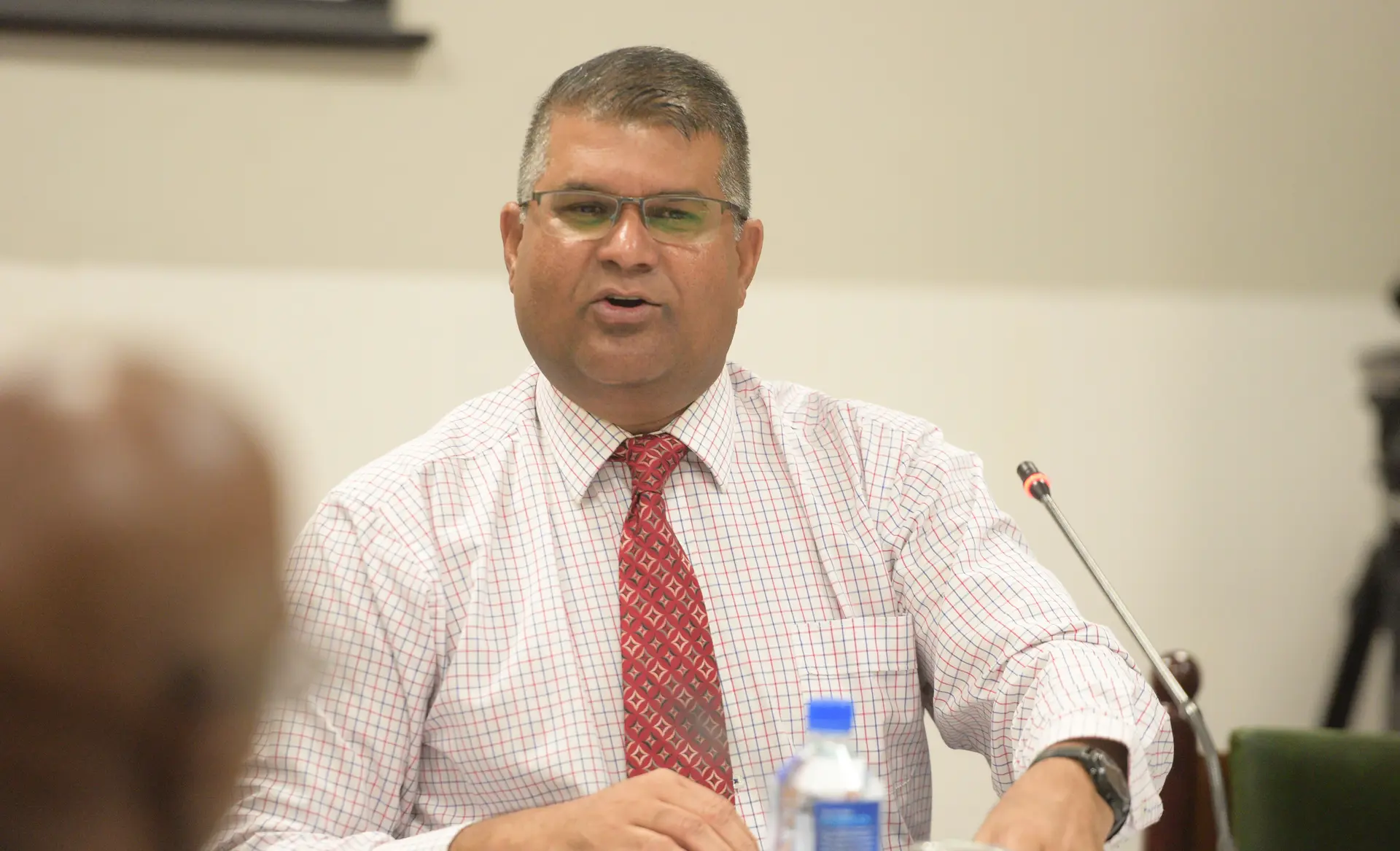
Reserve Bank of Fiji (RBF) Governor Ariff Ali gave an update on Fiji’s economic status at Dialogue Fiji’s State of the Fijian Economy Dialogue 2026 at the Grand Pacific Hotel in Suva yesterday.
He reiterated how global events in recent months, driven by conflict in the Middle East and the stranglehold on the Strait of Hormuz, has affected the world’s fuel and oil prices, hitting all countries including Fiji.
He gave his update after he presented on the RBF Insurance 2024 Annual Report to the Parliament Standing Committee earlier in the day.
Related stories
Fiji’s GDP forecast
Mr Ali said Fiji’s gross domestic product (GDP) was initially forecast for this year to be 3 per cent, but now has been revised to 1.5 per cent.
“This is the lowest in five years,” he said.
“Our estimate for last year, the economy was initially estimated to be 3.5 per cent, we have now revised it for 3 per cent for last year. For the next year, we have also revised it to 2.5 per cent, and the following year to 2 to 3 per cent.
“Government had a national development plan; we had targeted 5 per cent of economic growth.
“We are nowhere close to 5 per cent.”
Mr Ali said Fiji’s inflation rate at the end of May was 3.5 per cent while in September last year, it was -3.8 per cent.
“That means prices, on average, have gone up by 7.7 per cent,” he said.
“Inflation this month will be higher because of the impact of the fuel and gas prices, plus the full impact of the electricity surcharge will come in.
“And as transportation costs goes up because of fuel, freight costs will go up.”
As a consequence of this, Mr Ali said farmers and fishermen would have to charge more for their produce and catch in the markets.
Such factors would contribute to a rise in the cost of living.
Mr Ali also said that on the other hand, we have one of the largest deficits this financial year, which was 6.4 per cent, the largest excluding during the COVID-19 era.
“Our debt-to-GDP is now estimated to be very close to 84 per cent at the end of this financial year or somewhere close by,” he said.
“Government expenditure has increased from somewhere around $3.3billion, $3.5billion to now $4.8billion in this current budget.” Mr Ali said that normally, when an economy slows down anywhere in the world, the Government is the first to increase expenditure in order to boost the economy.
However, Fiji is constrained on that front due to the debt-to-GDP being so close to 84 per cent.
He said in a period when Government is unable to spend more to simulate the economy, then the private sector has to come in.
“I wish we had started more with the private sector a few years earlier,” Mr Ali said.
Monetary policy
“With regards to monetary policy, the way we stimulate the economy is to control the money, which is inflation. If you increase interest rates, it will be expensive to borrow and therefore businesses will think twice whether they will be able to service the debt and whether returns will justify the high cost of borrowing.”
Mr Ali also said Fiji’s interest rates have been kept extremely low.
“We have done our utmost to grow the economy and this is reflected in the fact that private sector credit growth is about 12.8 per cent.”
Mr Ali summed it up by saying Fiji’s economy was in a period of uncertainty and volatility.
“What is happening in the Strait of Hormuz is impacting us and we have no control,” he said.
“The only option to grow out of this situation, is the private sector.
“But when you talk to the private sector, based on our surveys, there are a number of issues impacting them.”
These issues have been:
- Ease of doing business and;
- Crime rate, drugs and HIV affecting businesses.
Another issue has been the Employment Relations Bill.
Mr Ali said in its current form, most in the private sector have raised issues with the Employment Relations Bill, affecting business confidence.
RBF Insurance 2024 Annual Report Before giving his presentation at Dialogue Fiji’s State of the Fijian Economy Dialogue 2026, Mr Ali had made a submission on the RBF Insurance 2024 Annual Report to the Parliamentary Standing Committee.
RBF was pinning its hopes on smart policies in the upcoming national budget to help the economy, as deep cuts to national growth targets and soaring cost of living left the country with very little room to spend its way out of trouble.
Briefing parliamentary committee members during the submission, Mr Ali was hopeful that precise fiscal interventions later this month would provide a crucial liferaft.
However, he warned that a sharp spike in public expenditure over the last three years had depleted the Government’s fiscal space.
“The Budget can add some stimulus to the economy, but we understand that the room for the Government to spend more is not as much,” Mr Ali said.
“So, what we really hope is some smart policies in the budget to help the economy.”
Explore more on these topics








Advertisement
Advertise with Fiji Sun