RFMF servicewomen push gender reform through leadership training
The training forms part of the RFMF’s ongoing efforts to build a professional, people-centred institution that reflects Fiji’s national values and international peacekeeping commitments.
Thursday 15 January 2026 | 18:00
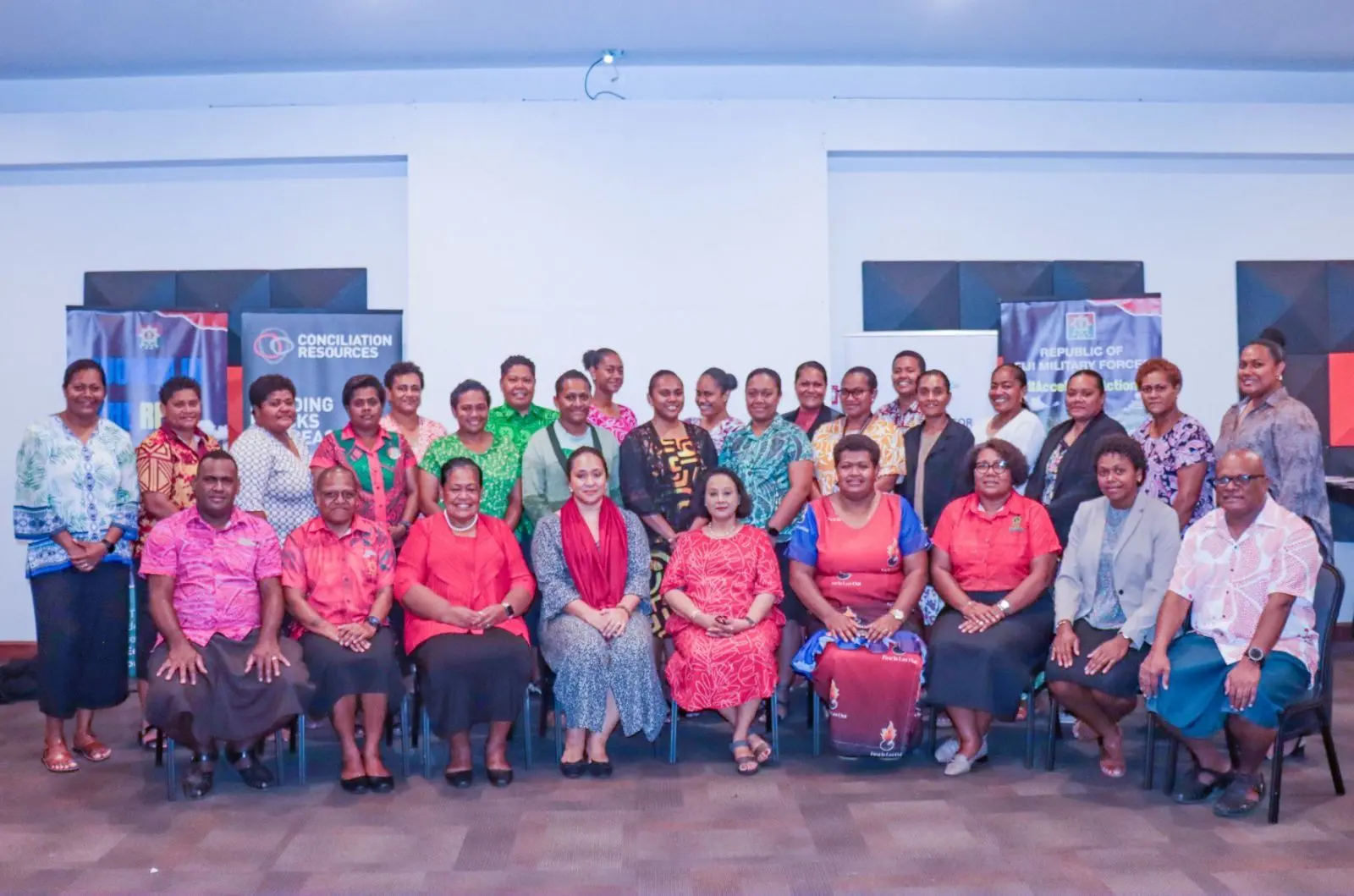
RFMF servicewomen with Colonel (Ret’d) Litea Vulakoro Seruiratu and Acting British High Commissioner to Fiji, Josh Kemp and facilitators at the conclusion of the Gender Responsiveness Training in Pacific Harbour.
Photo: : Republic of Fiji Military Forces
The Republic of Fiji Military Forces (RFMF) is advancing gender reform from within its ranks, with servicewomen participating in Gender Responsiveness Training aimed at breaking barriers and strengthening inclusive leadership across the Force.
The two-day workshop, held at The Pearl Resort in Pacific Harbour from January 13–14, brought together servicewomen from different units to deepen understanding of gender equality, equity and transformative change within the military.
The training forms part of the RFMF’s ongoing efforts to build a professional, people-centred institution that reflects Fiji’s national values and international peacekeeping commitments. It was facilitated by the Pacific Centre for Peacebuilding in partnership with Conciliation Resources.
Officiating at the workshop, Colonel (Ret’d) Litea Vulakoro Seruiratu, one of the RFMF’s pioneering servicewomen, delivered a strong message on the need for deliberate and sustained action.
Referring to United Nations Security Council Resolution 1325, Colonel Seruiratu said women were not only affected by conflict but played a central role in preventing it and building lasting peace.
“The international community acknowledged that women must be architects of peace,” she said.
She acknowledged that, despite progress, servicewomen continued to face institutional and cultural challenges within military structures.
“The command directive is simple — gender reforms must happen,” she said, stressing that meaningful change required leadership and collective responsibility from within the Force.
Colonel Seruiratu encouraged participants to use the training to build confidence, challenge discrimination and uphold justice in their workplaces.
She also highlighted Fiji’s strong contribution to global peacekeeping and its people-centred national security approach, which places dignity, human rights and gender equity at its core.
Respect, she said, remained a non-negotiable value of the RFMF and must be extended to all, regardless of rank or position.
Participants took part in interactive learning sessions, including case studies, scenario-based exercises, role plays and group discussions, covering safeguarding, restorative justice, mediation and negotiation, and managing stress and trauma.
The workshop was officially closed by Acting British High Commissioner to Fiji and Counsellor Josh Kemp, who underscored the importance of inclusive leadership and strong support networks within the RFMF.
“The skills and knowledge you have gained are powerful,” Kemp said.
He reaffirmed the United Kingdom’s long-standing military partnership with Fiji, noting that a stronger RFMF depended on equal opportunity and safe, supportive workplaces for all.
The training marked another step towards ensuring servicewomen are not only represented within the RFMF, but empowered to lead meaningful change.