Fijian student sets sights on transforming agriculture back home
Samuela Tule hopes to use his studies in Smart Agriculture and Agricultural Engineering to help modernise Fiji's farming sector.
Thursday 12 November 2026 | 14:30

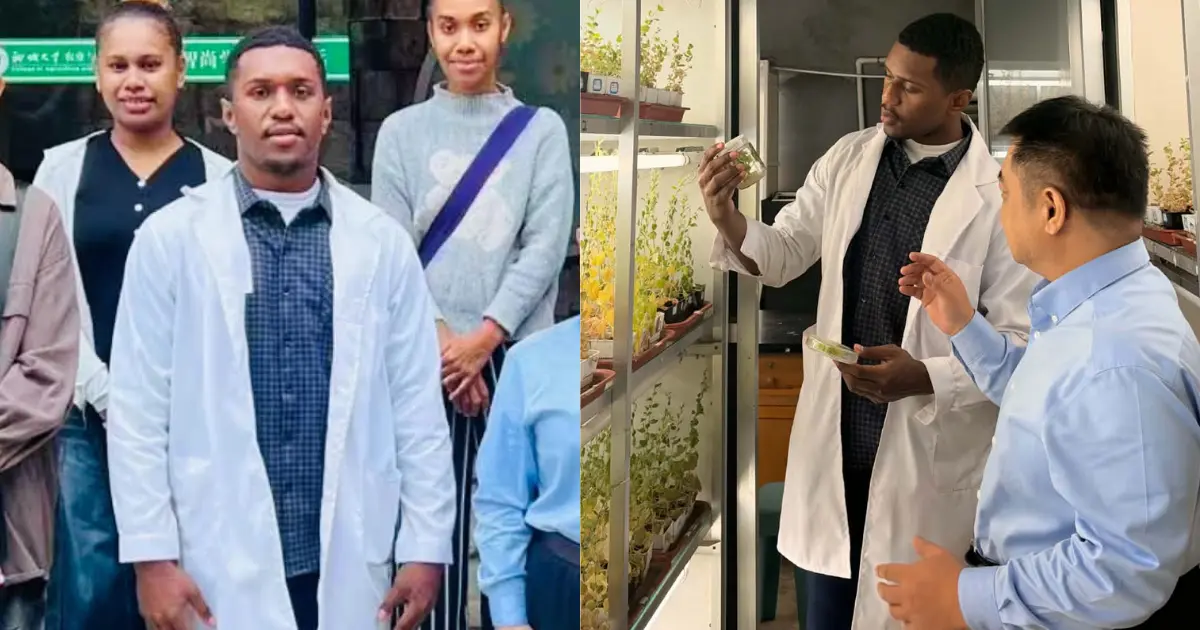
From the village of Naloto in Verata, Tailevu, to the advanced agricultural laboratories of China, Samuela Tule is pursuing an opportunity he hopes will one day help transform Fiji’s agricultural sector.
Currently studying Smart Agriculture and Agricultural Engineering in China, Mr Tule is gaining first-hand exposure to modern farming technologies, automated machinery and innovative agricultural practices that could help address some of Fiji’s biggest challenges.
For the young Fijian, studying in China has been more than an academic journey. It has involved adapting to a different education system, overcoming language barriers and embracing a culture vastly different from life back home.
Related stories
One of his initial challenges has been navigating the language barrier, particularly in a highly technical field such as Agricultural Engineering.
Although some classes are conducted in English, technical terminology, laboratory equipment, software interfaces and research materials are often presented in Mandarin.
Translation applications and support from fellow students have therefore become important tools in helping him keep up with his studies.
Beyond the classroom, everyday activities such as ordering food, asking for directions and setting up bank accounts also presented challenges during his initial adjustment.
However, digital platforms such as WeChat and Alipay have made communication and daily transactions considerably easier.
Despite these challenges, Mr Tule believes the opportunities available in China make the experience worthwhile.
Compared with studying in countries such as Australia and New Zealand, China offers a more affordable option for many Fijian students, particularly those benefiting from Government and provincial scholarships that can cover tuition fees and accommodation, as well as provide monthly living allowances.
The relatively affordable cost of public transport and daily essentials, along with access to high-speed rail services, also helps students manage their expenses.
However, affordability is only one part of what makes studying in China valuable.
Mr Tule says the differences between the education systems have also broadened his perspective on learning.
The Chinese education system is characterised by a demanding academic environment, with a strong emphasis on discipline, examinations, continuous assessment and practical learning.
For a student specialising in Smart Agriculture, access to advanced facilities is particularly important.
Chinese universities offer exposure to modern agricultural infrastructure, including high-tech greenhouses, agricultural drones, automated farming machinery and data-analysis laboratories.
The combination of classroom instruction, practical laboratory work and research projects allows students to understand how technology can improve agricultural production.
Outside the academic environment, adjusting to Chinese culture has been another significant part of his journey.
Moving from Fiji’s relatively relaxed lifestyle to the fast-paced environment of Chinese cities required considerable adjustment.
Differences in food and climate have also tested his ability to adapt, particularly experiencing harsh winters after growing up in Fiji’s tropical climate.
Nevertheless, these experiences have helped him become more independent and comfortable navigating unfamiliar environments.
More importantly, his studies have exposed him to agricultural technologies that are not yet widely used in Fiji.
These include automated farming systems, artificial intelligence-driven crop monitoring and modern drone technology, which can help farmers monitor crops, improve productivity and make informed decisions.
The international connections he is developing with fellow students, researchers and industry professionals have also expanded his understanding of opportunities in the global agricultural sector.
But beyond the qualifications and international exposure, Mr Tule has a clear ambition for what comes next.
He hopes to return to Fiji and apply the knowledge and skills gained in China to help modernise the country’s agricultural industry.
With Fiji facing challenges relating to climate change, food security and agricultural labour shortages, he believes smart agricultural technologies could play an important role in strengthening the sector.
From introducing climate-resilient farming methods and automated machinery to improving crop yields and supporting agricultural exports, the skills he is acquiring could contribute to a more productive and sustainable agricultural future.
For Mr Tule, the journey from Naloto to China is not simply about earning a qualification overseas.
It is about gaining knowledge, embracing innovation and preparing to bring new ideas home.
His ultimate ambition is to ensure that the opportunities he has received abroad translate into meaningful benefits for farmers and communities in Fiji.