Munia People Hope to Get Back Island
Sold for $400 as freehold land to an American, the descendants of the original inhabitants of Munia Island in Vanuabalavu, Lau, are still burdened with payment to get their island
Saturday 19 October 2024 | 16:00
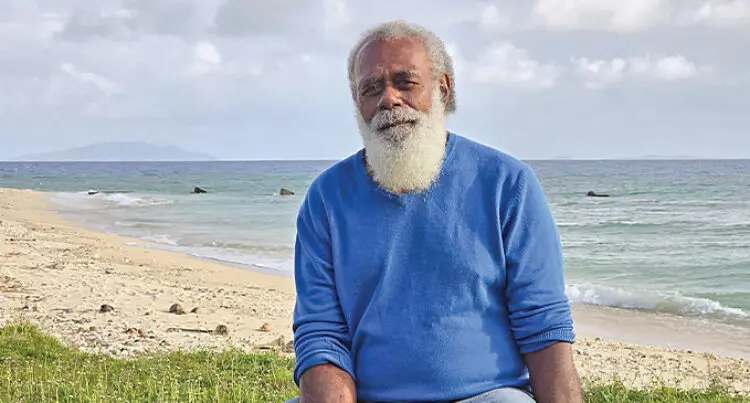
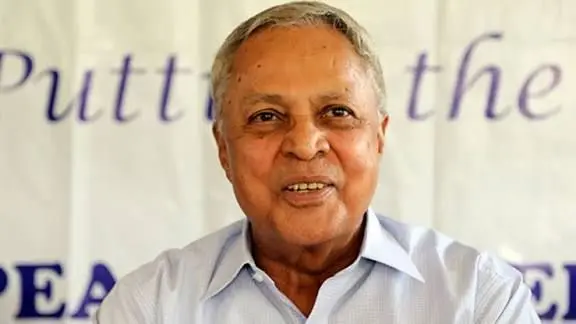
Etuate Umu. Photo: Ivamere Nataro/ Behind him is Munia Island.
Photo: Ivamere Nataro.
Sold for $400 as freehold land to an American, the descendants of the original inhabitants of Munia Island in Vanuabalavu, Lau, are still burdened with payment to get their island back.
Munia, spanning about 5.3km with a coastline of 10km, was first settled by the elders of the villagers who now occupy Avea Island, also in Vanuabalavu.
It’s been more than two centuries since the forefathers of the people of Avea were forcefully driven away from Munia because of a transaction between the Tui Cakau at the time, Ratu Galea and the American.
Related stories
We visited Avea Island where the village headman, Etuate Umu, spoke about the struggles of paying the Government $450,000 to have complete ownership of Munia.
The Government bought Munia in 1983 for $450,000 and resold it to the Munia people.
As part of the Land Buy Back Scheme sale and purchase agreement with the Government in 1989, the people of Munia were to pay off the $450,000 over 30 years, with a yearly payment of $15,000.
“We were only able to pay $30,000 over two years,” he said.
“We requested for the yearly payment to be reduced, so the Government reduced it to $7000, but we still couldn’t pay it, then they reduced it further to $3000.”
Mr Umu, 69, said there was no stable source of income for many of the villagers, even working in the copra industry, which made it difficult for them to pay what was agreed.
The villagers were only able to pay $225,000 over the 30 years.
“The elders living on Avea Island today attended Mavana Primary School, and we were dependent on our relatives on Mavana village, which was a struggle and a burden for families we had to stay with on Mavana,” he said.
Mavana is a village in mainland Vanuabalavu, about a 45 minutes boat ride from Avea.
“For us, as soon as we turned six years old, we were taken to live in Mavana because of school. This kind of struggle was the reason we didn’t achieve further education to secure us good paid jobs.
“So, when the Government decided to return our island by reselling it to us for almost close to half a million dollars, it was a burden for us.
“Our island was almost taken away from us again because we couldn’t pay for the amount that was given to us.”

Avea Village headman, Etuate Umu, shows a well in the middle of the village that was used for Maafu’s piggery farm. Photo: Ivamere Nataro
Photo: Ivamere Nataro
Avea Village headman, Etuate Umu, shows a well in the middle of the village that was used for Maafu’s piggery farm. Photo: Ivamere Nataro
Being the village headman for the third term, Mr Umu hopes that they would be able to the remaining $225,000 by December this year.
“The four mataqali (clan) on the island are to give $25,000 each by December,” he said.
“This means each working men from Avea Island, who live outside of the island, must give $1000 by December.”
The four mataqali are Marama, Nakie, Narocake and Saweilau.
Mr Umu said money they’d kept in their trust fund and invested would supplement whatever the remaining balance was.
He added some villagers would be relocating to the island once payment was completed.
However, he said “there’s the plan to run Munia as a State where the villagers remain on Avea but work on Munia.”
It is understood that upon completion of payment, Munia would be transferred to the trustees (four mataqali) in freehold status.
If the trustees’ default on payment, the minister has the authority to rescind the agreement, and all the monies paid will be forfeited to the Government.
The Freehold Buyback Scheme BHwas established in 1989 to purchase back ancestral land that was alienated as freehold land.
EARLY MIGRATION AND SALE OF MUNIA
The 118 villagers living on Avea Island are descendants of waves of early migration from Vuna, Taveuni.
Mr Umu tells of how his forefathers left Vuna and sailed across to Munia Island settling first at Waitadrailagi, led by Koroi Bo.
From Waitadrailagi, they relocated to Delai Yatova, also on Munia. Mr Umu said his forefathers moved around the island searching for a land to settle and create a village for their descendants.
They finally made a piece of land on the island called ‘Marama’ their home. The second wave of migration from Vuna to Munia was led by Ratu Saqa, Mr Umu said.
“Around the 1860s, while in M unia, they returned to Wairiki in Taveuni to fight in the tribal wars. The Tui Cakau at the time was Ratu Galea, sold Munia Island to the white people,” he said.
When the transaction between Ratu Galea and the white men took place, there were still some people living on Munia.
“Some of our elders were still on Munia Island, in a place called Toka, when the Tui Cakau at the time sold Munia Island.
“Our elders were waiting there when the White men started occupying the island.
We were told that these white men started shooting their guns into the sky scaring our elders away until they reached Toka. Our elders had never heard the gun before, and they feared that they were going to die.”
The only option was for the people to swim across the ocean to mainland Vanuabalavu.
“When the gun sounded near, they all swam across the ocean to Navusaqa in Mualevu, Vanuabalavu.
“They stayed in Navusaqa for a while until the sau ni vanua o Mualevu, Ratu Qoriniasi, brought our elders to Avea Island, under the orders of Maafu.”
Avea Island was initially Ma’afu’s piggery farm, Mr Umu said.
THE WHITE MEN’S OCCUPATION OF MUNIA
Mr Umu was matured enough at the time to recall working for the white men on Munia Island.
Born in 1955, Mr Umu said the white men inhabited and lived on Munia until the 1970s.
“I worked for the white men on their copra field on Munia Island at the time,” he said.
When the island was returned to us, nothing was left on the island.
Today, the voice of the people of Munia living on Avea are heard across Fiji’s airwaves, with three renowned local bands – Cagi ni Delaiyatova, Voqa kei Waitadralagi, Voqa kei Munia, and their gospel band, Dakui Yaveya Gospel.
-IVAMERE NATARO