PM Rabuka acknowledges past divisions, calls for national healing
Prime Minister calls on all sectors of society to engage in reconciliation and address historical grievances.
Monday 30 March 2026 | 11:30
Updated 30 March 2026 | 15:30 FJT

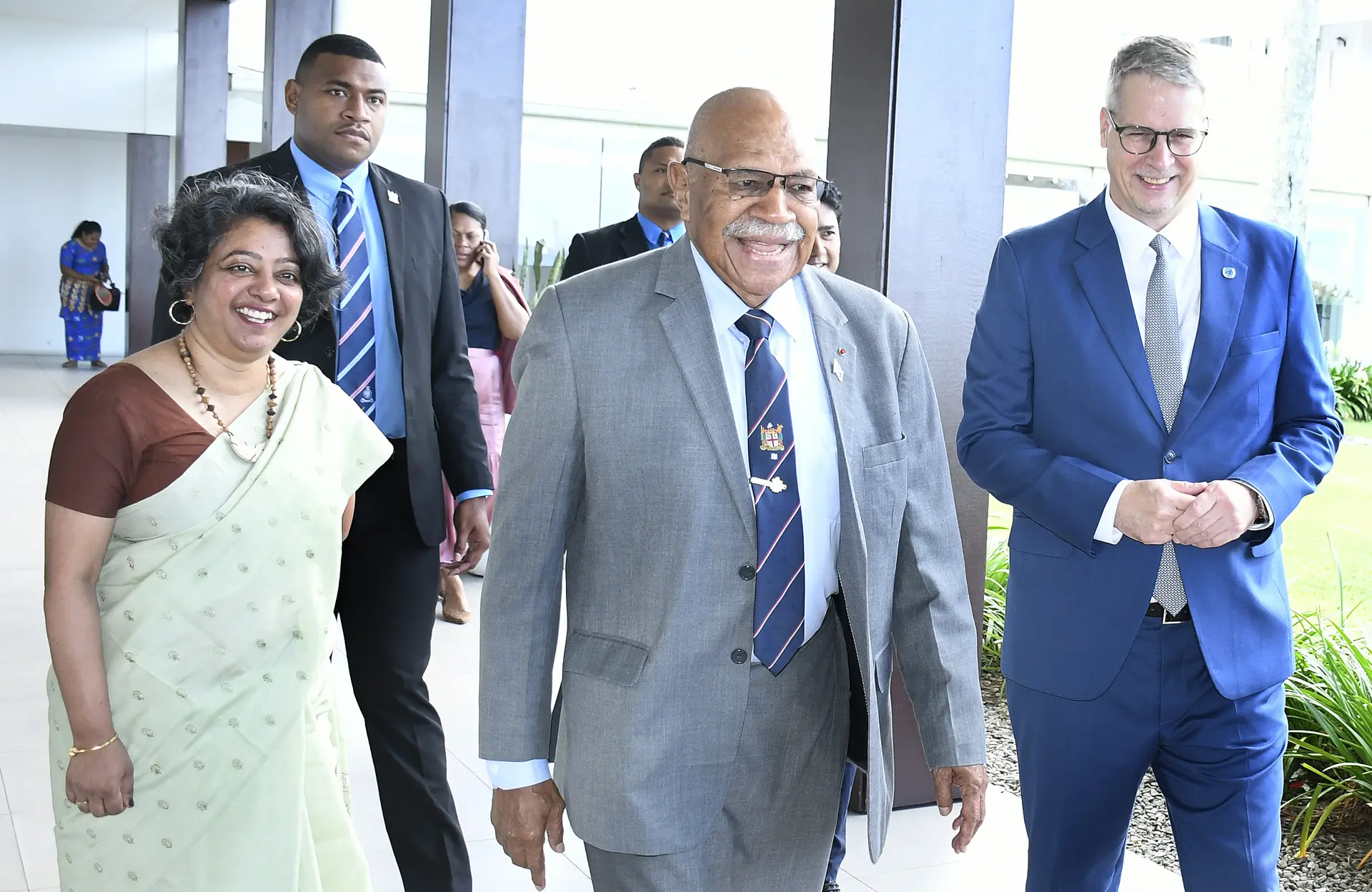
From left: Minister for Women Sashi Kiran, Prime Minister Sitiveni Rabuka and UN Resident Coordinator Dirk Wagner during the National Social Cohesion Stakeholder Conference in Suva on March 30, 2026.
Photo: Ronald Kumar
Prime Minister Sitiveni Rabuka has acknowledged public accusations that he once harmed Fiji’s social cohesion but said he is now committed to healing the nation.
Mr Rabuka made the comments this morning at the National Social Cohesion Stakeholders Conference at the Grand Pacific Hotel in Suva.
“I’ve been accused of being guilty of destroying this in Fiji, but I have started this journey to bring our people together,” Mr Rabuka told delegates.
Related stories
“I’m honoured to be invited, not as what you remember, but as the Prime Minister of Fiji.”
The remark is widely understood as a reference to Mr Rabuka’s role in the 1987 military coups, which toppled the country’s first Indo-Fijian-led government and deepened ethnic divisions.
Since then, Mr Rabuka has positioned his leadership as focused on reconciliation and national unity.
Central to that effort is the Fiji Truth and Reconciliation Commission (FTRC), established in December 2024 to address historical grievances.
The commission provides Fijians with a formal process to acknowledge past wrongs and work toward national healing.
UNDP Resident Representative Munkhtuya Altangerel expressed support for the commission, noting that the findings of the new Social Cohesion and Reconciliation Index, presented at the same conference, would contribute to the FTRC’s ongoing work.
UN Resident coordinator Dirk Wagener added that “sustaining long-term peace will require continued attention to underlying structural challenges.”
Mr Rabuka urged all sectors of society to engage honestly in the reconciliation process.
“To collectively move forward, we must address and reconcile the pain of our past with compassion and courage,” he said.
FTRC chairperson Joaquim Da Fonseca was among those present at the conference.








