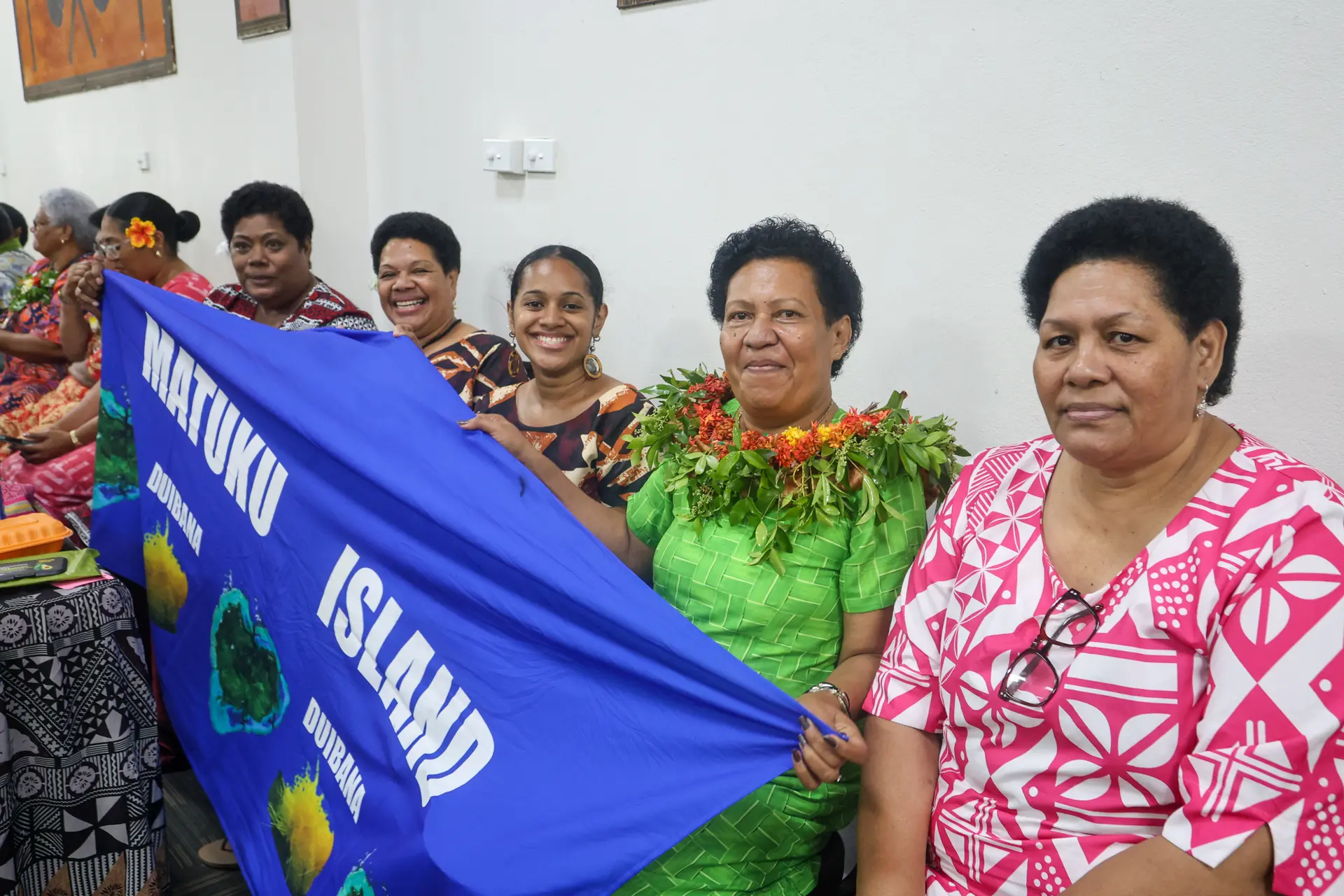
Seven villages fear fallout from proposed iron sands project
Communities warn the proposed project could threaten livelihoods, fishing grounds, heritage sites and the environment despite promises of jobs and investment.
Tuesday 10 November 2026 | 09:00

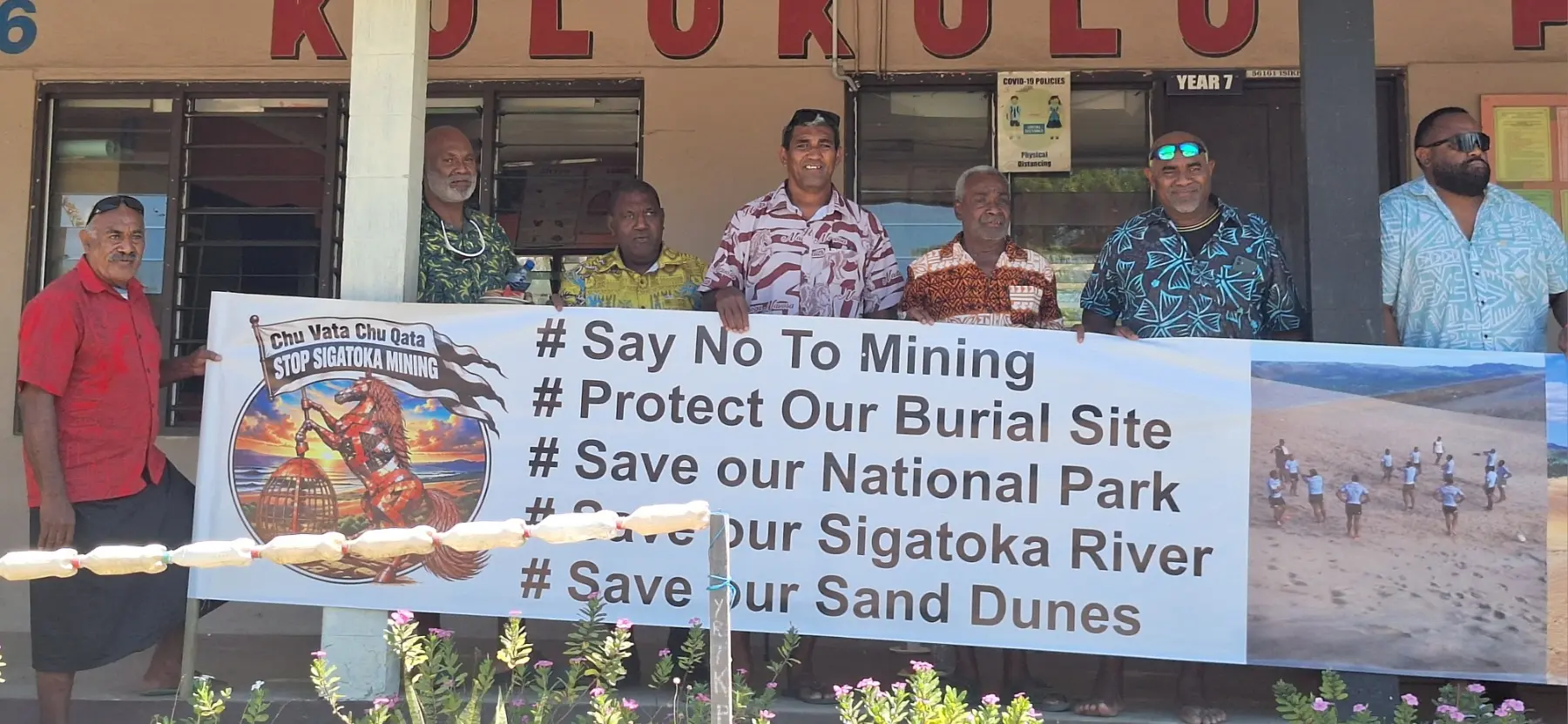
Landowners of Nadroga display a poster carrying messages expressing their concerns about the proposed Sigatoka Iron Sands Project during the Environmental Impact Assessment (EIA) public consultation at Kulukulu Public Primary School in Nadroga on November 7, 2026.
Photo: Katherine Naidu
The livelihoods and survival of people in the district (tikina) of Nahigatoka are at stake as Magma Mines Pte Ltd pursues its proposed extraction of black iron sands in the Sigatoka and Kulukulu areas.
Seven villages in the district, along with communities around Kulukulu, could be directly affected if the project is approved.
The proposed Sigatoka Iron Sands Project faces strong opposition, with landowners and residents warning of long-term environmental damage, disruption to ancestral land and threats to their livelihoods.
Related stories
Three public consultations held over the weekend highlighted concerns that the potential risks to the Sigatoka River Delta, surrounding communities and the natural environment could outweigh the anticipated benefits of mining.
Residents fear a repeat of damage caused by previous dredging activities, which they say affected fishing grounds, marine resources and ancestral land.
Other concerns include the destruction of sand dunes, coastal erosion, flooding, food security, damage to gardens, waste disposal, and the protection and retention of customary fishing grounds and heritage sites.
Ministry of Environment and Climate Change permanent secretary Sivendra Michael said customary landowners had raised concerns about the potential spillover effects of the project.
"Although freehold is the nature of the area that is being specified, the indigenous landowners or the customary landowners have spoken around the spill over effects, and who would be responsible for the spill over effects accordingly," Mr Michael said.
He clarified that the current Special Prospecting Licence (SPL) was only for exploration and investigative studies and did not permit extraction.
The seven villages identified as potentially affected are Nasigatoka, Yavulo, Nasama, Vunavutu, Volivoli, Nayawa and Laselase, along with surrounding communities.
A Kulukulu resident has also challenged the benefits of the proposed project, arguing that 24 jobs are not worth the potential loss of the area's iconic sand dunes.
Mausara/Olosara resident Adi Alisi Seniloli Lalabalavu said the Sigatoka dunes were part of Fiji's heritage, supported tourism and served as a training ground for athletes.
The concerns were raised during public consultations as the project undergoes its environmental assessment.
However, Magma Mines Pte Ltd engineer Peter Hinner said the proposed project could create new export opportunities for Fiji while supplying specialised construction materials to local industries.
Mr Hinner said the proposed Kulukulu South operation would target international markets for its high-quality magnetite and construction sand, with potential to support local manufacturers and infrastructure projects.