Taveuni turns waste into income opportunities
The initiative brings together schools, businesses, co-operatives, development partners, and local communities to turn discarded materials into economic value.
Sunday 29 November 2026 | 15:00
Updated 29 November 2026 | 18:04 FJT
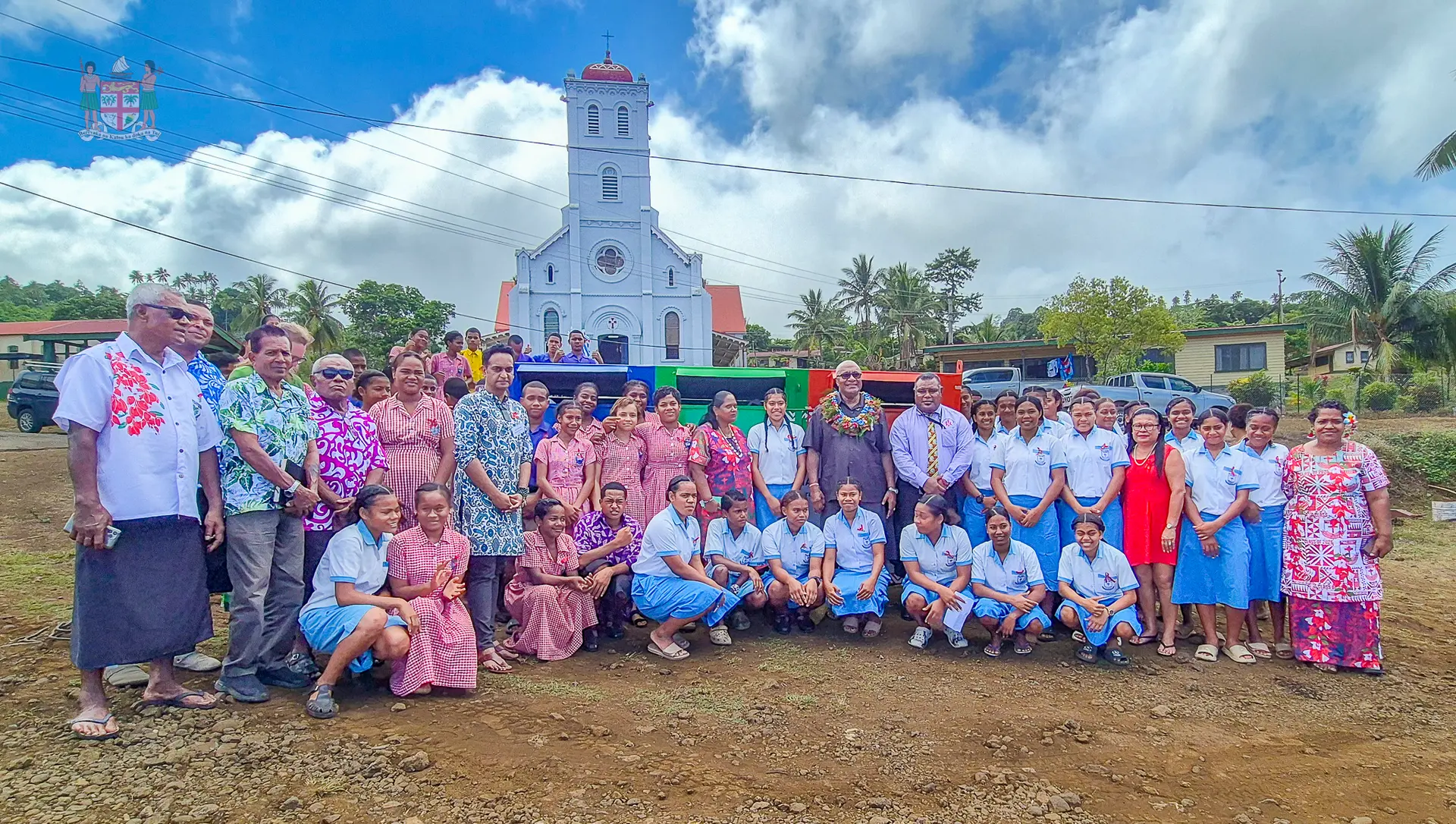
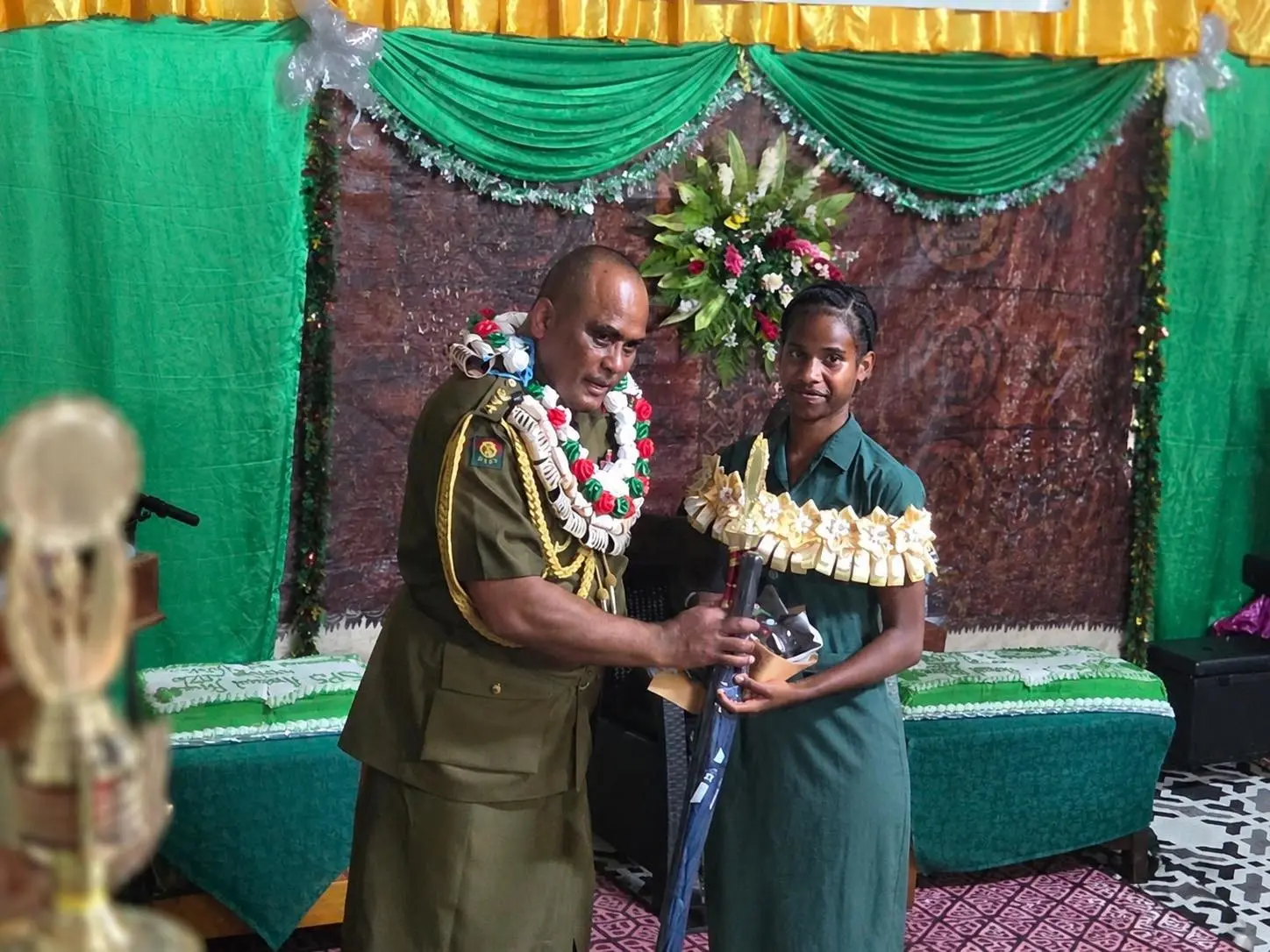
Deputy Prime Minister and Minister for Industries, Commerce, Business Development and Public Enterprises Manoa Kamikamica (middle) with teachers, students and stakeholder during the launch of Taveuni Waste Management Initiative at Holy Cross Primary School in Wairiki, Taveuni on November 27, 2026.
Supplied
A new recycling initiative on Taveuni aims to create employment and income opportunities for island residents by turning discarded materials into economic value.
Through a co-operative model, recycling operations will be managed locally to ensure the economic benefits remain on the island.
Deputy Prime Minister and Minister for Industries, Commerce, Business Development and Public Enterprises Manoa Kamikamica said recycling offered opportunities to strengthen rural economies while protecting the environment.
Related stories
He made the remarks during the official launch of the Taveuni Waste Management Initiative at Holy Cross Primary School in Wairiki last Friday.
“We should not view recycling only as a waste management solution,” Mr Kamikamica said.
“It is also an economic opportunity. It creates value from materials that would otherwise be discarded, and it creates work and income close to home.”
At the centre of the initiative is Nasomo Yalo Vata Co-operatives Limited, which will oversee local recycling operations.
Mr Kamikamica commended the co-operative model for giving residents a direct stake in protecting their environment while strengthening rural economies.
He urged participating organisations to supply recyclables consistently to ensure the sustainability of operations.
Community-driven approach
The initiative brings together schools, businesses, co-operatives, development partners and local communities.
Led by the Pacific Recycling Foundation (PRF), the programme is supported by the CleanSeas Marine Litter Prevention in Pacific Island Countries project.
The project is jointly implemented by GIZ Pacific, the Secretariat of the Pacific Regional Environment Programme (SPREP) and the Pacific Community (SPC), in partnership with Fiji’s Ministry of Environment and Climate Change.
Funded by the German Government, the regional programme is being rolled out across Fiji, Tonga, Samoa and the Marshall Islands.
GIZ representative in the South Pacific and head of the CleanSeas project Frauke Bartels stressed that tackling waste required collective action across the island.
“It will require households to participate, students to become advocates, businesses and tourism operators to take responsibility and local organisations to work together,” Ms Bartels said.
Over the next two and a half years, the project’s success will be measured not only by the volume of recyclables collected but also by the strength of its systems, partnerships and community participation.
Students at Holy Cross Primary School and Holy Cross College will play an active role through the Recycling on the Go Ambassadors Programme and new iRECYCLE hubs, gaining practical skills and promoting responsible waste disposal at home.
Private sector support from the Taveuni Tourism Association, local hotels and resorts and Waste Recyclers Fiji Limited further strengthens the island’s commitment to environmental protection, offering a model for other maritime communities across Fiji and the Pacific.