Where will mining waste go? Sigatoka residents demand answers
Mr Katonitabua raised concerns about the potential impact of additional waste on the river.
Monday 09 November 2026 | 07:00

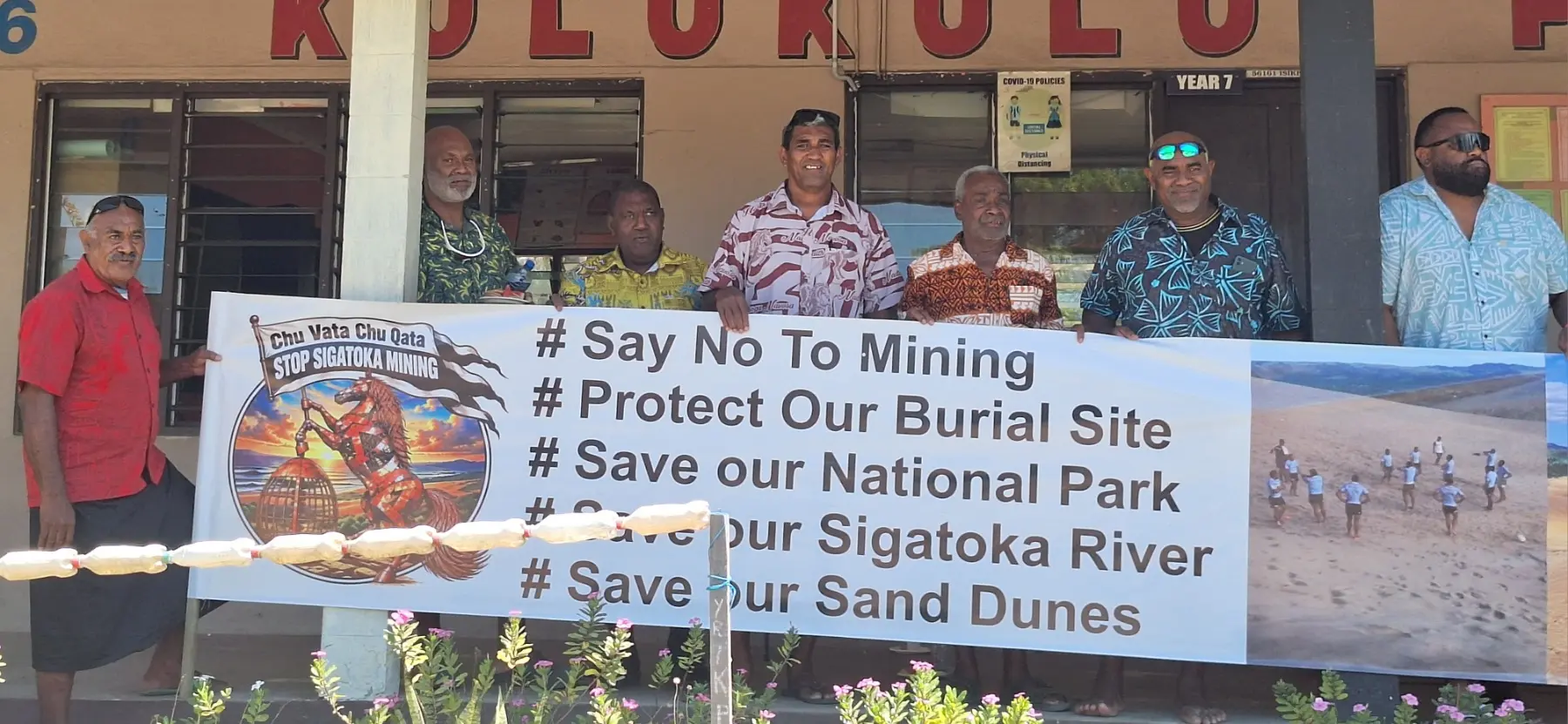
Landowners of Nadroga display a poster carrying messages expressing their concerns about the proposed Sigatoka Iron Sands Project during the Environmental Impact Assessment (EIA) public consultation at Kulukulu Public Primary School in Nadroga on November 7, 2026.
Photo: Katherine Naidu.
Concerns over possible pollution of the Sigatoka River have prompted calls for clarity on how waste from the proposed Kulukulu iron sands mining project would be managed.
Former Fijian Ambassador to the United Arab Emirates (UAE) Naipote Katonitabua questioned whether liquid waste from Magma Mines Pte Ltd's proposed Special Prospecting Licence (SPL) 1495 – Kulukulu Sands, Sigatoka Iron Sands Project could enter the river.
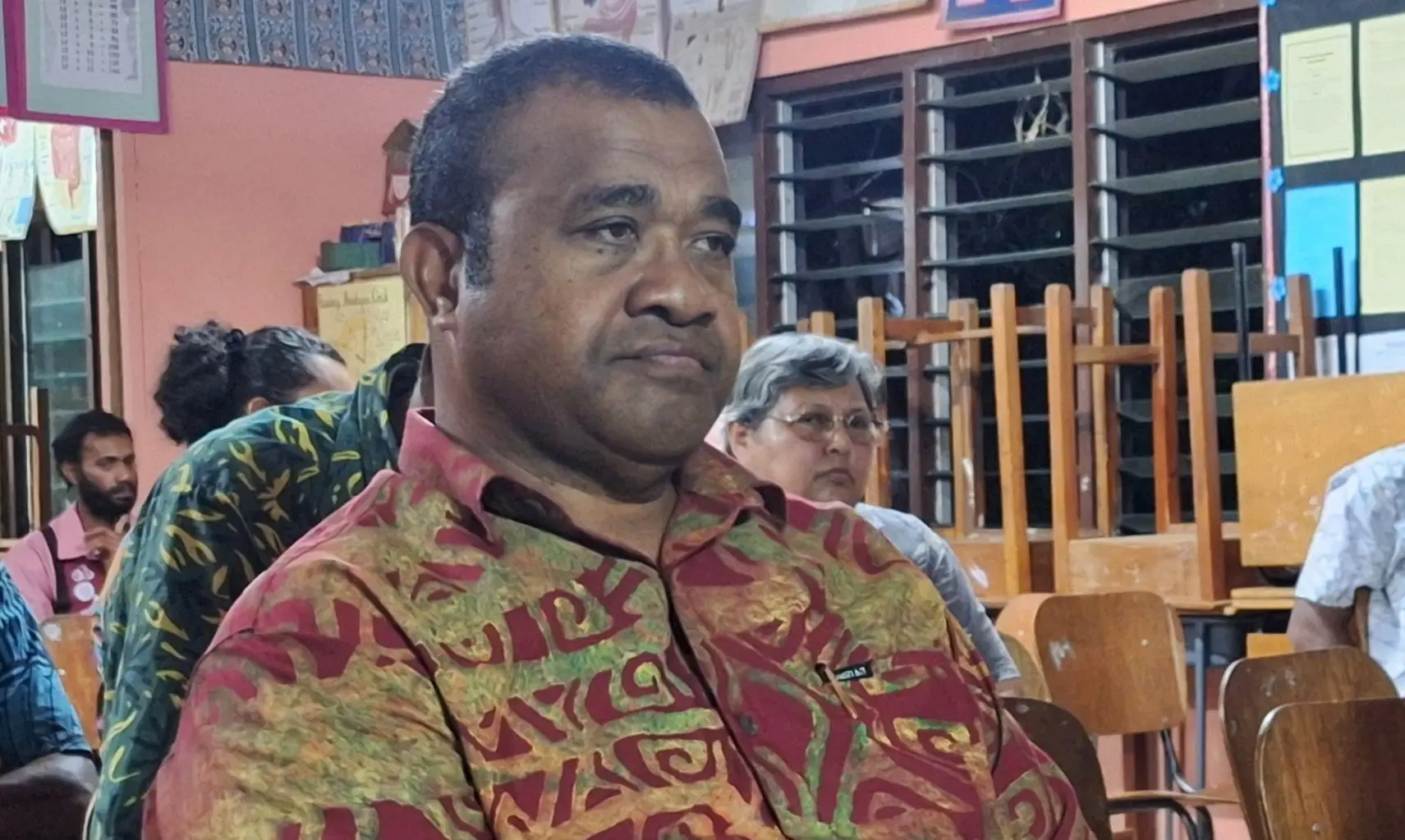
Former Fijian Ambassador to the United Arab Emirates (UAE) Naipote Katonitabua.
Photo: Katherine Naidu.
Related stories
Speaking during the Environmental Impact Assessment (EIA) public consultation at Kulukulu Public Primary School in Nadroga on Saturday, Mr Katonitabua raised concerns about the potential impact of additional waste on the river.
“Where will you dispose your liquid disposal from this mining? Is there any disposal into the river, or where will you keep your disposal in terms of mining?” he asked.
Mr Katonitabua, who is originally from Vunavutu Village, also questioned the project's proximity to an existing sewage treatment facility.
“Just opposite the site you are recommending for your steel trial is the sewage plant. So we do not want to again dispose of unnecessary elements into a river that has already been unfairly treated by the developer around this area,” he said.
Mining company responds
Magma Mines Pte Ltd engineer Peter Hinner said material extracted through any approved river dredging would be deposited on land before being processed at a processing plant.
“If we were given permission to do any sort of dredging within the river, the material that we pull out of the river will be deposited onto the land and then processed through a processing plant,” he said.
Mr Hinner said the company would not adopt disposal methods similar to those associated with previous dredging activities in the area.
“So in terms of assuming you might be talking about something like the Chinese dredging dig where they just spew the slurry on the land anywhere they like, no, that’s definitely not something that we would do or could do or would be allowed to do,” he said.
Separate waste permits required
Permanent Secretary for the Ministry of Environment and Climate Change Sivendra Michael said waste management requirements were separate from the EIA process.
He said the ministry's Waste Pollution and Control Unit monitored air, water and ocean pollution.
Mining operations would also require solid and liquid waste permits.
“If it’s mostly for the mining, it is a solid waste permit as well as a liquid waste permit, but that is a different requirement that is imposed on any form of operation that deals with the waste disposal,” he said.
Mr Michael said transporting waste would also require appropriate permits, generally imposed as conditions of an operating licence.