Sayed-Khaiyum says Government ignored fuel crisis warnings
Mr Sayed-Khaiyum said Government should have implemented measures to cushion the impact of rising fuel prices on low-income and vulnerable Fijians.
Friday 22 May 2026 | 09:00

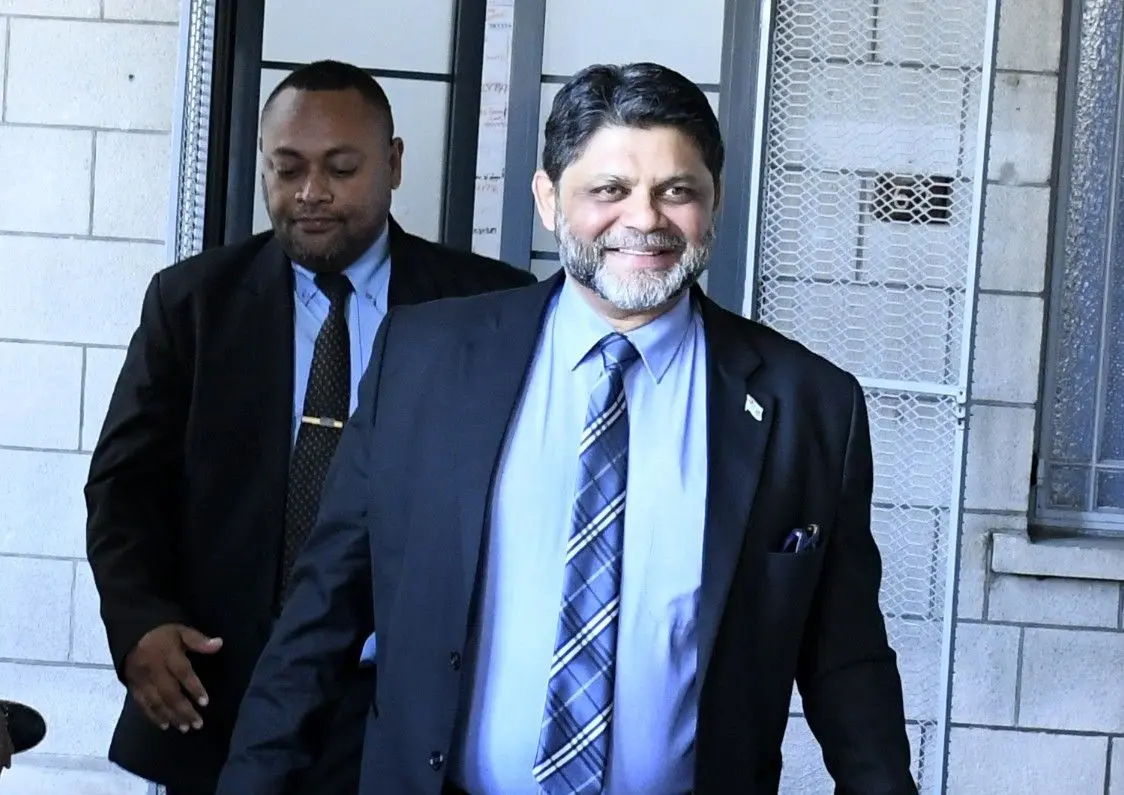
Former Attorney-General Aiyaz Sayed-Khaiyum outside the High Court in Suva.
Photo: Ronald Kumar
Former Minister for Economy Aiyaz Sayed-Khaiyum claims Government ignored warnings about a possible fuel crisis and failed to put contingency measures in place despite concerns being raised as early as October 2024.
Mr Sayed-Khaiyum said tensions in the Middle East had already pointed to the likelihood of fuel price increases and supply disruptions.
“Within this context we had highlighted that when developing budgets and economic policies those in charge of the economy need to be also acutely cognisant of global dynamics,” he said.
Related stories
Mr Sayed-Khaiyum said Government should have implemented measures to cushion the impact of rising fuel prices on low-income and vulnerable Fijians.
“But more importantly we had highlighted that the government needed to put in place contingencies to mitigate against, the now fuel crisis.
“The Government could have then put in place whole of raft of contingencies which would have not only mitigated directly against the fuel crisis, buffering our low income and vulnerable Fijians but overall put in place policies to have a robust and resilient economy.”
He claimed the advice and suggestions made “19 months ago” were ignored.
“However, unfortunately this advice given 19 months ago, like a number of other observations and suggestions, purely in the interest of the economic wellbeing of Fiji and all its citizens especially those on the lower end of the socio-economic scale and the growing poor went unheeded.”
Mr Sayed-Khaiyum said his comments were not intended as political point-scoring.
“These observations and suggestions then and its highlighting now were and are not about ‘We told you so’ or political point scoring or one upmanship.
“It is about reminding the government that it should recalibrate and correct its economic and social policy mistakes.”
He also criticised what he described as “regressive and disastrous economic policies” during the tenure of former Deputy Prime Minister and Finance Minister Professor Biman Prasad.
Mr Sayed-Khaiyum said Government could have introduced a mini budget after Professor Prasad’s departure.
“A mini budget could have been easily and quickly put in place after Biman Prasad’s departure.
“There was no need to change the financial year, as it appears to be mistakenly believed by some in the government, to deliver a mini budget.”
He said Government was now “in a bind” ahead of the 2026-2027 national budget because of inaction and the current fuel crisis.
“No doubt this has been further precipitated by the fuel crisis and its consequences (such as escalated inflation and slow down of the economy) that we had forewarned of.”
Despite the challenges, Mr Sayed-Khaiyum said opportunities remained for Government to correct its course.
“This however will require substantial thinking out of the current box. It will require a clinical reconfiguration of the current misplaced priorities.”
He urged Prime Minister Sitiveni Rabuka to take the lead in reshaping Government policy.
“Prime Minister Rabuka should lead the charge in this respect. He must realign the economic and other relevant policies to ensure the well being of all Fijians, in particular the working class and the vulnerable, who should always be the centre of all decision making.”
Mr Sayed-Khaiyum warned that failure to act could result in long-term damage to Fiji’s economy and further hardship for vulnerable communities.
“Prime Minister Rabuka must do the above to avert an irreversible damage to the fundamental structure of the Fijian economy and to ensure that the working class and vulnerable Fijians do not get further marginalised.”