Ro Veidovi’s remains returned, interred in chiefly burial grounds at Lomanikoro
Ro Veidovi repatriation marks historic moment of reconciliation, says Ro Teimumu Kepa
Saturday 13 December 2025 | 14:00
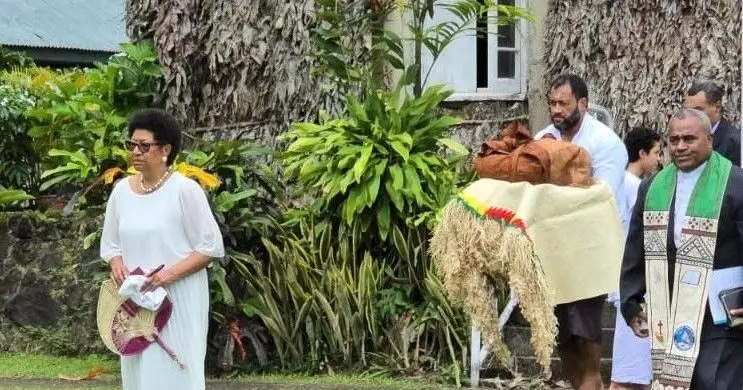
Na Gone Marama Bale na Roko Tui Dreketi Ro Teimumu Kepa leads the procession to the chiefly burial grounds in Lomanikoro village in Rewa today.
Rosi Doviverata
The Gone Marama Bale na Roko Tui Dreketi, Ro Teimumu Kepa, has described the repatriation of the remains of Rewa chief Ro Veidovi as a deeply significant moment in Fiji’s shared history with the United States.
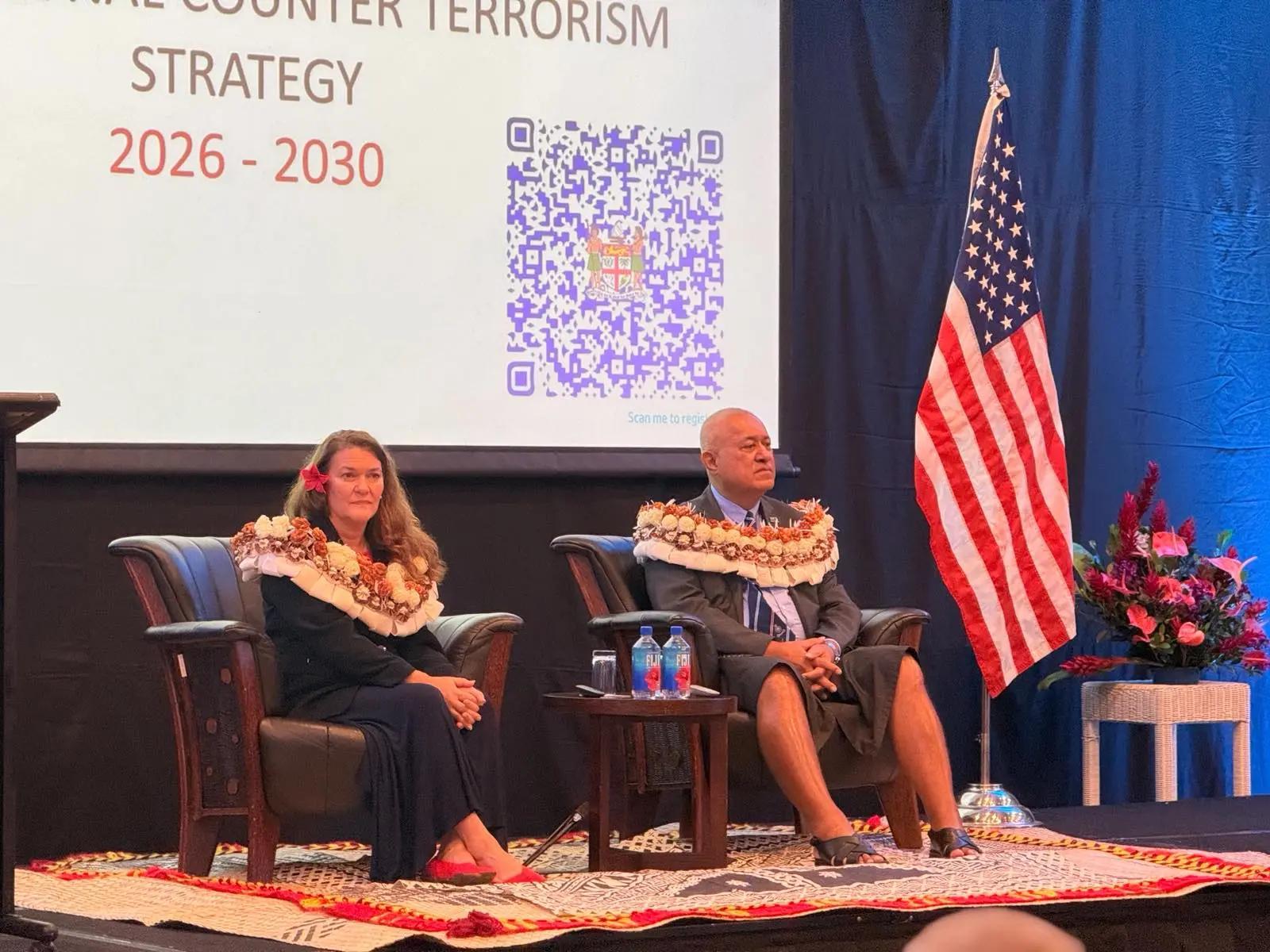
In a formal exchange with United States embassy officials today at Lomanikoro village, Ro Teimumu conveyed the appreciation of the Vanua of Rewa for the role played by the United States in ensuring the dignified return of Ro Veidovi’s remains after more than a century abroad.
“On behalf of the Vanua of Rewa, its people and the chiefly household of Valelevu i Burebasaga, I convey our deepest appreciation and gratitude to the Government and people of the United States of America,” she said.
Related stories
Ro Teimumu said Ro Veidovi’s remains were returned from the Smithsonian Institution in Washington, D.C., to his ancestral home in Rewa.
Although Ro Veidovi died shortly after arriving in the United States in 1842 and was interred at the U.S. Naval Cemetery in New York, she said his remains were preserved with dignity for more than 180 years.
“The respectful care afforded to Ro Veidovi during this long period, and the support extended in facilitating his return home, is an honour we acknowledge with heartfelt gratitude,” Ro Teimumu said.
She said the occasion also symbolised the enduring relationship between Fiji and the United States.
“Your presence here today, as representatives of your great nation, carries deep meaning for our people. It symbolises friendship, cooperation and mutual respect between our nations,” she said.
As Ro Veidovi was laid to rest in the chiefly burial grounds at Lomanikoro, Ro Teimumu said the role of the United States would always be remembered.
“The part played by the United States in ensuring that Ro Veidovi returned to his people with honour will never be forgotten,” she said.
She concluded by expressing hope for the continued strengthening of ties between the two nations.
“We extend to you, Your Excellency, the traditional thanks of our vanua as we look forward to the continued strengthening of the bonds between our nations.”
History
Ro Veidovi was a 19th-century Fijian high chief from Rewa who was taken to the United States as a prisoner in 1840. He died shortly after arriving in New York in 1842, and his story is a notable historical link between Fiji and the U.S.
Story in the United States
Ro Veidovi (also known as Vendovi) was accused by American merchants of masterminding the 1834 murder of a group of American sailors who were trading for beche-de-mer (sea cucumbers) in Fiji. In 1840, the United States Exploring Expedition, commanded by Lt. Charles Wilkes, apprehended the chief and took him aboard their ship, the USS Vincennes, to the U.S. for trial.
Death and Burial: He never made it to trial, falling ill and dying in the New York Naval Hospital shortly after the expedition's return to New York Harbor in June 1842. His body was buried in a naval graveyard in Brooklyn, New York.
Skull at the Smithsonian: In a practice common at the time, the expedition's surgeons removed his head for "scientific" study. His skull, tagged as "Specimen 292," became part of the founding collection of the Smithsonian Institution in Washington, D.C., where it remains in a restricted area.
Legacy: Vendovi Island, one of the San Juan Islands in Washington State, was named by Wilkes in his honor, a name that survives to this day.
The story of Ro Veidovi continues to connect the two nations, with his descendants and the Fijian government making efforts to negotiate the return of his skull for a proper burial in Fiji. His life and the fate of his remains highlight broader themes of 19th-century American expansion and cultural collision in the Pacific.