New banknotes ‘not accessible,’ says blind advocacy group
United Blind Persons of Fiji says design changes make it difficult to identify denominations.
Thursday 08 January 2026 | 18:00

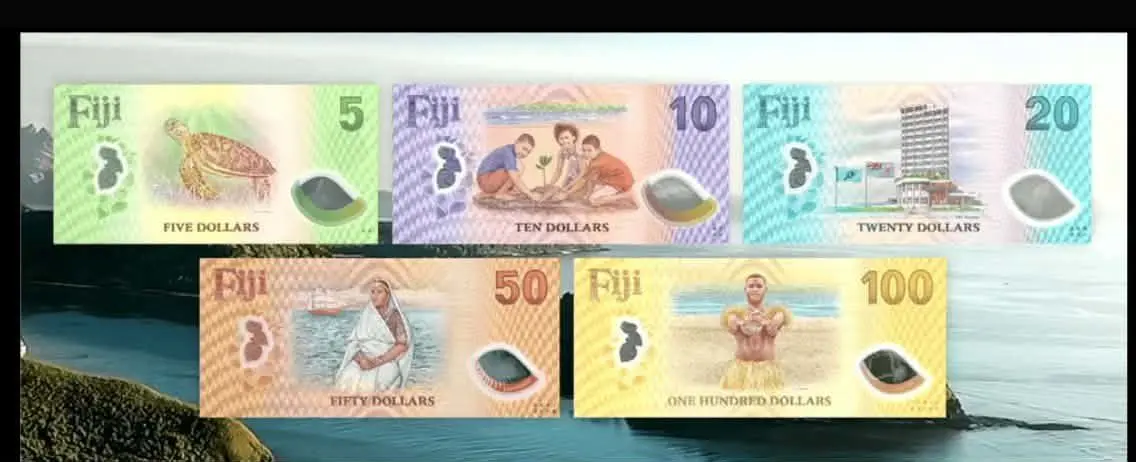
The United Blind Persons of Fiji (UBP) has raised serious concerns over the accessibility of the new banknotes introduced by the Reserve Bank of Fiji (RBF) in December 2025.
UBP said the new currency does not adequately meet the needs of blind and low‑vision persons, with members across the country reporting difficulty in independently identifying banknote denominations.
In a media release, the organisation said the issue has affected daily financial transactions, reducing confidence, safety and independence among users.
Related stories
"Since the introduction of the new notes, UBP members throughout the country have reported persistent challenges in independently identifying banknote denominations, directly impacting their ability to manage daily financial transactions with confidence, safety, and dignity," the organisation stated.
One of the main concerns is the removal of clear size differences between denominations. Previous banknotes featured a noticeable two‑inch size variation, introduced after consultation with UBP, which allowed blind and low‑vision users to distinguish notes by touch.
UBP said the new banknotes no longer provide a detectable size difference, making it difficult for users to identify denominations independently.
"However, with the newly launched banknotes, this size distinction is no longer easily detectable, making it extremely challenging for persons with visual impairment to tell denominations apart."
The organisation also criticised the lack of meaningful consultation with persons with visual impairment during the design of the new currency, noting that UBP previously sat on the Currency Committee and had contributed to accessibility improvements in earlier banknote series.
"UBP is also particularly concerned about the absence of meaningful consultation with UBP and persons with visual impairment during the design and development of the new currency.
"This is especially disappointing given UBP’s previous representation on the Currency Committee and the successful consultation process that led to improved accessibility features in earlier banknote series."
While the new notes include raised dot markings, UBP said these do not follow recognised Braille standards and are ineffective. It said the $50 note carries eight raised dots that do not represent any Braille symbol, while the dot arrangement on the $100 note also does not correspond to any recognisable denomination.
"For example, the $50 banknote contains eight raised dots, which do not correspond to any recognised Braille symbol. Similarly, the $100 banknote features raised dots arranged horizontally, a configuration that does not represent any Braille character or denomination. As a result, these tactile markings do not assist blind users in identifying the notes and instead create confusion and uncertainty."
According to UBP, the unclear tactile features increase dependence on others, raise the risk of financial error or exploitation, and undermine equal participation in economic life.
The organisation has called on the RBF to acknowledge the concerns, consult disability stakeholders, review the accessibility of the current banknote series and adopt internationally recognised best practices in future designs.
UBP said accessible currency is a fundamental right and that Fiji’s obligations under the Rights of Persons with Disabilities Act 2018, the National Disability Policy 2024–2033 and the United Nations Convention on the Rights of Persons with Disabilities should be reflected in the design of national currency.
UBP said it remains willing to engage with the RBF to improve accessibility.