PM had no authority in FICAC dismissal, court hears
Lawyer Tanya Waqanika argues the Prime Minister breached the Constitution in advising the President to revoke Barbara Malimali’s appointment.
Monday 27 October 2025 | 13:00
Updated 27 October 2025 | 22:07 FJT

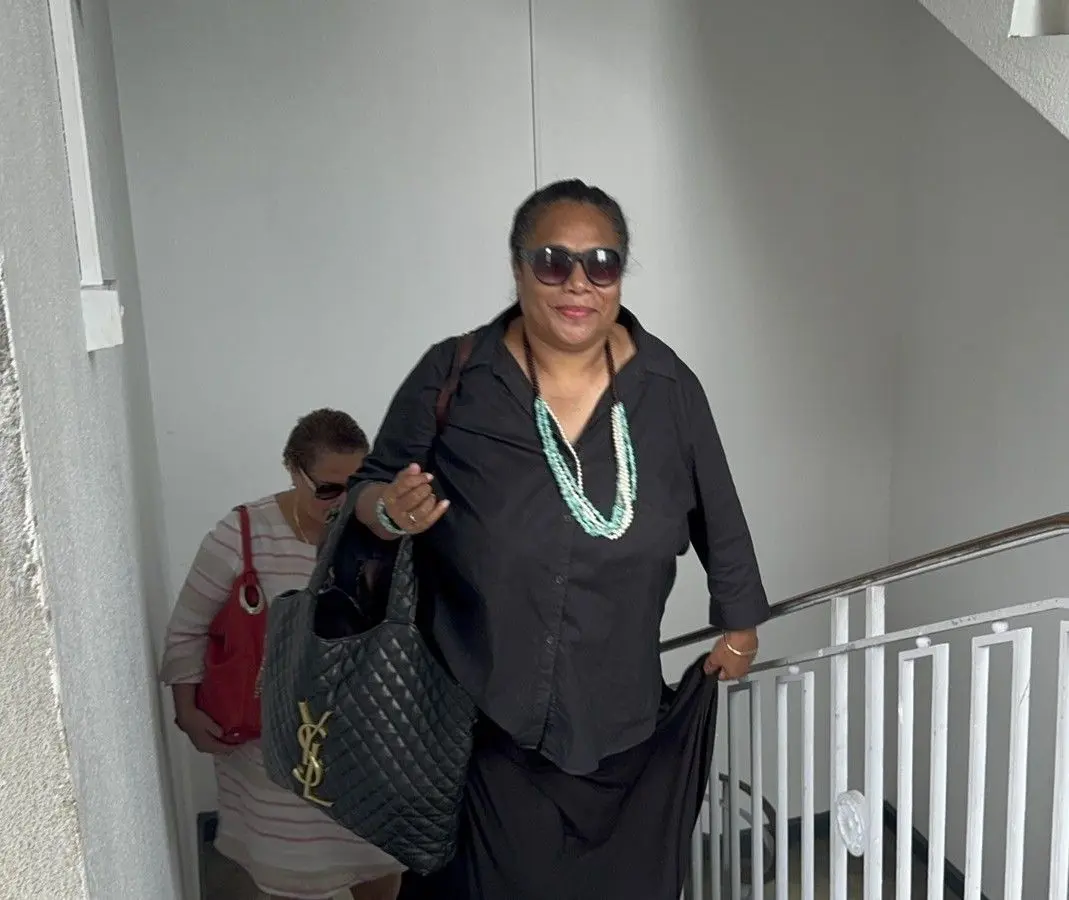
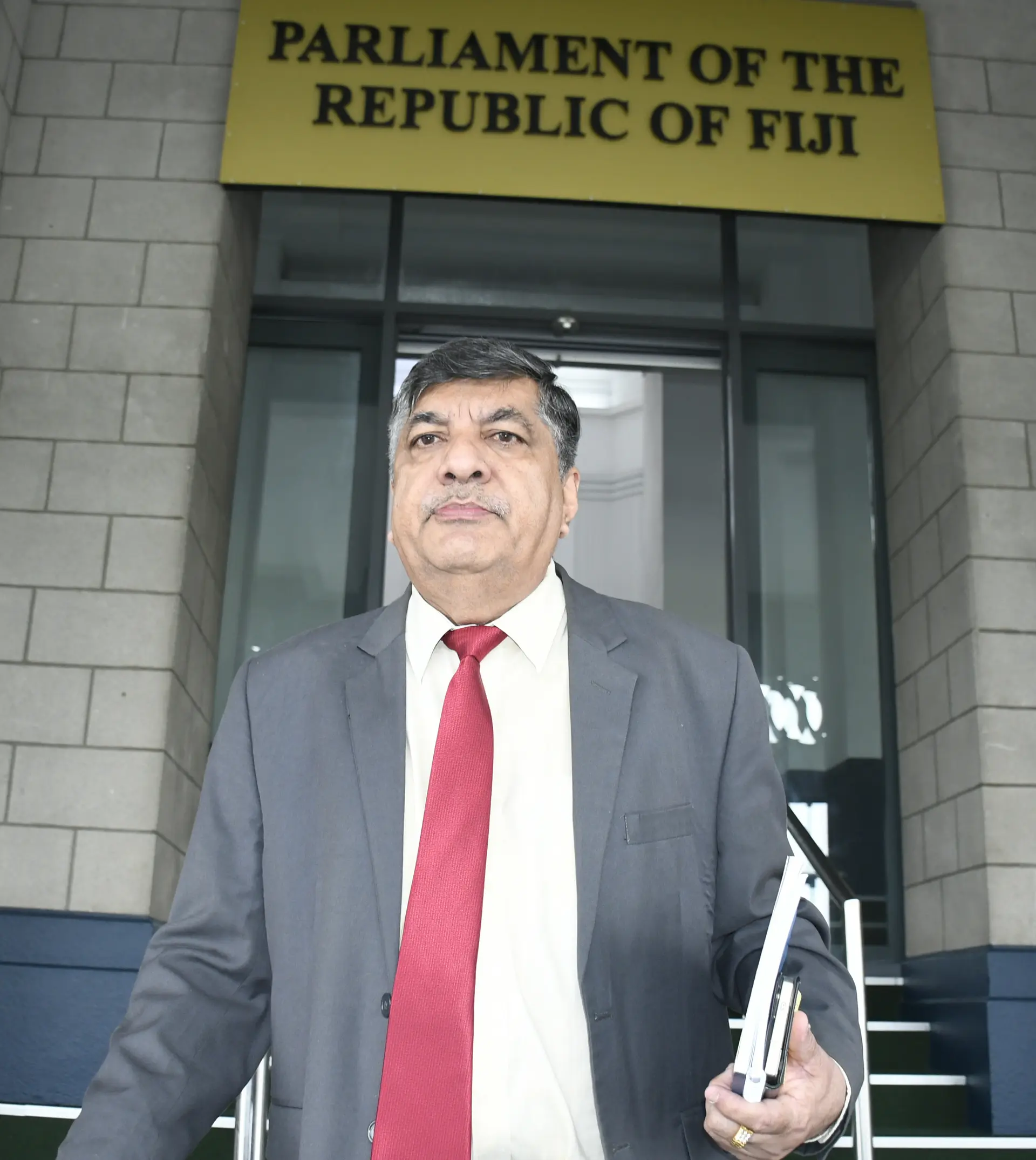
Former FICAC Commissioner Barbara Malimali on her way to court this morning.
Photo: Asenaca Ratu
The Prime Minister, Sitiveni Rabuka, acted unlawfully when he advised President Ratu Naiqama Lalabalavu to revoke the appointment of Barbara Malimali as Commissioner of the Fiji Independent Commission Against Corruption (FICAC), the Civil High Court in Suva heard today.
Malimali’s lawyer, Tanya Waqanika, made the argument firmly during the hearing, which drew a packed courtroom of supporters, law students, and legal professionals.
The case stems from Malimali’s termination on May 29, following the release of a Commission of Inquiry (CoI) report that deemed her appointment unlawful.
Related stories
Applicant’s submission
Ms Waqanika presented a 66-page submission, arguing that PM Rabuka breached Section 16 of the 2013 Constitution by advising the President to dismiss her client. She contended that the Prime Minister had no authority in the matter and that the process of Malimali’s removal was unlawful, unfair, and ultra vires (beyond legal authority).
She said there must be a ‘separation of powers’, adding that a proper investigation into Malimali’s appointment should have been conducted. However, she claimed Mr Rabuka avoided this due to the cost involved.
Ms Waqanika said her client was unaware of any allegations against her and only learned of the CoI report through social media. She also revealed that a complaint from former Acting Deputy FICAC Commissioner, Francis Pulewai, surfaced just three days before Malimali assumed office.
She argued that only the Judicial Service Commission (JSC) has the authority to advise the President on such matters.
Ms Waqanika pleaded with the court, stating that Malimali has been unemployed since her dismissal and has faced harassment and defamation online, making it difficult for her to secure work.
“Given her revocation was unlawful, she remains the FICAC Commissioner, but we leave that for the court to decide,” she said.
Defendants' submission
Deputy Solicitor General Eliesa Tuloma, representing the President and the Attorney-General’s Office, argued against Malimali’s application, citing Sections 82 and 83 of the 2013 Constitution, which he said gave PM Rabuka the right to advise the President.
Mr Tuloma told the court that both the JSC and the Attorney-General were implicated in the CoI Report, prompting a reconsideration of who should advise the President.
Mr Rabuka’s lawyer, Simione Valenitabua, stressed in court that Mr Rabuka’s move to advise the President was constitutional, citing Section 3 of the Constitution. He sought the court’s indulgence to interpret Sections 3(1) and 3(2) in a manner that would reasonably allow Mr Rabuka to be the sole advisor to the President.
Mr Tuloma further argued that when applying for the FICAC Commissioner position, Malimali failed to:
- Provide her background history with the JSC or the Legal Practitioners Unit (LPU)
- Disclose her involvement in an investigation with FICAC
He said the CoI Report had already been endorsed, and therefore the High Court could neither review nor overturn it.
Ms Waqanika, who delivered the final rebuttal, dismissed the defendant’s claims as “hogwash,” asserting that their actions undermined the importance of maintaining independent institutions. She argued that Mr Tuloma’s claim regarding the President’s limited powers over the past 16 years was due to the former FijiFirst Party’s control over all aspects of governance.
She described Malimali’s removal as a “modern-day coup.”
Justice Tuiqereqere is expected to deliver his ruling on January 23, 2026.