Inflation and fuel costs cut into market vendors' profits
Vendors say rising fuel costs are driving up produce prices.
Friday 19 June 2026 | 13:00
Updated 19 June 2026 | 14:22 FJT
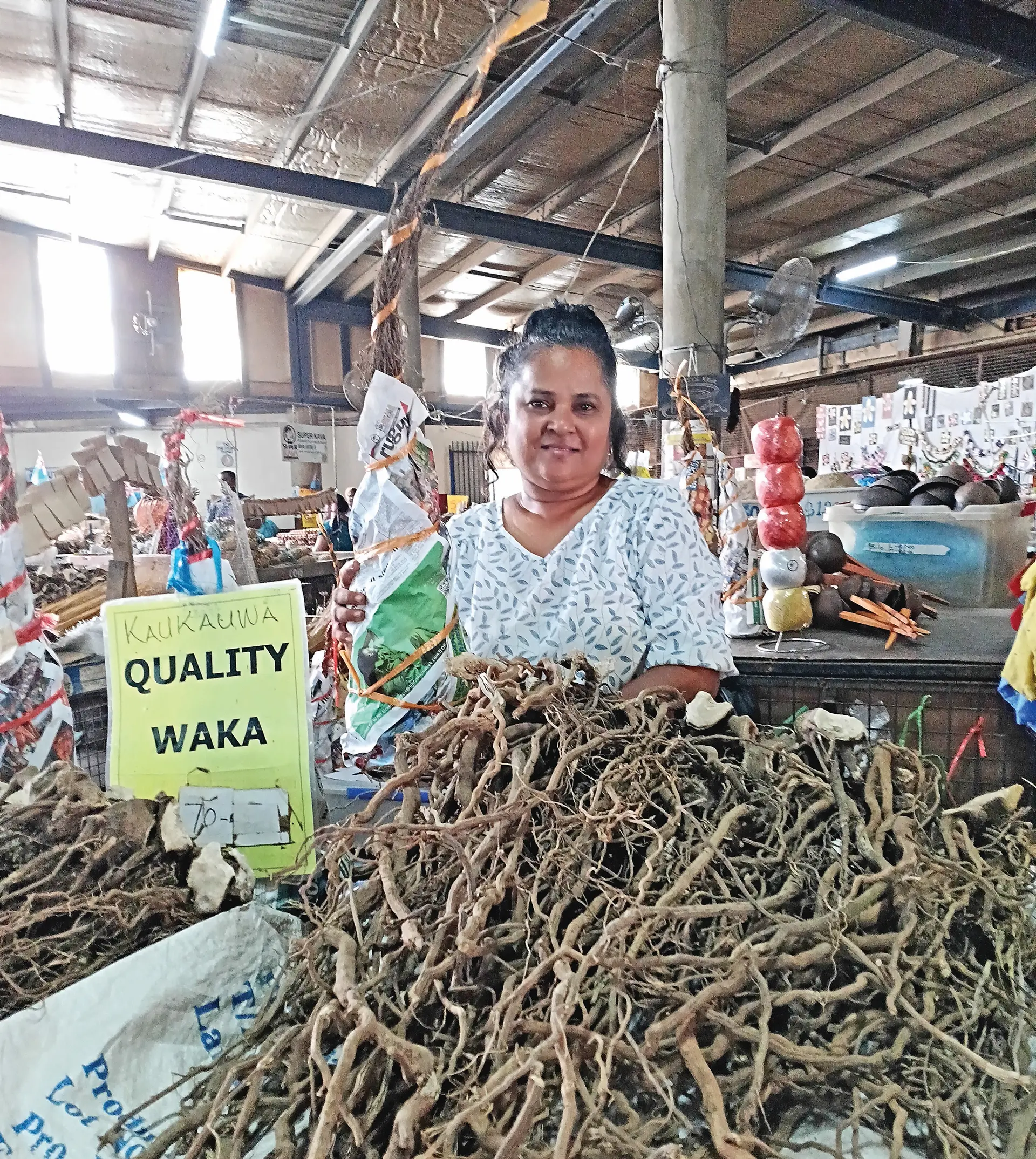
Market vendor Gendawati at the Lautoka Market.
Photo: Rishika Nair
Rising vegetable prices, increasing transport costs and shrinking profits are placing significant pressure on Lautoka market vendors.
The vendors hope the upcoming national budget will provide much-needed relief.
As the 2026-2027 National Budget announcement approaches on June 26, vendors say their earnings are being eroded while the cost of living continues to climb.
Related stories
One of the major challenges is the high cost of purchasing produce from farmers, driven largely by transport and fuel expenses.

Aerun Chand at the Lautoka Market
Photo: Rishika Nair
Lautoka kava vendor Aerun Chand said rising fuel prices had directly affected the prices charged by suppliers.
"The high fuel costs mean farmers sell kava to me at a higher price, and I have no choice but to pass some of those costs on to customers," Ms Chand said.
With households already struggling with inflation and higher food prices, vendors say customers are becoming more cautious with their spending.
"I am barely able to make any profit as my sales have dropped significantly," she said.
Vendor Gendawati, 67, said business activity had slowed considerably because of rising costs.
"My business is very slow nowadays because of the high costs," she said.
"If those costs do not come down, life will only get harder for everyone."
Vendors argue that targeted Government support for farmers and transportation services could help reduce retail prices and ease financial pressure on both sellers and consumers.
"If Government assists farmers or lowers transport costs, it would change the entire situation," she said.
"I could then lower my prices and sell fresh vegetables at more affordable prices."
As vendors await the national budget announcement, many hope policymakers will introduce measures aimed at reducing operating costs, stabilising food prices and supporting small businesses that continue to face inflationary pressures.