Seven oral cancer deaths recorded in Fiji in 2024
Health Assistant Minister says oral cancer must be treated as a cancer-control and health-system priority.
Monday 17 August 2026 | 16:30

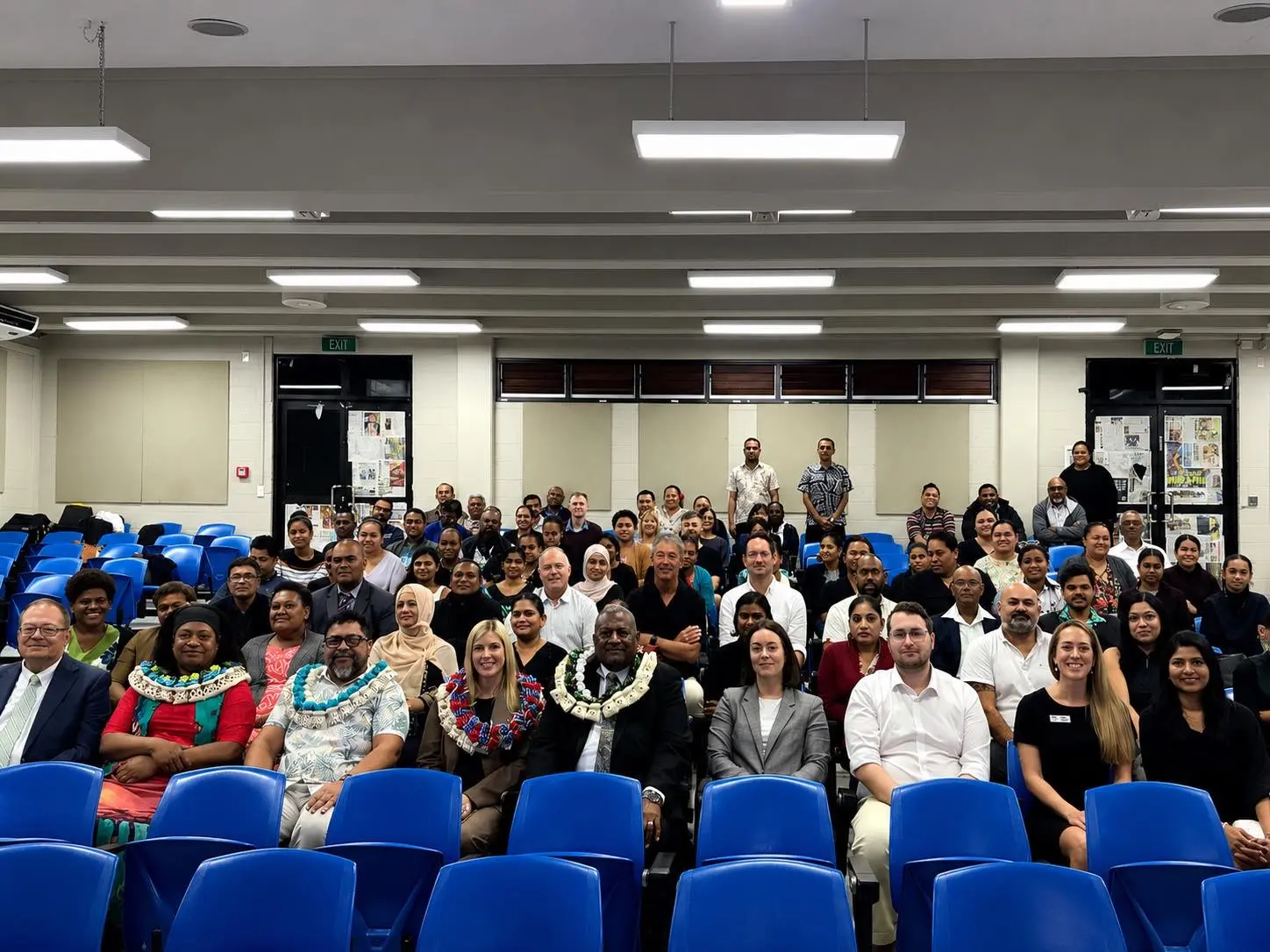
From left: Fiji National University College of Medicine, Nursing and Health Sciences Dean Dr Amelia Turagabeci, Smiles of the Pacific chairman Dr Abdul Aziz, NEOSS managing director Tracey Dickson, AssistantHealth Minister Penioni Ravunawa with staffs and students during the Pacifika Implantology Conference 2026 at FNU Pacifika Campus in Suva on August 16, 2026.
Photo Lavenia Waqanivanua
Fiji recorded an estimated 26 new cases of lip and oral cavity cancer in 2024, with seven deaths attributed to the disease, revealed the Assistant Minister for Health and Medical Services Penioni Ravunawa.
Speaking during the Pacifika Implantology Conference 2026 at Fiji National University’s Pasifika Campus in Suva today, Mr Ravunawa said oral cancer should be treated as a major public health priority, with early detection and stronger specialist capacity needed to improve survival and quality of life for patients.
He said oral cancer was no longer simply a dental concern but a wider cancer-control and health-system issue.
Related stories
“These figures underscore a critical reality. Oral cancer is not solely a dental concern. It is a cancer control priority,” he said.
Mr Ravunawa said oral cancer could begin silently, making early recognition by health professionals critical.
He identified persistent ulcers, unexplained swelling, unusual bleeding and difficulty swallowing, eating or speaking as warning signs requiring timely clinical attention.
Dental professionals had an important role beyond routine dental treatment, including identifying risk factors, recognising abnormalities, educating patients and ensuring timely referrals.
“Prevent where possible. Detect early where possible. Treat decisively where necessary,” Mr Ravunawa said.
He said early diagnosis could make the difference between limited intervention and extensive reconstructive surgery, while also determining whether a patient retained important functions and, in some cases, survived the disease.
Fiji and other Pacific Island countries faced challenges in providing specialised healthcare because of geographical isolation, high costs of specialist services, limited workforce capacity, and financial and logistical constraints.
However, he said these challenges should not result in lower standards of care.
“Geography may define our location, but it must not define the quality of care to our people,” he said.
He said partnerships such as Smiles for the Pacific were helping Fiji strengthen its ability to manage complex oral and maxillofacial conditions by combining international expertise with local clinical knowledge.
The initiative has focused on education and treatment, with Mr Ravunawa noting that knowledge transferred to local health professionals could benefit generations of patients.
He also highlighted support that had provided specialised equipment to Fiji, including surgical motors, specialised attachments, handpieces and bone-cutting systems for complex oral and maxillofacial procedures.
The equipment will be donated to the Ministry of Health and Medical Services Super Dental Clinic.
Mr Ravunawa said Fiji must continue developing local specialist capacity while using international partnerships to strengthen, rather than replace, the country’s health system.
“Our objective remains clear, bring world-class knowledge to the Pacific, build world-class capability within the Pacific, and deliver world-class care for our Pacific people,” he said.
He said the ultimate goal was to ensure Pacific people, regardless of where they lived, had access to timely, safe and dignified oral healthcare.