Fiji gains stronger legal backing in climate fight
Professor Patel, Vice-Chancellor of India’s Rashtriya Raksha University and a sitting member of the United Nations International Law Commission, said three landmark advisory opinions from the International Court of Justice (ICJ), the International Tribunal for the Law of the Sea (ITLOS), and the Inter-American Court of Human Rights had reshaped the legal landscape for small island states.
Saturday 28 February 2026 | 09:00

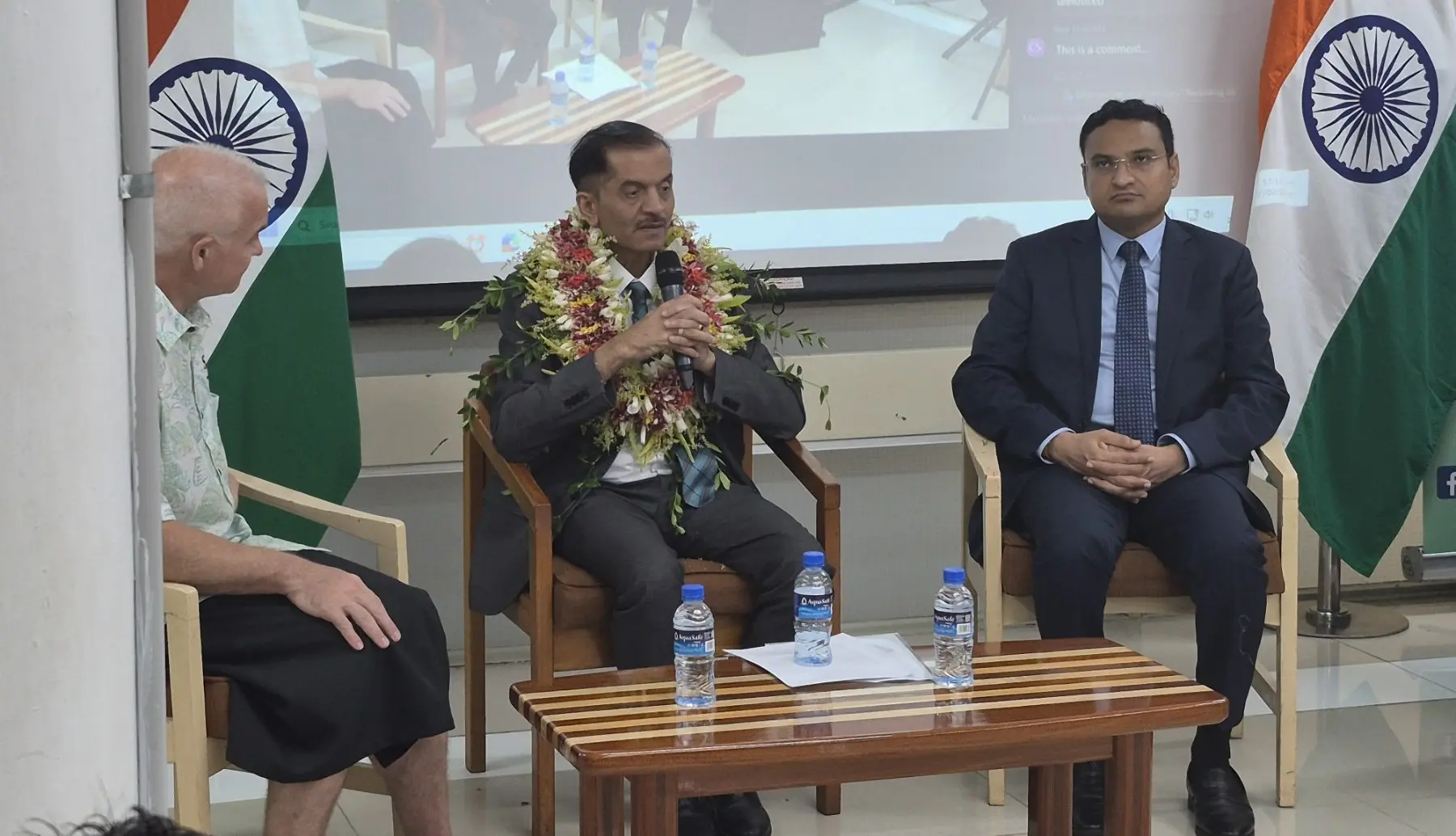
Professor Bimal Patel (middle) and the Indian High Commissioner to Fiji Shri Suneet Mehta (right) during a public lecture held at the University of the South Pacific’s Statham Campus in Suva on February 27, 2026.
Photo: Kaneta Naimatau
Fiji and other Pacific Island nations now have stronger legal backing to demand action and accountability from major polluters — and their statehood remains protected under international law, regardless of rising sea levels.
That was the message delivered by leading international law expert Professor Bimal Patel at a public lecture at the University of the South Pacific’s Statham Campus in Suva last Friday.
Professor Patel, Vice-Chancellor of India’s Rashtriya Raksha University and a sitting member of the United Nations International Law Commission, said three landmark advisory opinions from the International Court of Justice (ICJ), the International Tribunal for the Law of the Sea (ITLOS), and the Inter-American Court of Human Rights had reshaped the legal landscape for small island states.
Related stories
“Countries like Fiji or small island states now have an opportunity,” Professor Patel told this masthead.
“The jurisprudence of ITLOS, ICJ and the Inter-American Court of Human Rights have provided them the legal documentation, legal clarity with which they can engage the global north, financial institutions in pressing for their concerns, their needs and their interests.”
While the advisory opinions are not legally binding, they formally recognise climate change as an existential threat and affirm that countries responsible for serious climate harm may face international consequences, including possible reparations or compensation.
On concerns that rising seas could threaten the sovereignty of Pacific nations, Professor Patel was unequivocal.
“Statehood is part of customary international law — no state loses its statehood because of sea level rising,” he said.
“The three opinions and the International Law Commission reports are absolutely clear.”
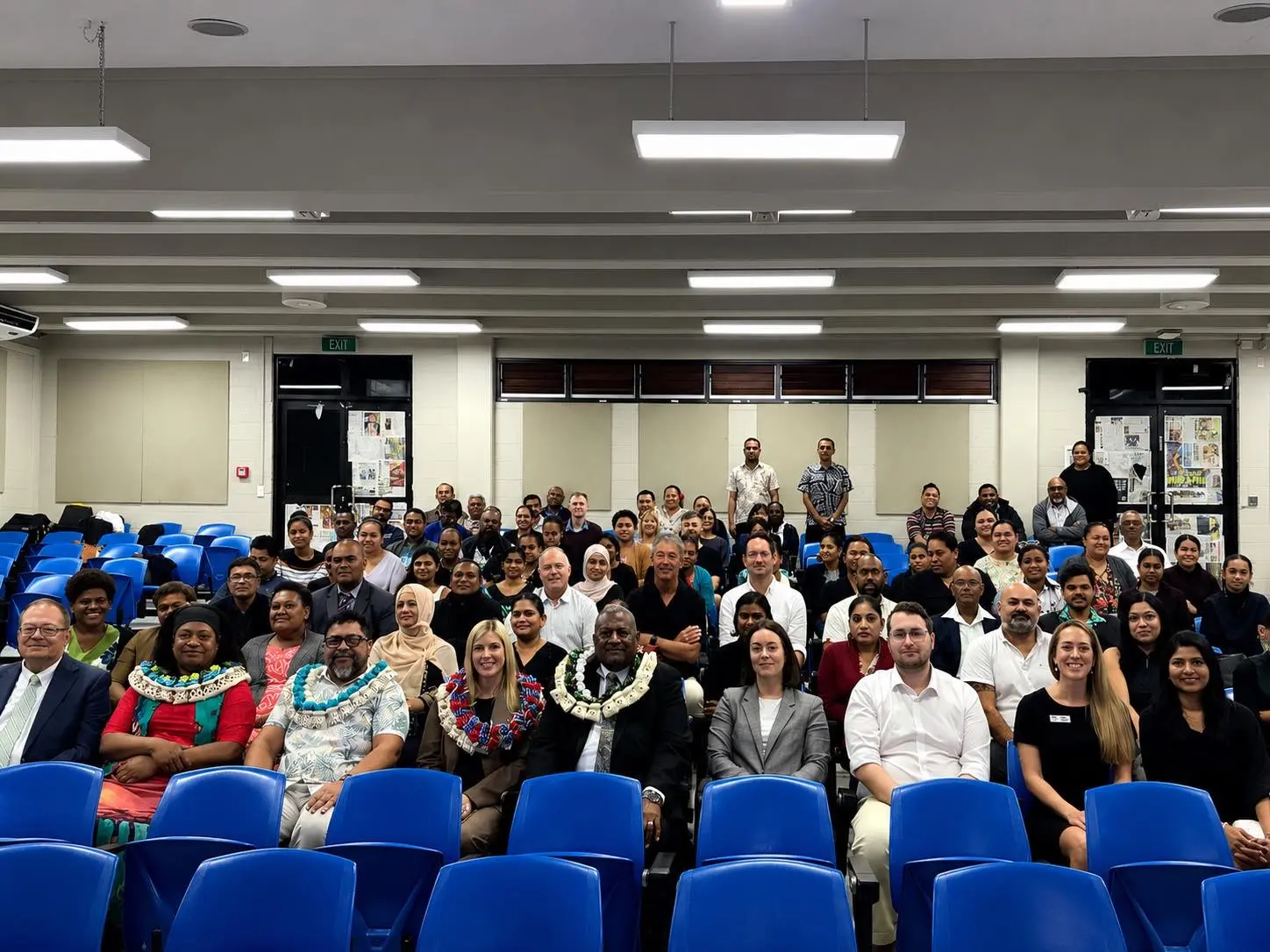
The lecture was co-hosted by the High Commission of India and USP’s Centre for Sustainable Futures and attended by members of the diplomatic community, academics and the public.
Indian High Commissioner Shri Suneet Mehta welcomed guests and highlighted the partnership between India and USP, including the establishment of the Sustainable Coastal and Ocean Research Institute (SCORI), funded by India to advance ocean and coastal research for Pacific Island countries.
Professor Patel also emphasised that responsibility for addressing climate change does not rest solely with industrialised nations.
“Neither industrialised countries nor developing countries alone can overcome this existential problem,” he said.