Hope, Concern Not Enough – Action Must Follow Latest IPCC Findings
Even though effective adaptive strategies are executed, there are limits to how much other species and people can adapt.
Sunday 06 March 2022 | 16:32
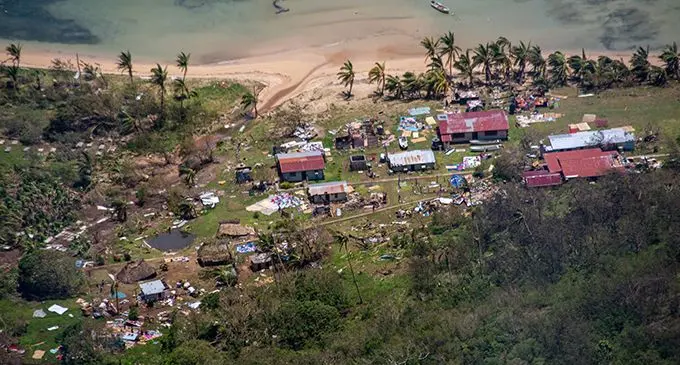
The devastation left behind by category 5 Tropical Cyclone Yasa in December, 2021. Photo: Leon Lord
Sea level rise and sea inundation along Fiji’s coastal communities will worsen if big carbon emitters carry on with its business-as-usual attitude.
Already, several villages and communities are contemplating relocation. At least 40 of these communities need to move urgently according to Government.
And when you add global heating to the mix – it’s expected to affect our daily lives, from the things we can grow, to how we farm.
Related stories
At least these are some of the scenarios outlined in the latest Intergovernmental Panel on Climate Change (IPCC) Report.
The report, Climate Change 2022 Impacts, Adaptation and Vulnerability by ‘Working Group II’ is the second installment of the IPCC’s Sixth Assessment Report (AR6).
The Working Group II report looks at the impacts of climate change on nature and people. It explores the future impacts at different levels of warming, the resulting risks and offers options to strengthen nature and society’s resilience to ongoing climate change, to fight hunger, poverty and inequality.
Like previous reports, the science is bleak for Fiji and the Pacific.
Professor Patrick Nunn, one of the lead authors of the ‘Small Islands’ chapter in the report broke down the technical jargon.
“In a warmer world, we will find it more difficult to sleep at night so the temptation to use air-conditioning (which is often run by power that pumps carbon dioxide into the atmosphere) is often hard to resist.
“But it won’t help the big picture. We need to design houses – like bure or Samoan fale – that maximise the amount of natural cooling for people inside without using electricity.”
Embedding such indigenous and local knowledge as well as integrating cultural resources into decision making has been identified as a key adaptation option in the report.
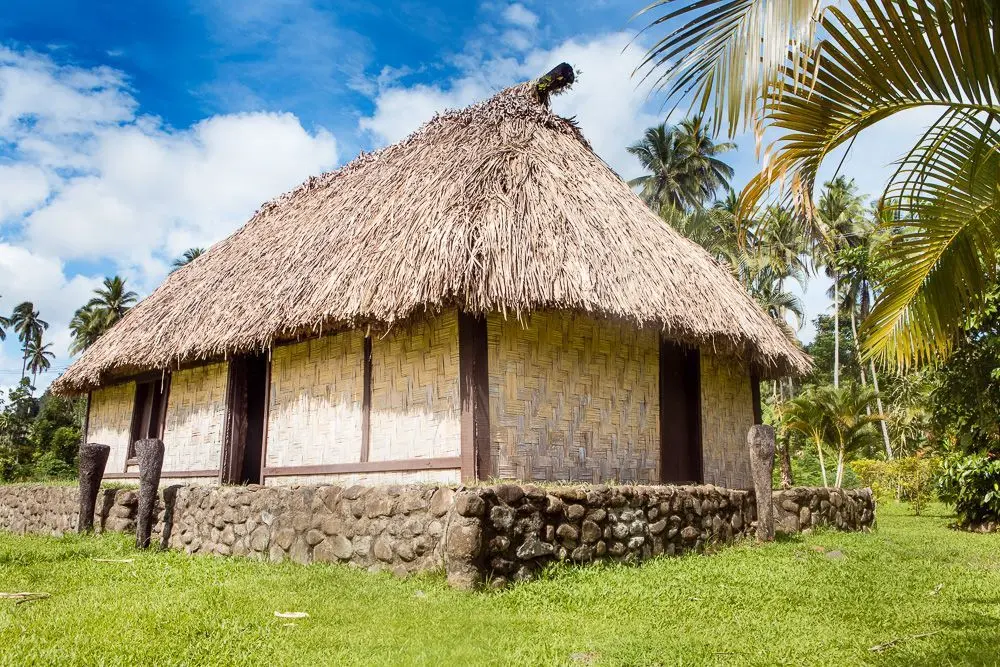
A Fijian bure is ade from natural fibre materials.
With the preparatory work to COP27 in Sharm el-Sheikh, Egypt already well underway, Professor Howden is confident that the IPCC report will have a significant impact on commitments, promises and delivery.
Across the globe, leading climate negotiators have singled out COP27 as the year to deliver.
“It is really important for the Pacific to maintain a strong voice in these discussions as part of their arguments that they put forward in the next Conference of the Parties, the next Pacific Island Forum meeting, and all other points of discussion which convey the urgency of action on climate change to other countries,” he said.
Professor Howden has had over 24 different roles in the publication of the IPCC report. The latest when he was the vice chair of the IPCC Working Group II for the Sixth Assessment Cycle.
UN SECRETARY GENERAL .
Delay means death.
United Nations Secretary-General, António Guterres was blunt about the reality the report highlighted.
“You cannot claim to be green while your plans and projects undermine the 2050 net-zero target and ignore the major emissions cuts that must occur this decade.
“We need new eligibility systems to deal with this new reality.”
He added that the Glasgow commitment on adaptation funding is clearly not enough to meet the challenges faced by nations on the frontlines of the climate crisis.
“I’m also pressing to remove the obstacles that prevent small island states and least developed countries from getting the finance they desperately need to save lives and livelihoods,” he said.
“I take inspiration from all those on the frontlines of the climate battle fighting back with solutions.”
UN ENVIRONMENT PROGRAMME
Executive Director of the UN Environment Programme, Inger Andersen said we are in an emergency, heading for a disaster.
“We can’t keep taking the hits and treating the wounds. Soon those wounds will be too deep, too catastrophic, to heal. We need to soften and slow the blows by cutting greenhouse gas emissions.
“But we also need to cushion the blows by picking up our efforts to adapt to climate change – which have been too weak for too long.”
RELEASE OF NEXT REPORT
The Working Group III contribution is scheduled to be finalised in early April 2022.
It is responsible for assessing the mitigation of climate change – responses and solutions to the threat of dangerous climate change
This can be done by reducing emissions and enhancing sinks of the greenhouse gases that are responsible for global warming.
Feedback: rosi@fijisun.com.fj