$466m Vualiku project to transform tourism in Vanua Levu
The project aims to position Vanua Levu as a premier sustainable tourism destination.
Wednesday 22 January 2025 | 08:15


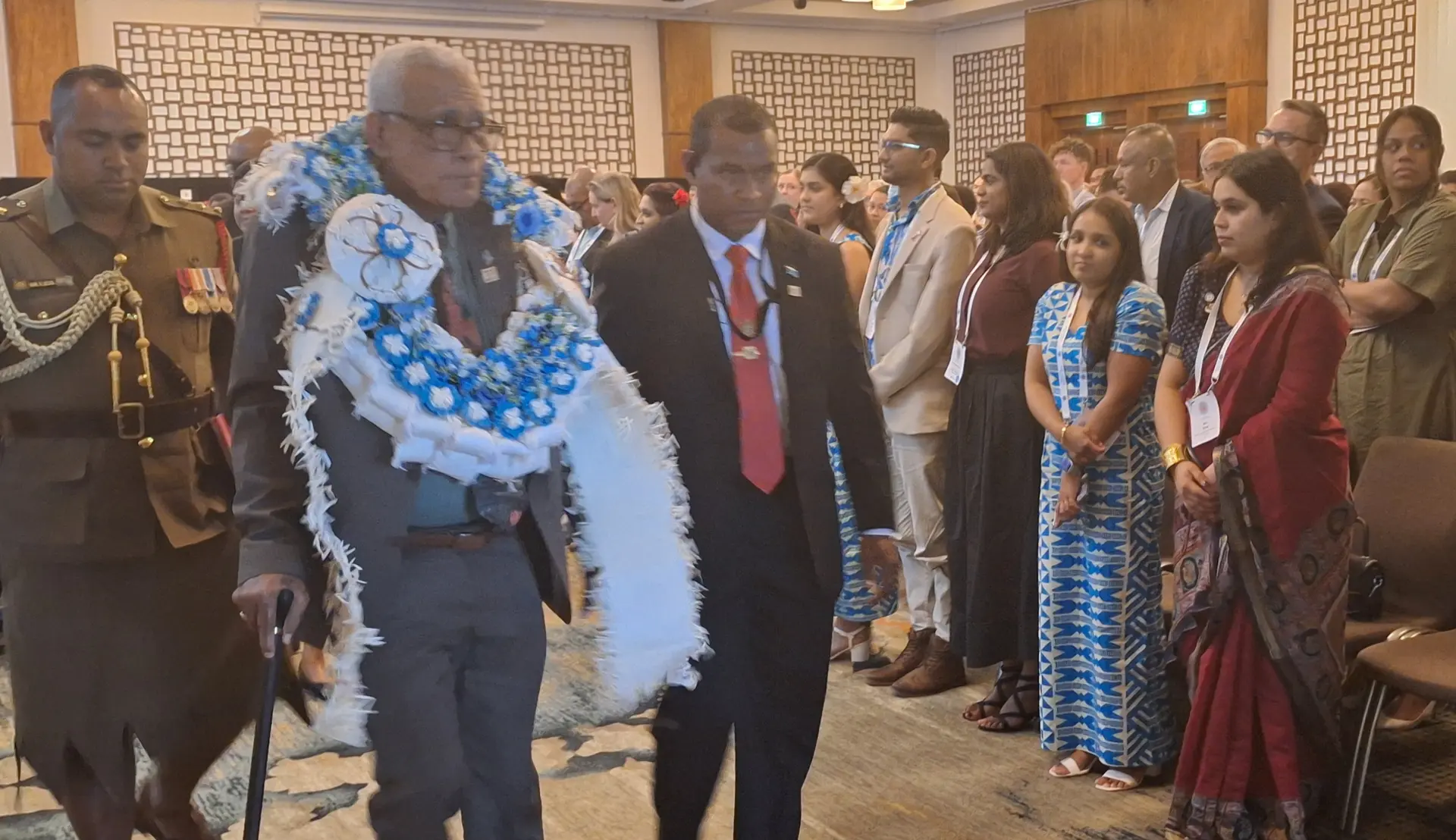
Permanent Secretary for the Ministry of Tourism and Civil Aviation, Salaseini Daunabuna, during the 2025 Fiji National University FNU Conference on Resetting Technical and Vocational Education and Training (TVET) and Higher Education at the Sofitel Fiji Resort and Spa at Denarau, Nadi. Photo: FNU
The $US200 million (FJ$466 million) Vualiku project is set to unlock Vanua Levu's untapped potential, bringing transformative changes to the region's tourism sector.
The Permanent Secretary for Tourism and Civil Aviation, Salaseini Daunabuna, shared details of the project yesterday in Nadi during the 2025 Fiji National University (FNU) Conference on Resetting Technical and Vocational Education and Training (TVET) and Higher Education at the Sofitel Fiji Resort and Spa, Denarau Island.
Ms Daunabuna said the project would not only redefine how visitors experience various hotspots across Fiji but also cater for the next decade.
Related stories
Delivered through a multi-phase, "overlapping" approach, each phase builds on the previous to ensure long-term impact.
"This is the first time the World Bank is delivering a tourism project of this scale in the Pacific region," Ms Daunabuna said.
"The project's phases are designed to yield results that feed directly into the next phase."
The total cost of $US200 million (FJ$466 million) includes a $US61.5 million (FJ$143 million) first phase.
The project aims to position Vanua Levu as a premier sustainable tourism destination.
"There is potential in Vanua Levu that has not yet been unlocked. Securing funding and the political will to make this happen are key to ensuring the project's success and sustainability," she said.
Key components of the project
The Vualiku project consists of three core components: Developing Sustainable Tourism (DST) - Allocated $US12.45 million (FJ$29 million), this component aims to overcome barriers and develop sustainable tourism practices.
It includes an integrated tourism masterplan, environmental and social assessments, and support for micro, small, and medium enterprises (MSMEs), particularly women- and community-led businesses.
Building Resilient Tourism Infrastructure (BSTI)- Budgeted at $US40.05 million (FJ$93.41 million), it focuses on enhancing connectivity and infrastructure in key tourism hubs like Savusavu, Labasa, and Taveuni. It includes upgrading essential services and resilient infrastructure, such as cityscape improvements. Enhancing Tourism Capacity (ETC) - This component focuses on enhancing stakeholder capacity and managing the overall project delivery.
Collaboration with partners such as Airports Fiji and the Fiji Roads Authority (FRA) will be critical to the infrastructure component's success, Ms Daunabuna said.
Community and private sector engagement
Fiji receives over one million visitors annually, with 980,000 arriving via airports and 80,000 through cruise ships. Ms Daunabuna emphasised that the success of the Vualiku project depends on collaboration with the community and the private sector.
"We can create the enabling environment, but it is really the people who will make this happen," she said.
The first phase (2024-2027) will deliver 12 core projects, followed by 37 projects over the next two years, and 22 from 2026 to 2027. A key outcome will be a 25-year integrated tourism masterplan for Vanua Levu, covering areas such as the Natewa Peninsula, Natewa Bay, Labasa, and Taveuni.
"We will produce a detailed investment and financing plan to identify opportunities in both the public and private sectors," Ms Daunabuna said.
Monitoring, evaluation, and investment promotion will also form integral parts of the project's development strategy.
Feedback: mereleki.nai@fijisun.com.fj