539 traditional titles filled in Ra
Mr Vasu said Fijian Holdings Limited was helping strengthen indigenous participation in key sectors of the economy while building commercial assets for future generations.
Saturday 20 June 2026 | 13:00
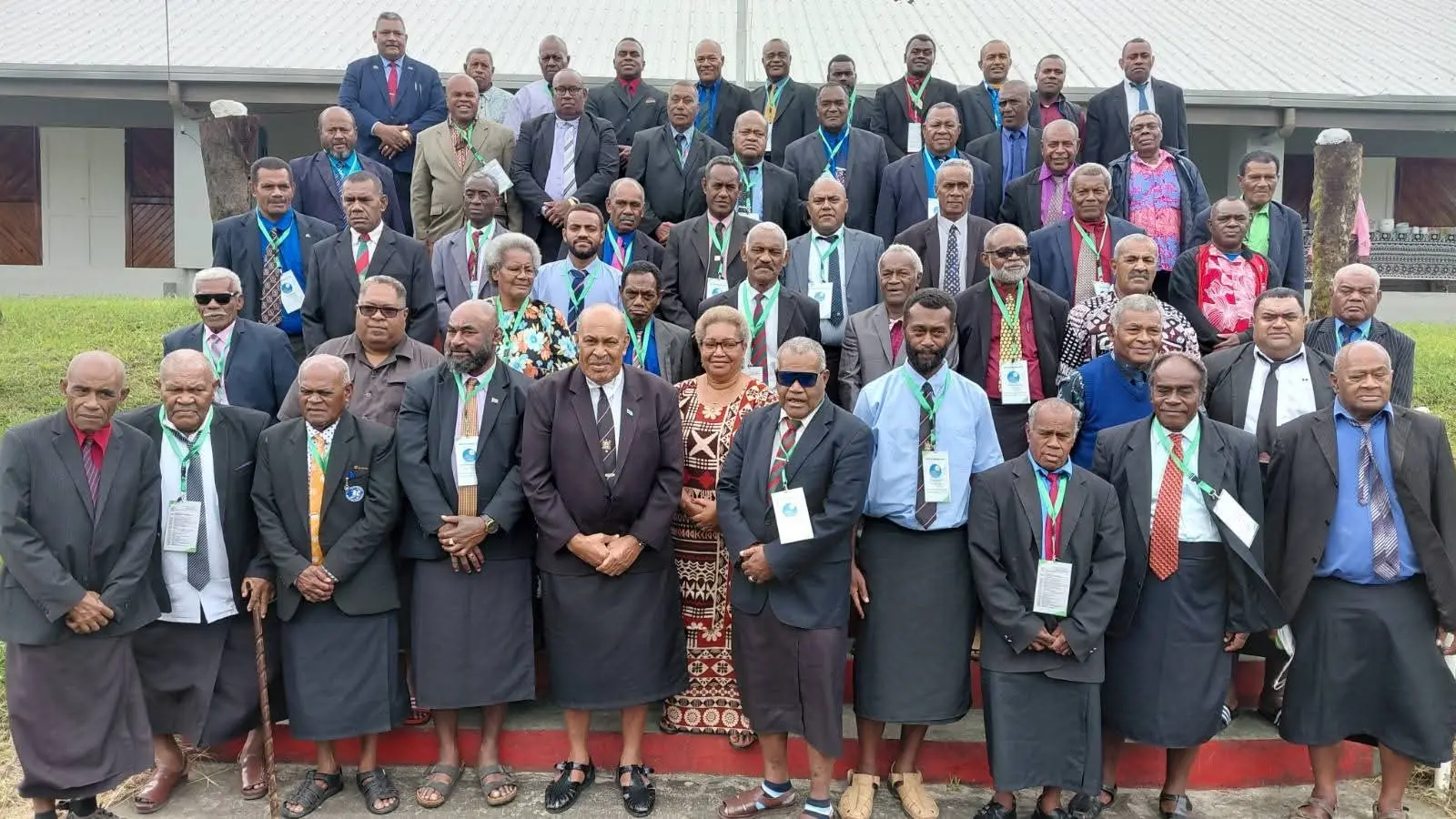
Minister for iTaukei Affairs Ifereimi Vasu {front row/ fifth from left)t, with representatives from Ra in Nanukuloa.
A total of 539 traditional titles in Ra have been filled, representing about 81 per cent completion, says Minister for iTaukei Affairs Ifereimi Vasu.
Speaking on developments within the iTaukei sector, Mr Vasu said the achievement highlighted the important role of the iTaukei Lands and Fisheries Commission in recording and resolving traditional leadership matters.
"Strong and recognised traditional leadership is essential for unity, decision-making, land development and the effective implementation of village and provincial programmes," he said.
Related stories
Mr Vasu urged the remaining communities to complete the required processes through consultation, respect for custom and cooperation with the commission.
He said the iTaukei Trust Fund Board continued to support the preservation of language and culture, education, research, institutional capacity and community initiatives.
Mr Vasu said Fijian Holdings Limited was helping strengthen indigenous participation in key sectors of the economy while building commercial assets for future generations.
He also highlighted the work of the Centre for Appropriate Technology and Development at Nadave, which equips young iTaukei people with practical and technical skills to help them secure employment, establish businesses and contribute to their communities.
"These institutions can provide pathways, finance, technical advice and protection. But success will still depend on the discipline and unity of our people," he said.
Mr Vasu said the 'vanua' of Ra must continue to pursue meaningÂful development projects, establish strong governance structures, protect communal assets and ensure benefits are shared by current and future generations.
"The purpose is not simply to receive grants or lease money. The purpose is to convert land, knowledge, culture and institutional support into lasting household and community prosperity," he said.








