A-G: Building Resilience Can Bring Certainty to Economies
‘We need to bring new tools, new perspectives and new mindsets in tackling our world’s greatest development challenges’
Sunday 20 October 2019 | 10:45

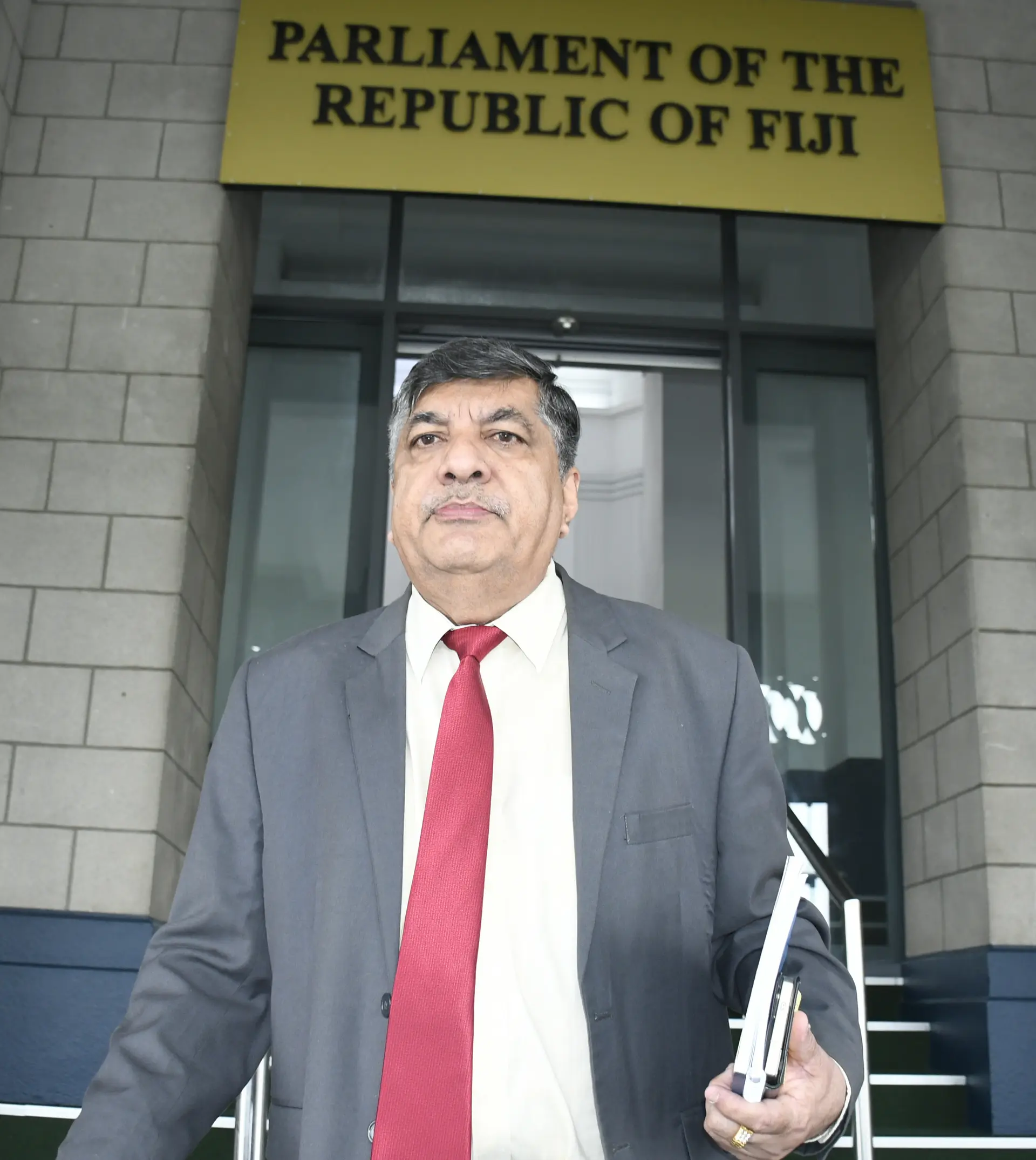
Attorney-General and Minister for Economy Aiyaz Sayed-Khaiyum says only by building resilience can we bring certainty to economies.
He adds that it will also empower growth and create a stable and growing demand for goods and services that fuels domestic, regional and international markets.
He says the growing severity of the climate threat has driven us into a complex and challenging landscape.
Related stories
73rd Plenary of the Boards of Governors of the World Bank Group and International Monetary Fund
“We need to bring new tools, new perspectives and new mindsets in tackling our world’s greatest development challenges,” he says.
Mr Sayed-Khaiyum made the remarks yesterday in his capacity as chairman of the Boards of Governors at the 73rd Plenary of the Boards of Governors of the World Bank Group and International Monetary Fund in Washington DC, United States.
It is 75 years on from the Bretton Woods Conference which marked the inception of these institutions and the multilateral system.
“My fellow Governors, the Bretton Woods System undoubtedly restored stability to the international economic order in the aftermath of World War II. But we’re not living in the world as it was in 1944,” he said.
“Our world is rapidly warming, new inequalities are arising, and the climate crisis is exposing those gaps and, in some cases, ripping them wide open.
“We need to bring new tools, new perspectives and new mindsets in tackling our world’s greatest development challenges. If we do so, we are confident that at the ripe age of 75, our rules-based multilateral system will still be agile enough to live up to its highest founding ideals and, indeed, leave no nation behind.”
“Ladies and gentlemen, when our predecessors gathered in New Hampshire in the summer of 1944, the world was suffering from monumental failures of its political and economic systems. With the fires of the Second World War still raging and decades of devastating conflict behind them, those leaders rightfully shut the door on the painful folly of unilateralism.
“Instead, they looked to co-operation – through a visionary multilateral system – as the ultimate guarantor of global peace and economic stability.”
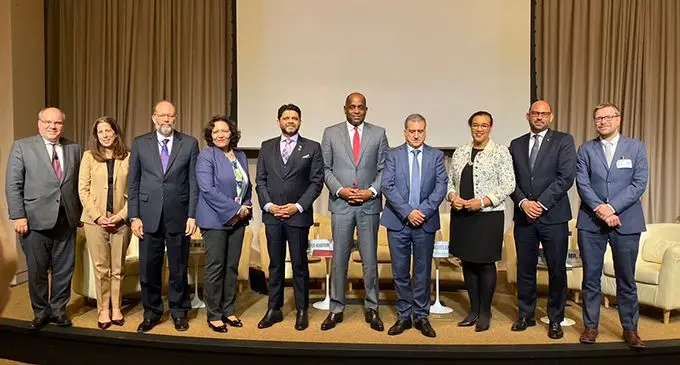
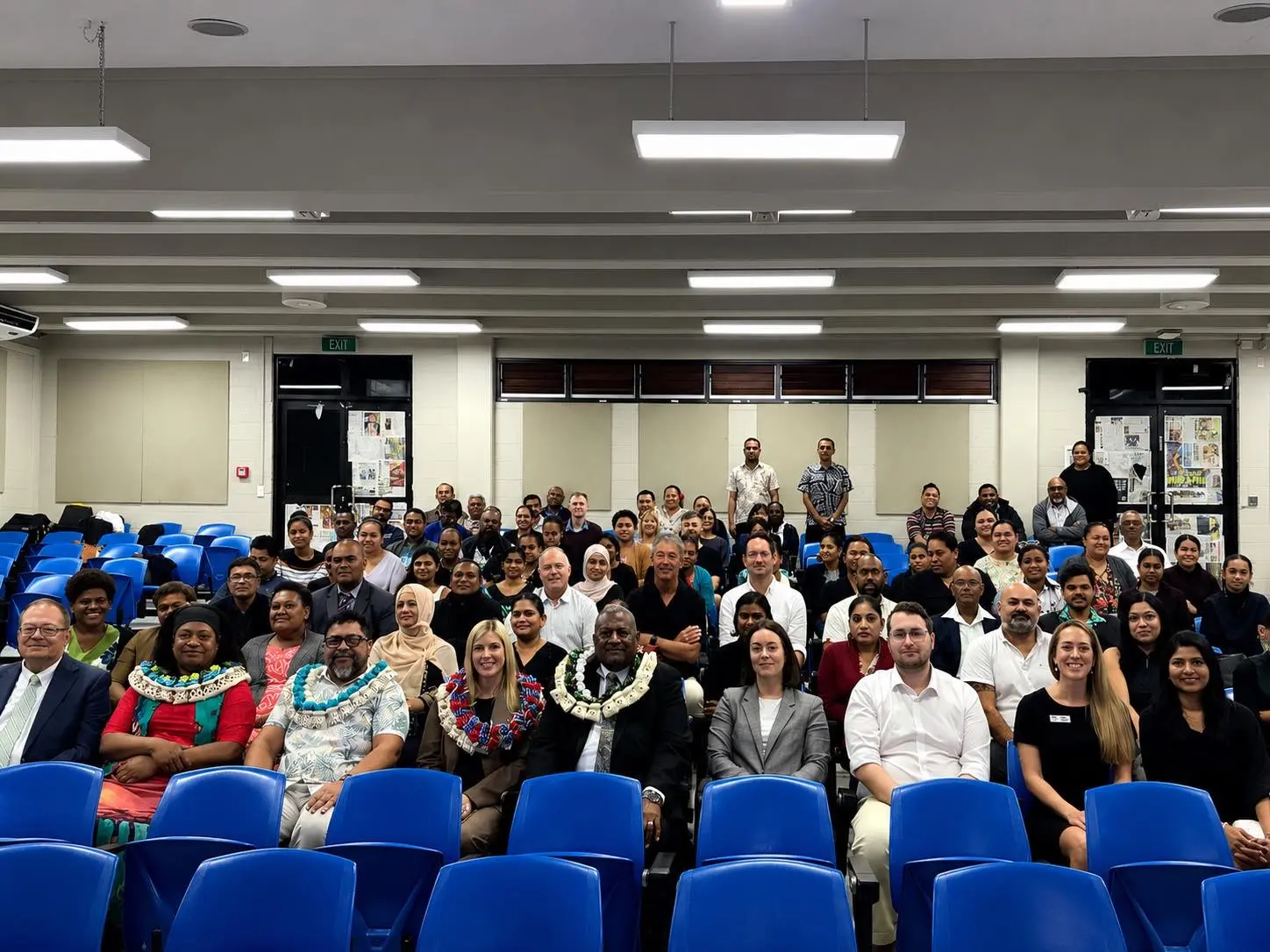
Attorney-General Aiyaz Sayed-Khaiyum (fifth from left), with delegates to the World Bank and International Monetary Fund meetings.
Bring innovation to the conversation
He urged the new leadership of the World Bank Group and the IMF to give this issue urgent attention.
He said the world’s larger economies must also continue to play their role to grow the pool of accessible and affordable finance.
“And we look forward to the replenishment of IDA 19 and beyond.
But even the full weight of public-sector finance, coupled with MDB financing, cannot fill every gap in resilience. We must also enlist the resources, expertise and ingenuity of the private sector.”
He said as ministers for finance and economy, and leaders of financial institutions, it is on them to bring innovation to this conversation. Their business-as-usual mentality had unlocked only a tiny fraction of private finance in the adaptation space.
“Let’s re-engineer the conventions. Let’s market the real opportunities in resilient investments. Let’s ramp up liquidity support and credit guarantees. Let’s create new markets for insurance. Let’s develop new means of assessing risks. And let’s build new tools and make smarter use of the ones already at our disposal.”
He said international financial institutions could also wield their convening power to leverage support from new partners; investment funds, sovereigns, and philanthropic organisations to lighten the burden of the costs on nations without disrupting the securities market.
They could also encourage conscientious investing that supported resilient sustainability, he said.
He said these were vital pathways to a vibrant and resilient global economy.
He said if they brought new tools, new perspectives and new mindsets “we are confident that at the ripe age of 75, our rules-based multilateral system will still be agile enough to live up to its highest founding ideals and, indeed, leave no nation behind.”
Edited by Jonathan Bryce
Feedback: nemani.delaibatiki@fijisun.com.fj