Attorney-General: Nadi Magistrate's Court Decision Deeply Flawed
Mr Sayed-Khaiyum said he had the right to criticise the ruling of the court. He said he was not holding the court in contempt and just like anyone could criticise the ruling of the court.
Friday 17 April 2020 | 11:01


Attorney General Aiyaz Sayed-Khaiyum has brushed aside the notion that there was interference in the judiciary by the executive arm of the Government following criticisms of a ruling made by a magistrate in Nadi.
Mr Sayed-Khaiyum said he had the right to criticise the ruling of the court. He said he was not holding the court in contempt and just like anyone could criticise the ruling of the court.
Magistrate Siroma Turaga in his ruling had questioned the powers of Prime Minister Voreqe Bainimarama to call the curfew and the directives associated with it. Mr Sayed-Khaiyum had called the ruling flawed and missing the substance of the matter pertaining to the national crisis currently faced.
Related stories
He said an appeal to the rulings that acquitted three people was on its way. He said the Office of the Director of the Public Prosecutions and the Police were working on the appeal.
An issue the Attorney-General was hoping the appeal would address is the disparity in the sentences that was being given by magistrates.
There have been a wide range of sentences which have been different in amounts and severity when the charge has been the same.
Mr Sayed-Khaiyum said this too was disconcerting and hoped the appeal would shed light on this issue as well.
Edited by Jonathan Bryce
Feedback: shalveen.chand@fijisun.com.fj
A-G's Address
"The Fijian Government has rolled out an unprecedented package of health protection directives in the interest of stomping out the spread of the coronavirus, including targeted lockdowns of high-risk areas, a nationwide curfew and certain business shutdowns. These directives are vital, they are proven to work around the world, and they are saving Fijian lives.
Nadi Magistrate Court decision
The decision by the Nadi Magistrate Court yesterday regarding the breach of the nationwide curfew is deeply flawed and –– disconcertingly –– seems to miss the substance of the matter, which pertains directly to the health and wellbeing of the Fijian people.
The curfew order and our other health protection directives are simple and straightforward. The curfew is in effect from 8pm to 5am every day.
During that window, all Fijians need to stay off the streets and refrain from travelling.
This order was made by the Minister and Permanent Secretary for Health under the Public Health Act and published in the Government Gazette 12 days ago on 4 April 2020.
As state before, orders under the Public Health Act do not need to be gazetted as long as they are made known to the public.
Nonetheless, the orders were published in the Government Gazette. We note rather disturbingly that the Magistrate in question failed to consider –– let alone refer –– to these orders, even though they were published 11 days before his ruling, and the persons were charged six days after the publication of the orders.
These orders were initially announced in nationally-broadcast press conferences by our Prime Minister.
To claim that this announcement by the Prime Minister dilutes their legal standing is baseless.
All over the world, similar health protection directives have been announced by heads of government. This is done to ensure maximum exposure and public awareness of new public initiatives in a time when the virus –– and its impact on society –– is rapidly evolving.
Even in times of calm, not crisis, it is common sense that a head of Government publicly announces major policy initiatives, even if the legal authority rests in a different ministry or department.
Curfew violation
The decision by the Nadi Magistrate Court pertained to two individuals who admitted to violating the nationwide curfew on 15 April 2020. The charges were erroneously dismissed –– not on the basis of the law’s validity –– but on the basis of how the prosecuting Police officers drafted them. This is a matter of form, not substance.
No doubt the Police prosecution office could have drafted the charge more clearly, referencing the order from the Minister for Health, rather than referring to the Prime Minister. However, that charge could have easily been amended or fixed at the request of the court, as is common practice, so long as it does not in any way prejudice the interest of the accused. In the interest of justice and public health, this is clearly what should have taken place in this instance.
These two gentlemen admitted to the offence –– it defies logic that the charges were hastily dismissed by the learned magistrate on the basis of an easily-correctable charge. A number of magistrates throughout Fiji have properly applied the law and facts to similar cases.
The flawed decision from the Magistrate in Nadi in no way jeopardises the enforceability of the Fijian Government’s health protection directives.
These directives are saving Fijian lives every day, and those who violate these directives will continue to be arrested and prosecuted.
Legal authority rests with Health Minister and Permanent Secretary
Regardless of who announces these directives, legal authority rests with the Minister for Health and the Permanent Secretary for Health which nobody has usurped.
Meanwhile, with the eyes of the nation on the Prime Minister for decisive leadership, any changes under the Public Health Act will be announced by him so that it reaches the widest possible audience and is given the utmost attention.
It is unfortunate the Magistrate deviated from the standard court practice of allowing the charge to be rectified, moreso given the wide publicity and the public interest in ensuring that the law and the charges made under the Public Health Act are enforced in these extraordinary times.
Any legal practitioner with even a rudimentary understanding of criminal procedure would know that, in such situations, charges can be amended rather than be dismissed in such a hasty manner.
We understand this same magistrate made a similar ruling yesterday. We’ve had discussions with the Commissioner of the Police on how these fundamentally flawed rulings can be expeditiously reviewed through an appeals process.
Thank you."
Review of RM Turaga’s decision: Statement by Acting Chief Justice Kamal Kumar
On 15 April 2020, Resident Magistrate Siromi Turaga sitting at Nadi Court, delivered a decision whereby he acquitted the accused persons who pleaded guilty to the charges for breaking curfew hours and did not raise any legal argument against the charge laid.
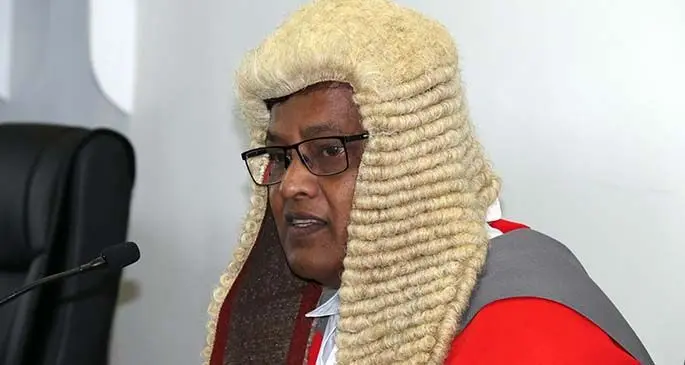
The following is a statement from the Acting Chief Justice Kamal Kumar
Resident Magistrate on his own volition held the charges to be defective and void on the following grounds:
(i) Particular of the offence read:- “Ravin Rohit Lal and Shalvin Praveet Chand on the 09th day of April, 2020 at Nadi in the Western Division without unlawful excuse fail to comply with orders of Prime Minister of Fiji by breaching the curfew hours, an order that was deemed necessary for the protection of the public health from an infectious disease namely Novel Corona Virus”
(ii) Honourable Prime Minister did not have power to make curfew order pursuant to section 69 of the Public Health Act 1935 and power to make orders under the Act rostered with Honourable Minister for Health and Permanent Secretary for Health
Resident Magistrate could not find any declaration made by Honourable Minister for Health in regards to the imposition of curfew.
Upon reading the decision pursuant of section 260 of Criminal Procedure Act 2009 I handed the matter to Honourable Justice Vincent Perera to review the decision of the Resident Magistrate.
Decision of the Resident Magistrate has been reviewed by Honourable Justice Perera who has set-aside the orders made by Resident Magistrate on following grounds:-
(i) The charge did say accused failed to comply with section 69(1)(c), of the Public Health Act 1935 Regulation of Public Health (Infectious Disease Regulation, 2020);
(ii) Orders were issued by Honourable Ministry for Health
(iii) Magistrates should have allowed Prosecution to amend the charge by deleting “Prime Minister” to “Minister for Health”;
(iv) The implementation of curfew orders was approved by Honourable Minister for Health and Medical Services. Notice of which was given by the Permanent Secretary for Health and Medical Services via Extraordinary Gazette No. 32 published on 4 April 2020.
According Resident Magistrate orders was set-aside and the matter will be called in Nadi Magistrates Court on 21 April 2020.








