Climate Change Hits Home: Sea Level Rise Affects Vanuabalavu's Students
“When sea water floods the road, children are either stranded in their homes or forced to wait for the water to recede so that vehicles that transport them to school can access the road,” she said.
Wednesday 20 November 2024 | 10:56
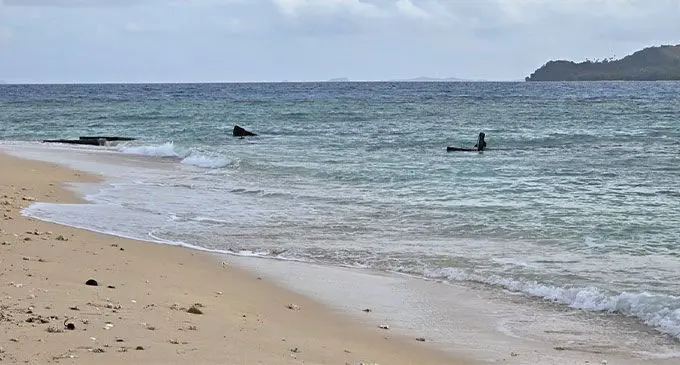
Original foundation of Avea Primary School that is now underwater. Photo: Ivamere Nataro
Students of Mavana Village in Vanuabalavu, Lau, are forced to stay home or arrive late to school during bad weather as the accelerated impact of sea level rise affects their transportation to school.
Many of the children affected are those who attend Adi Maopa Secondary School in Lomaloma. It is the only secondary school on the island.
There is only one road that connects Mavana Village to Lomaloma – the business centre of the island – that also has the post office, hospital, market, shopping centre and jetty.
Related stories
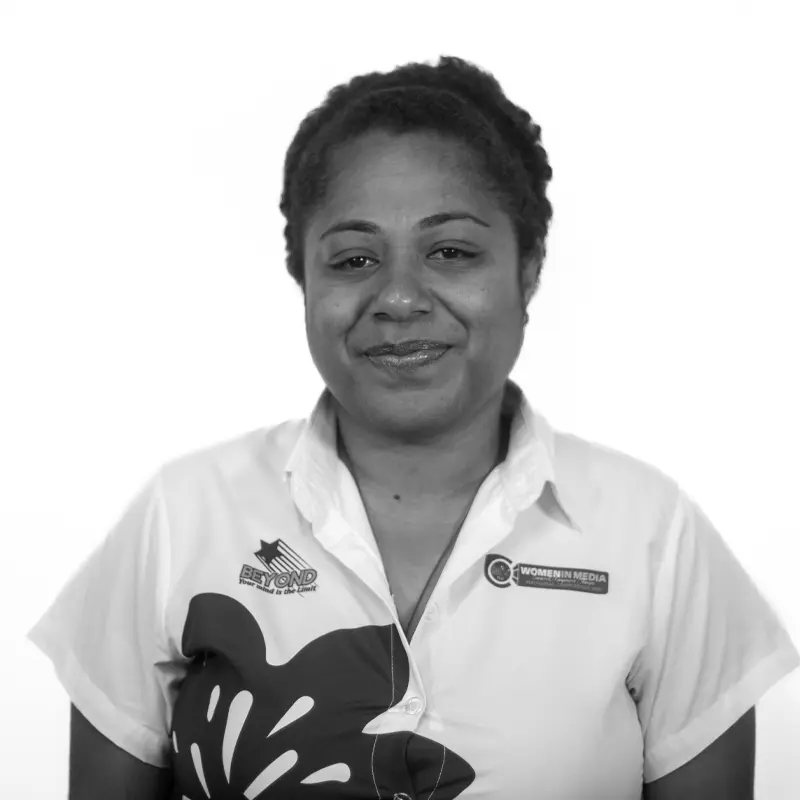
Mavana District School headteacher Milika Vuamuri said in the 20 years that she taught and lived on Vanuabalavu, she had experienced first-hand the impact of climate change on the children’s education.
“When sea water floods the road, children are either stranded in their homes or forced to wait for the water to recede so that vehicles that transport them to school can access the road,” she said.
“The road condition has also deteriorated because of this and has become narrow, forcing drivers to drive on the grass on the side of the road.”
The road on the island is made up of loose gravel with evidence of debris washed from the sea, and potholes. Lomaloma is a 30-minute drive from Mavana, but during adverse weather, it takes close to an hour to reach Lomaloma.
For children on the island, they usually travel via carriers during school days.
Vanuabalavu has heavily succumbed to the detrimental effects of climate change. In 2016, when Category 5 Tropical Cyclone Winston hit Fiji, two schools on the island were severely damaged.
This included Adi Maopa Secondary School and Avea District School that now has its original building founda-tion submerged under the sea.
Ms Vuamuri spent most of her years as an educator on Vanuabalavu having taught at Mualevu District School and a short term at Avea District School.
She said Avea District School on Avea Island was one of the beautiful schools on Vanuabalavu surrounded by white sandy beaches.
But this changed in the years following TC Winston. While the school has relocated inland, the old foundation of the school is now under water, including the old principal’s quarters and the school playground.
Ms Vuamuri is concerned sea level rise, caused by climate change, can have a detrimental impact on children’s access to education.
Climate change affects our well-being and survival, and not just the environment. Climate change affects children’s right to education among other things, and if leaders do not act now, our children will not have a bright future.
The Ministry of Education acknowledges that there is a stretch of road from Mavana to Mualevu that is almost at sea level.
“There is a stretch of road from Mavana to Mualevu that is often inundated with seawater with a stream and a culvert that holds water from flowing back to the beach at high tide,” Minister for Education Aseri Radrodro said.
Mr Radrodro said the ministry’s Divisional Education Officer Eastern had requested the assistance of the Fiji Roads Authority team currently in Vanuabalavu.
“I have asked the principal to relay my request to the Fiji Roads Authority supervisor who is currently there with his team on Vanuabalavu for road maintenance works to inspect and attend to the concern and see how they can assist.”
In Mavana Village, while the flooding of the roads affects the children’s access to education, villagers are also deprived of accessing the market to sell their produce.
Migration of fish
Villages in Vanuabalavu rely on fisheries to earn money. For women of Mavana Village, they find it is diffi-cult to catch fish at their usual fishing spots, and they attribute it to climate change.
“Before, women can just catch fish close to our seashore, but now, we have to go out further to catch fish,” Anaseini Temo, 66, said.
Ms Temo was born and raised in Mavana Village. She has noticed how climate change has made life difficult for women on the island when they go out to catch fish.
Women on the island would go out to fish at night and return in the wee hours of the morning, even during bad weather.
Ms Temo said over the years they had noticed not only the rise in sea level but also induced shifts in tem-perature.
At the high-level COP29 meeting currently held at Baku, Azerbaijan, Deputy Prime Minister Biman Prasad stressed the need for and importance of climate financing.
“Our annual climate finance needs are immense, we need US$1-2 billion (FJ$4.4bn) annually to keep pace with the challenges we face and facilitate the transition we need to withstand the projected impacts of climate change into the future,” he said.
Fiji and the rest of the Pacific Islands have declared climate change as the greatest threat to the region.
Despite contributing less than one per cent of global greenhouse gas emissions, Small Island Developing States are fighting to survive the im-pacts of the adverse atmospheric conditions associated caused by climate change.
Feedback: ivamere.nataro@fijisun.com.fj