Climate Watch: Sea Inundation Brings Out Human Bones, Skulls
The bones have emerged because of sea inundation into the burial ground of their forefathers.
Sunday 30 January 2022 | 15:00
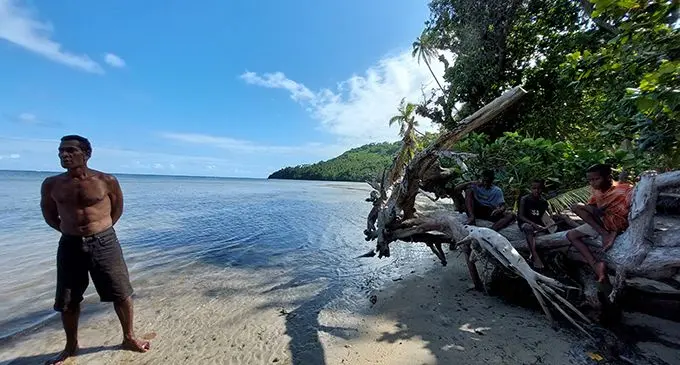
Viliame Taufa talks about the impact of climate change on his village. Photo: Wati Talebula
Children of Nasoki village, Moala in the Lau group playfully pick up human bones and skulls along the shores of their village from time to time.
They don’t scare them anymore.
The bones are gathered, wrapped in a piece of masi and buried inland. The bones have emerged because of sea inundation into the burial ground of their forefathers.
Related stories
“All we can do is collect the bones and bury them again,” 65-year-old Viliame Taufa said.
Exposed roots of trees line what used to be a picturesque beach.
Mr Taufa said their beachfront has reduced in size. He pointed to climate change as the cause.
“I lived in Suva before I retired and returned to the village. Everything has changed and I know that something must be done about it.
"Before we used to sit by the beach and throw our fishing line and we could take home at least three bundles of fish.
“Now, we can’t catch any fish by the beach. We must go further into the sea to catch fish. Now, we must buy premix and hire a dinghy and that costs us money too,” Mr Taufa, a former trucker said.
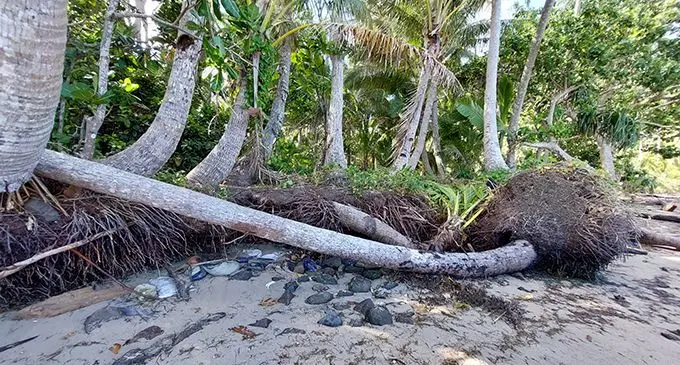
Exposed coconut tree roots along the shoreline of Nasoki village, Moala in the Lau group. Photo: Wati Talebula
Nasoki villagers are not alone in this climate fight. Across Fiji and the Pacific, the story is the same.
Countries that contribute the least to the warming of our planet are the worst affected.
The Intergovernmental Panel on Climate Change in its Fifth Assessment Report - a group of 1,300 independent scientific experts from across the globe concluded that 95 percent probability of human activities over the past 50 years have warmed our planet.
The commitment from big emitters is key.
Feedback: wati.talebula@fijisun.com.fj