Climate Watch: Where The Sea Has Its Way
The 42 houses in Ogea village accommodates 120 people. Plans to build a seawall have been ongoing for years. It’s the only way they hope to mitigate both the sea level rise and inundation.
Sunday 16 January 2022 | 15:51
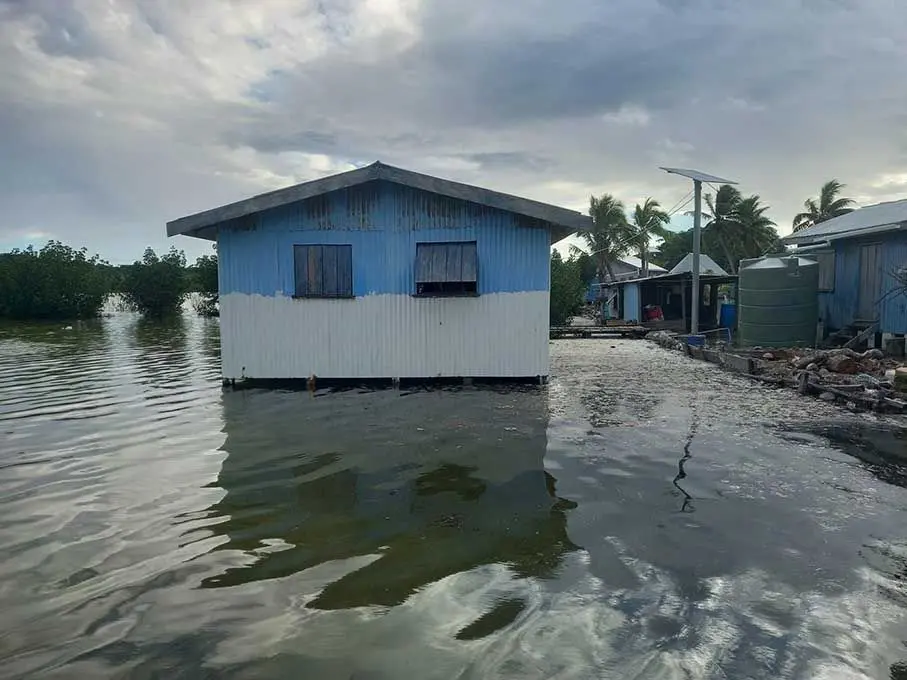
The last time Vuli Mikaele left Ogea village to pursue further studies in Suva, the inundation of seawater only reached the village ground or rara. That was 13 years ago.
He was back home over the Christmas and new year break – seawater has now reached his family home, 200 metres away from the shoreline.
This confirms the Intergovernmental Panel on Climate Change report released last August that the global trend of rising seas will have the most severe consequences in the Pacific.
Related stories
Sea-level rise along with storm surges and “king tides” worsen coastal inundation and the potential for increased saltwater intrusion. Land loss naturally follows.
So when Mr Mikaele steps outside his home, the water level is knee high. This is the norm for Ogea villagers at the beginning of every month. For at least three days, the sea has its way in the village.
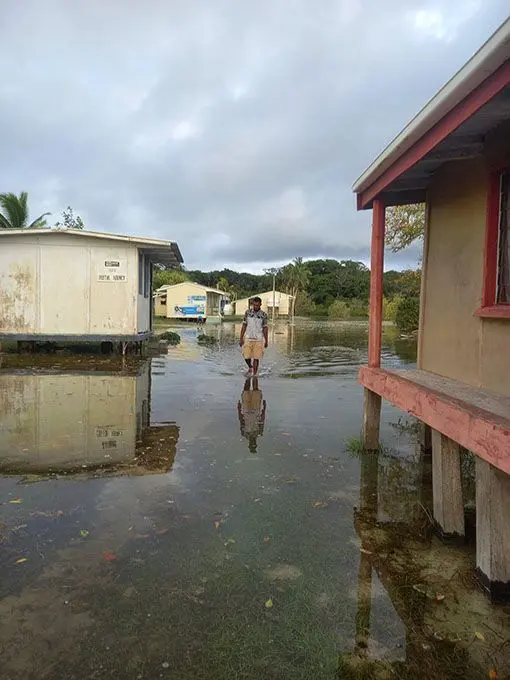
Sea level inundation in Ogea, Lau. Photo: Vuli Mikaele
“We don’t have the tools to help speed our work, so we work with the tide.
“It is impossible when the tide does not go down for three days and work is repeated all over again.
Mr Mocelutu said they’re being encouraged by his 82 year old grandfather, Sili Cabebula who is the Tui Ogea.
“My grandfather said that back in the 1970’s, the land was dry and they enjoyed planting bele, vudi (plantain) and the like near their homes but now we have to plant further inland - about a kilometer from the village where there is no seawater inundation.
“The village green was flat, and they would enjoy playing on the ground and enjoy a drink of coconut juice – but not anymore.”
The Tui Ogea said it was not until the 1990’s when the sea water began to come into the village and now it would last for three days.
On the up side, Mr Mocelutu said they do not have to go far to find crabs as they can easily catch crabs within the village ground.
Feedback: laisa.kabulevu@fijisun.com.fj








