Crime threatens development and stability, says Rabuka
Pacific leaders urged to strengthen cooperation against organised criminal activity across the region.
Tuesday 19 May 2026 | 15:30
Updated 19 May 2026 | 16:48 FJT

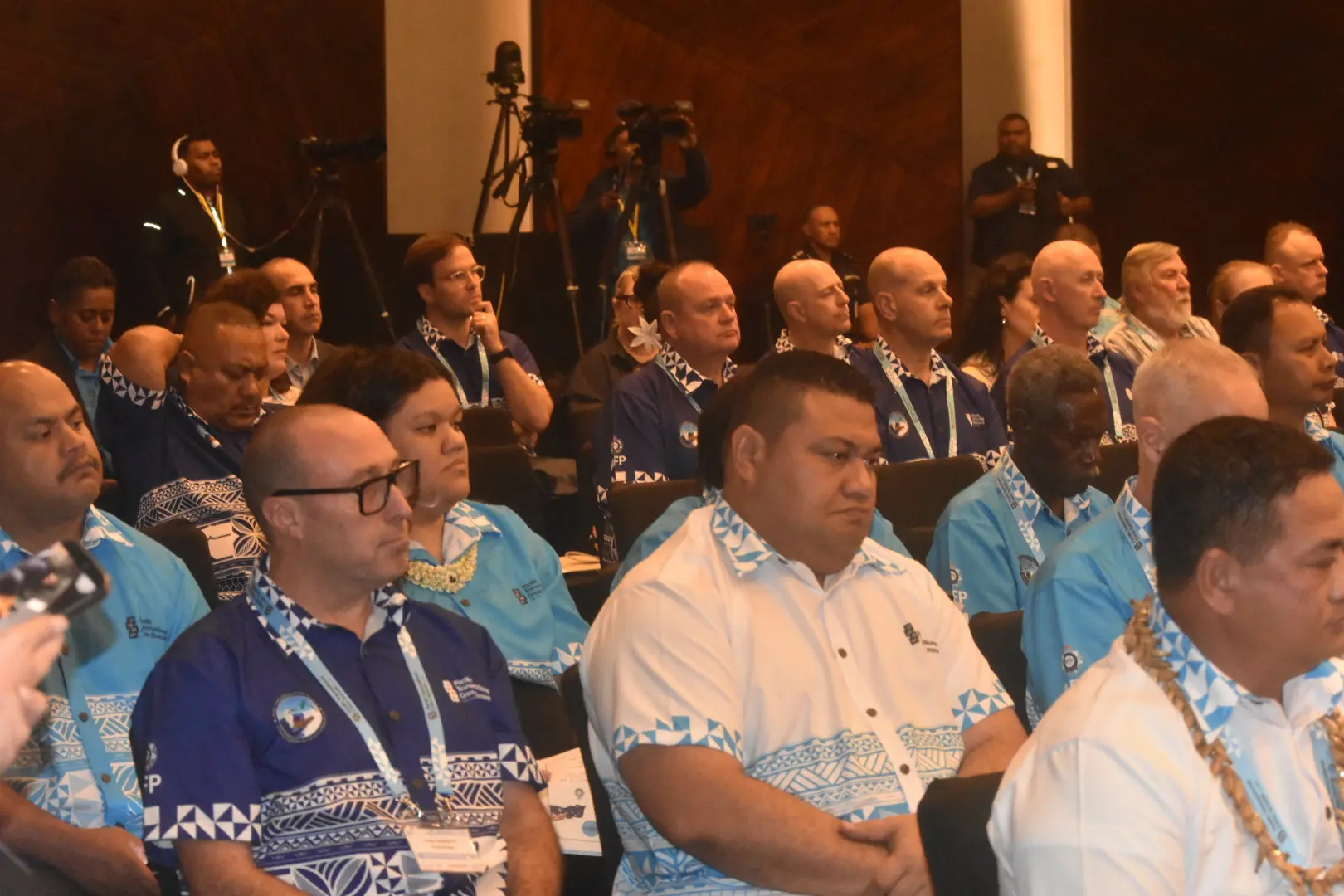
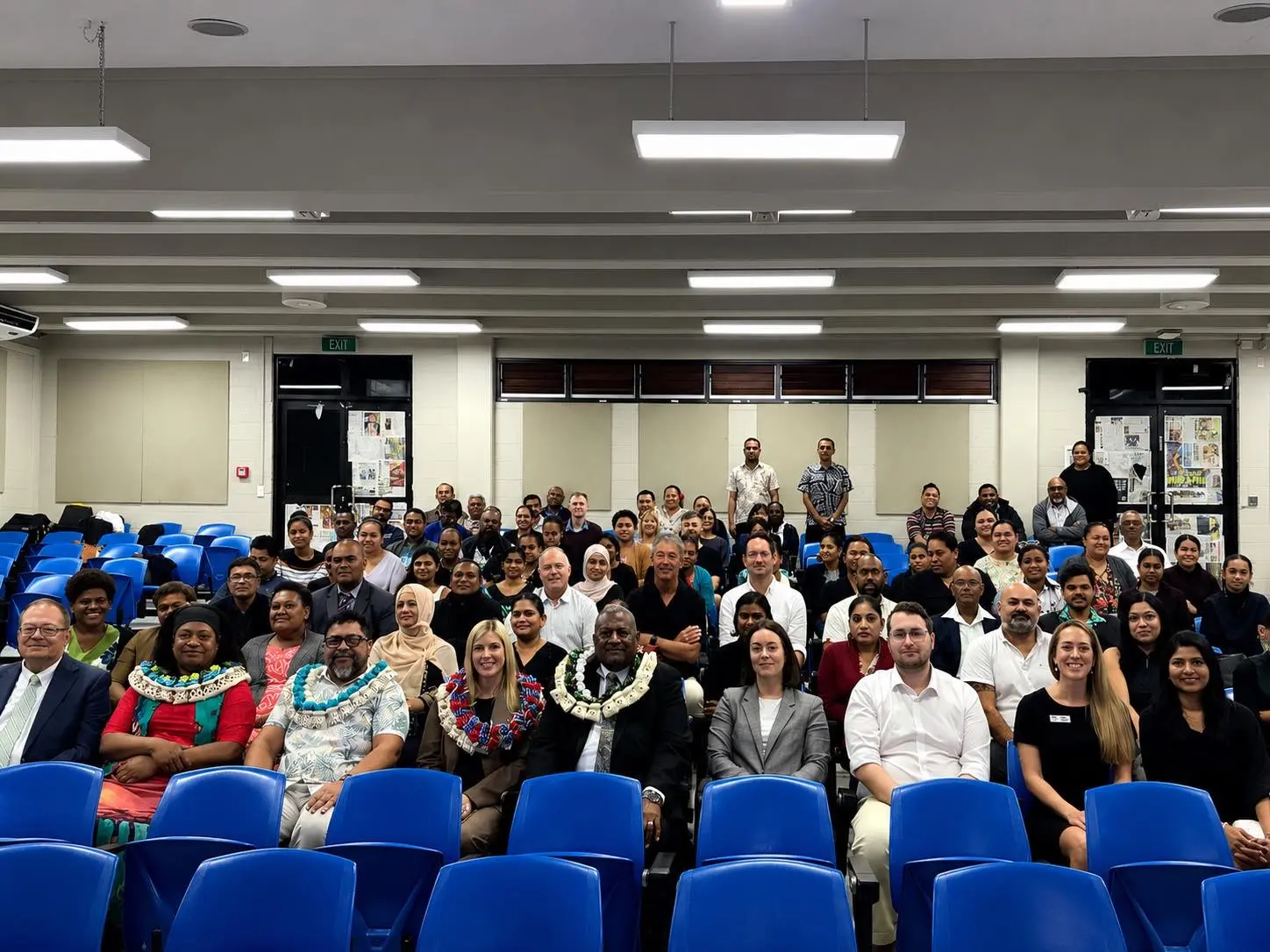
Delegates at the inaugural Pacific Transnational Crime Summit 2026 at the Fiji Marriott Resort Momi Bay in Nadi on May 18, 2026.
Photo: Waisea Nasokia
Security is not separate from development, says Prime Minister Sitiveni Rabuka.
He made the comments at the inaugural Pacific Transnational Crime Summit 2026 at the Fiji Marriott Resort Momi Bay last night.
“Without stability and safety, economic growth, investor confidence, social cohesion and development cannot be sustained,” Mr Rabuka said.
Related stories
“Our actions must also remain aligned with the Sustainable Development Goals, particularly the goals relating to peace, justice, strong institutions, sustainable communities and partnerships.”
Mr Rabuka said Fiji’s efforts aligned strongly with the National Development Plan and Vision 2050, the Ministry of Policing Strategic Plan 2025–2030, the Boe Declaration, the 2050 Strategy for the Blue Pacific Continent, the Melanesian Spearhead Group Security Strategy and the region’s collective security architecture.
“Importantly, it reflects Fiji’s commitment to Strategic Priority 2 of the Ministry of Policing Strategic Plan — Counter-Narcotics and Transnational Crime — focused on disrupting criminal networks before they harm our communities,” he said.
“It also advances Strategic Priority 4 — Maritime Policing and Forward Presence — recognising the strategic importance of protecting our maritime domain and strengthening law enforcement presence across our ocean spaces.”
Connected by ocean, united in the fight
The summit theme, “Connected by Ocean, United in the Fight”, speaks directly to the shared identity and collective responsibility of Pacific nations.
For generations, the Pacific Ocean has connected islands, economies, cultures and peoples.
“It has sustained livelihoods, enabled trade and exchange, and shaped our identity as one Blue Pacific Continent. Far from dividing us, our ocean has always united us,” Mr Rabuka said.
He said the shared heritage underpinned Fiji’s vision of an Ocean of Peace — a Pacific region characterised by peace, stability, cooperation, solidarity, mutual respect and collective security.
“However, we must also recognise the changing strategic realities confronting our region,” he said.
Mr Rabuka said the Pacific Ocean was increasingly being exploited by transnational criminal networks involved in illicit narcotics trafficking, cyber-enabled crime, money laundering, human trafficking, illegal fishing, environmental crime, online exploitation, illicit resource extraction and other forms of organised criminal activity.
He said climate change, economic vulnerabilities, porous maritime borders and rapid technological change continued to place additional strain on institutions and communities, creating vulnerabilities organised criminal networks were quick to exploit.
“This presents not only a law enforcement challenge, but a broader human security challenge,” he said.
“Crime undermines development. Crime weakens institutions. Crime threatens social cohesion. Crime exploits vulnerable communities and youth. Crime erodes the peace and stability upon which our future prosperity depends.
“That is why national security and regional security must ultimately translate into human security.”