‘Do Not Bring Back The Senate’
Professor Shameem noted that the collaboration aligned with the university’s values-driven Strategic Plan 2022–2026.
Tuesday 03 June 2025 | 15:14
Updated 08 August 2025 | 15:38 FJT

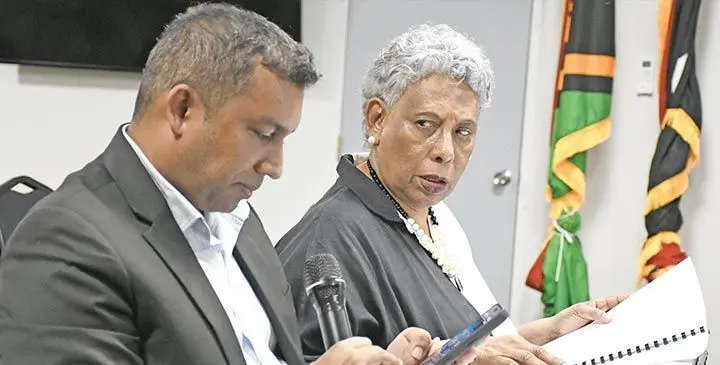
From left: Dialogue Fiji executive director Nilesh Lal and University of Fiji Vice Chancellor Professor Shaista Shameem making their submission before the Fiji Law Reform Electoral Review Commission in Suva on June 2, 2025. Photo: Ronald Kumar
The University of Fiji (UniFiji) and Dialogue Fiji have strongly opposed the restoration of the Senate in their joint submission to the Electoral Law Reform Commission.
The two institutions told the commission that an unelected upper house had no place in Fiji’s future governance.
They made their consolidated recommendations to the commission in Suva yesterday, emphasising that electoral reforms must promote inclusivity, transparency, and stability without regressing to outdated structures like the senate.
Related stories
Representing the UniFiji, Vice Chancellor Professor Shaista Shameem and Dialogue Fiji’s executive director, Nilesh Lal, said their partnership brought together the academic and advocacy strengths necessary for credible reform proposals.
Professor Shameem noted that the collaboration aligned with the university’s values-driven Strategic Plan 2022–2026, while Mr Lal highlighted Dialogue Fiji’s long-standing engagement in electoral issues.
“The senate, especially an unelected one, should not be restored,” their joint submission warned that such a move would undermine democratic representation. Other key recommendations included:
1. An Open List Proportional Representation system;
2. A single national constituency;
3. No change to the size of parliament because it was constitutionally set to adjust with population data;
4. Voting age should be retained to 18, as recommended by the UniFiji student body and international standards;
5. The four-year term of parliament should be retained;
6. Senate, especially an unelected senate, should not be restored;
7. Blackouts and restrictions on election day conduct should be retained as it provided respectability and security for the process;
8. Constitutional changes impacting on elections should not be risked close to election time as they pose a risk to national stability;
9. Electoral law reforms proposed can be undertaken without constitutional amendments.
Both organisations said that their joint submission aimed to balance academic insight with practical relevance, offering a reform blueprint grounded in research, experience, and public interest.
Feedback: inoke.rabonu@fijisun.com.fj








