Extra-Marital Affairs Rife In Seasonal Workers Scheme
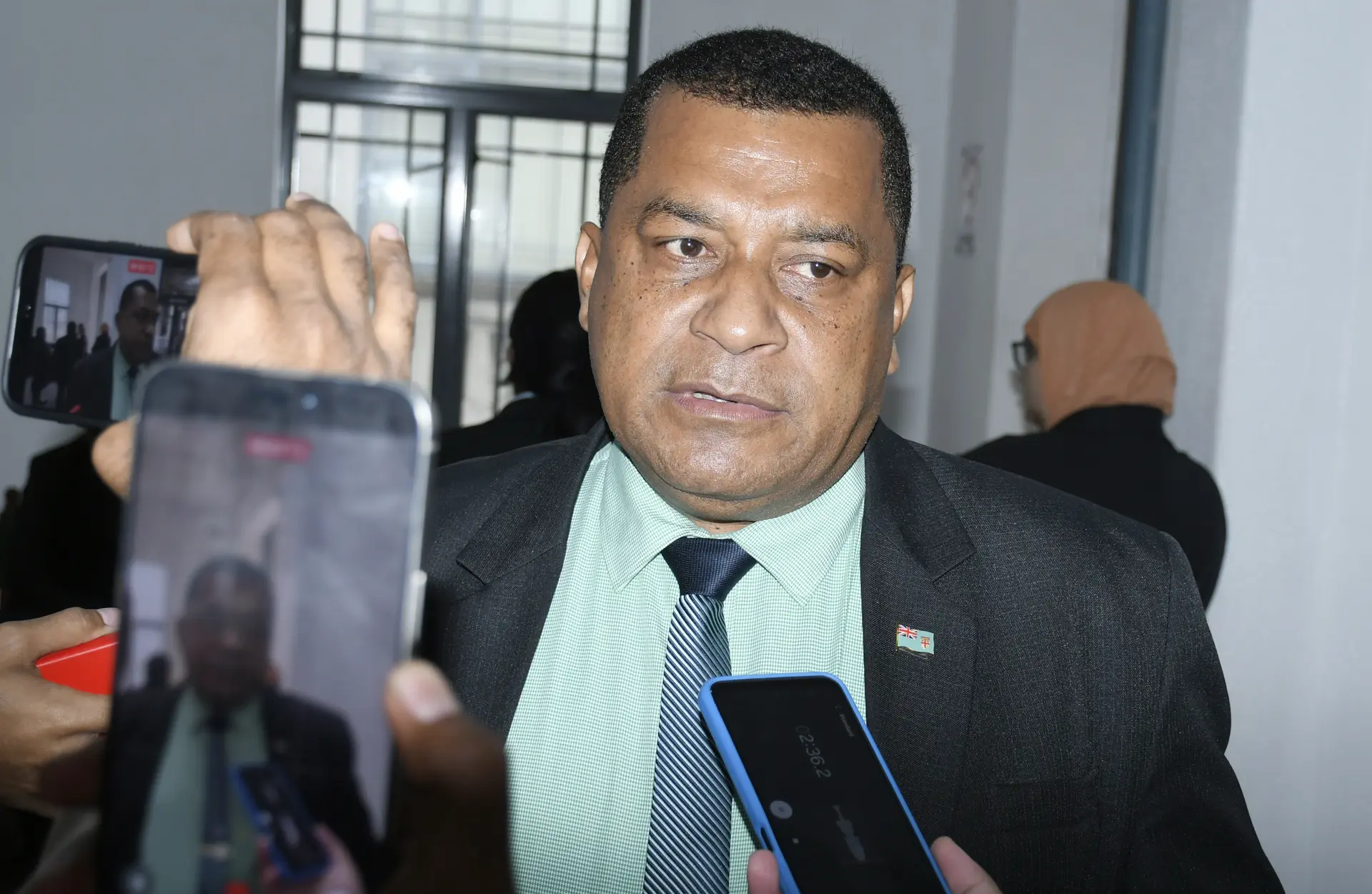
Minister for Employment, Productivity and Industrial Relations Agni Deo Singh says not only is the scheme causing a ‘terrible shortage’ of professionals in Fiji’s labour market, it is also contributing to a number of social ills affecting families.
Tuesday 23 July 2024 | 13:56

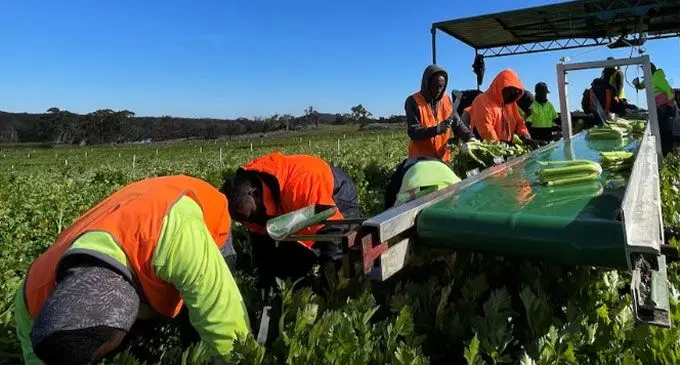
Seasonal workers in the horticulture industry. PHOTO: ABC Rural: Arlie Felton-Taylor
The issue of infidelity among Fijian workers now in Australia and New Zealand under the Pacific Labour Mobility scheme is again under the spotlight.
Minister for Employment, Productivity and Industrial Relations Agni Deo Singh says not only is the scheme causing a ‘terrible shortage’ of professionals in Fiji’s labour market, it is also contributing to a number of social ills affecting families.
Speaking at the Protecting Children in the Context of Labour Mobility conference in Vanuatu last week, Mr Singh said Fiji in the last decade had sent 12,994 people to Australia and New Zealand under the labour scheme.
Related stories
He also revealed that the ministry recorded 74 cases where recipients have engaged in extra marital affairs, losing connection with their families back home and not sending money or financially supporting them.
“While the number is not big percentage wise, that is 74 families affected,“ Mr Singh said.
He labelled this as a ‘matter of grave concern’.
Monthly statistics released by the Bureau of Statistics reveal that in the month of June, 2024, alone, 1020 Fijians left the country for employment purposes.
Of the 1020, 273 are away for work under three months, 370 for a period of three to 12 months, 377 for a period of one to five years.
This is compared to the 1076 that left Fiji for the same purpose in May.
“One thing we know is that labour mobility has always been there and will always be there,” Mr Singh said.
“Whatever we do as developing countries, we will not be able to stop our people from looking for better opportunities or greener pastures, better living standards for their families,” he said.
“As of late, Australia and New Zealand have opened up their borders for workers to an extent where they have modified their rules for migration, made it a lot easier and our people are flocking away.
“Back at home in Fiji, we have a terrible shortage of professionals and trades people and our economy is affected by.
“Unfortunately, the receiving countries are not assisting us in any way. They receive our finished product, we train our people and they get them FOC.”
CHILDREN LEFT WITH CAREGIVERS
Vanuatu’s Deputy Prime Minister Matai Seremaiah, while speaking at the seminar highlighted that even though there was a lot of benefits from labour migration financially, there are strong emotional impacts on children from being separated from their biological parents.
Mr Seremaiah said many children in the Pacific no longer lived with their parents due to the Recognised Seasonal Employer (RSE) scheme in New Zealand or the Pacific Australia Labour Mobility (PALM) schemes.
“A significant number of children in the Pacific do not live with their biological parents, or primary caregivers, which in some cases may heighten the risk of neglect, abuse and exploitation,” Mr Seremaiah said.
“Adolescence may adopt risky behaviour such as alcohol and drug abuse, inappropriate internet usage and many more.
The United Nations Children’s Fund (UNICEF) chief of child protection in the Pacific, Michael Copland, said children who end up in institutional care in the region normally come from single parent households.
He said there was an increasing burden of care on women in raising children, including mothers, grandmothers and teenagers.
In Fiji’s context, Minister for Women, Children and Social Protection Lynda Tabuya has highlighted statistics which showed that five out of every six children in Fiji were abused or neglected by their family.
“There has been an increase in children losing parents and carers due to labour mobility and the rise in online predation targeting children in Fiji and the Pacific,” Ms Tabuya said.
CHURCH
Fiji Council of Churches general secretary, Reverend Simione Tugi, in an earlier interview said if the family unit was already breaking apart and there was no solid foundation, the welfare of young ones who were exposed to the norms of using drugs and violence would continue to increase.
Reverend Tugi said child negligence was the root cause of all the chaos on young teens exposed to drugs and other related issues.
“The question we pose is what are the parents doing to address the issue and how well is the communication and level of understanding at home,” Reverend Tugi said.
“We have heard the call from the Government for proper collaboration, but if the family unit is not solid enough everything else fails,” he said.
“People, communities, parents, family members are not taking the drug issue seriously.
“We can say so much, we can dialogue so much and preach so much but if people are not willing to listen and act then we are doomed.”
ADDRESSING THE ISSUE
Minister Singh said while engaging in extra marital affairs was something beyond their control, the Ministry of Employment was working on creating a policy whereby a mandatory deduction would be made by the employer remitted to the family of an employee every week or every month.
This he said would be something labour scheme recipients would sign off on before leaving for the scheme.
“That is something we are going to do or something that we will work on,” Mr Singh said.
“Another one is pre-departure training, we have been holding four days of training currently,” he said.
“What we have noticed is as soon as they receive the news that they have been selected to go and work in Australia and New Zealand, they are already dreaming.
“Those four days are spent dreaming. They hardly listen to anything that has been presented or discussed. So we are looking at two weeks at least. So they know what to expect from the work opportunities and including the weather conditions, etc. and work them are going to do. Families need to be reminded too, sometime there are over expectations from family members.”
He added that as far as Government was concerned, parents do not pay for school fees and scholarships were available for students to pursue tertiary education.
“Social welfare assistance for single mom’s, for my ministry we are closely monitoring any child labour issues.
“We also have strong legislative arrangements because we want to make sure that our children are not exposed to social ills.”
Feedback: inoke.rabonu@fijisun.com.fj