Family Law Is Developed To Minimise Family Breakdowns: Acting Chief Justice
The commission’s acting director Shahin Ali said in Family Law, the demand for their service was perhaps the greatest, especially from the most vulnerable, women and children.
Friday 26 March 2021 | 10:32

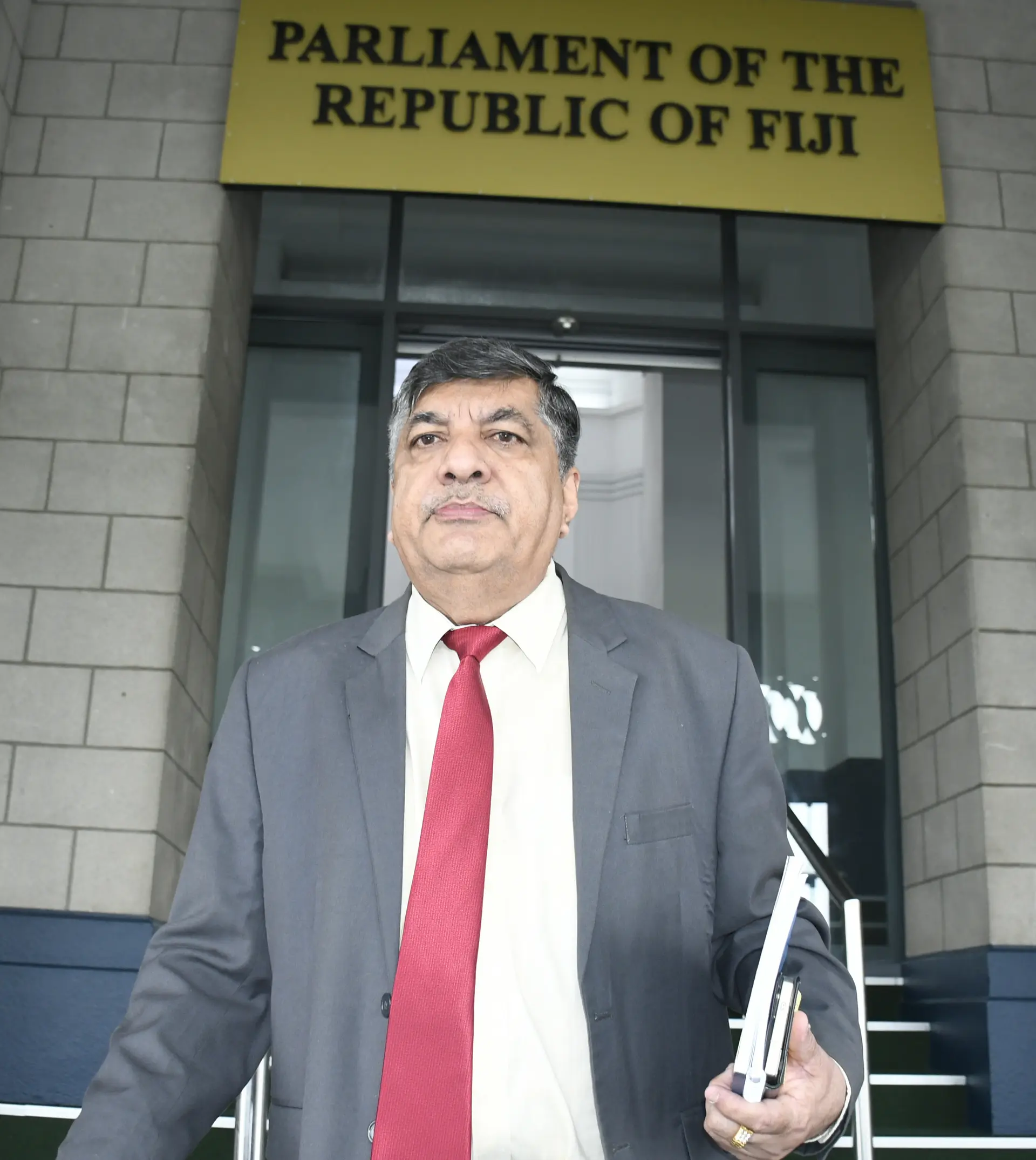
Acting Chief Justice Kamal Kumar while opening the Legal Aid Commission family law workshop in Suva on March 25, 2021. Photo: Ronald Kumar
Family law is developed to minimize breakdown of families or assist them in resolving their disputes to the best interest of all concerned, including children, children’s welfare, and development.
Acting Chief Justice, Kamal Kumar made this statement while opening the Legal Aid Commission Family Law workshop at the Civic Centre in Suva yesterday.
Better understanding of Family Court
Related stories
The two-day workshop is designed to enhance the commission’s lawyers to gain a better understanding about practice and procedure employed in the Family Court matters be it property settlement, child maintenance, child recovery and many other areas dealt by Family Court.
Acting Chief Justice Kumar said when a family breaks down and something goes wrong, people get separated, they must go through divorce, fight over children and property.
He added that all these affected people in dramatic ways.
Acting Chief Justice Kumar urged lawyers when people would go to them facing family problems, to treat them with calmness, patience, and respect.
“It goes without saying that when there is a breakdown in family, it affects all other institutions like political, economic and social,” he said.
“After completion of this workshop, no one can expect you to be 100 per cent, but we all expect you to say, ‘I can now perform my duties better than before’.”
The commission’s acting director Shahin Ali said in Family Law, the demand for their service was perhaps the greatest, especially from the most vulnerable, women and children.
He added that in many family law proceedings, it was vital that courts do not lose sight of the fact that it was ultimately the child’s future that was being decided upon, therefore it was crucial to consider his or her views be it directly by the child or through the child’s representative.
He further added that the Section 125 of the Family Law Act was perhaps put in for that very purpose.
Access to justice
Mr. Ali said the commission had an especially important role to play in the lives of thousands of Fijian and those were the people who needed the commission.
“The vulnerable, poor and those without access to justice – we must reach them, and we must help them,” he said.
“My duty, your duty, our duty is to these people, to our fellow Fijians and I know it is difficult at times, however, what we are doing is a great service to mankind.
“We can go home at night and sleep well knowing we have done well to a fellow human being. It is this what matters most,” Mr Ali said.
Acting Chief Justice Kumar said the commission was meant for providing access to justice to people who go through vulnerable situations like not being able to afford private lawyers.
“This is the reason why I have no hesitation in letting judges and magistrates to come and train you on practice and procedure in Family Court.”
The commission’s effort to assist Fijians.
Acting director Shahin Ali said there was an overwhelming demand from the commission’s clients, members of the public and stakeholders to provide timely, efficient, and professional legal aid services.
He said a good percentage of cases which go to court had legal aid lawyers representing litigants.
Mr. Ali said as the commission extended its national footprint with the opening of branches around Fiji, and expanded delivery of various types of legal services, the commission must build a strong, robust, and competent team of lawyers who were able to advocate without fear or favor.
He said as Legal Aid lawyers, they had an important mandate to fulfil and that was service delivery to those who were unable to afford the services of a private legal practitioner.
Collaboration between the Judicial Department and the commission
Mr Ali said the collaboration between the Judicial Department and the commission was a testament to the strength of professional relationship that had been forged over the years.
He said the collaboration over the years was quite an achievement and a testament to the value of sharing knowledge, experience, and expertise.
Legal opinions by court
Acting Chief Justice Kumar reiterated to the lawyers that judges and magistrates could not give legal opinion or advice about a particular issue or matter.
He said: “If they do so then they may have to disqualify themselves if that issue or matter comes before them.
“But there is nothing stopping them from letting you know practice and procedure, provision of legislation or international instruments that deal with particular issues or refer you to cases that deal with certain issues.
Practice direction
The establishment of the conflict unit last year and the issuance of Practice Direction No. 1 of 2020 permitted the commission to represent parties to the same proceedings in Family Law matters.
Mr Ali said this had a direct positive impact on service delivery and more so for women’s access to justice.
He added that the Practice Director No. 2 of 2020 now mandated the appointment of the commission as child representatives in order of priority.
UN Convention on the Rights of the Child (UNCRC)
Mr Ali highlighted that the UNCRC provided minimum standards for the child’s right to express views and to do so, in judicial proceedings, through a representative.
He said Fiji had ratified the CRC and was obligated to comply with the convention who promoted and imposed common minimum human rights standards for children.
Mr Ali said child representation was an exciting area of law which was still being developed in Fiji and it reinforced the rights of children and placed their interest as of paramount consideration above all else.
Feedback: ashna.kumar@fijisun.com.fj