Fiji Expect Prices of Wheat Products To Increase
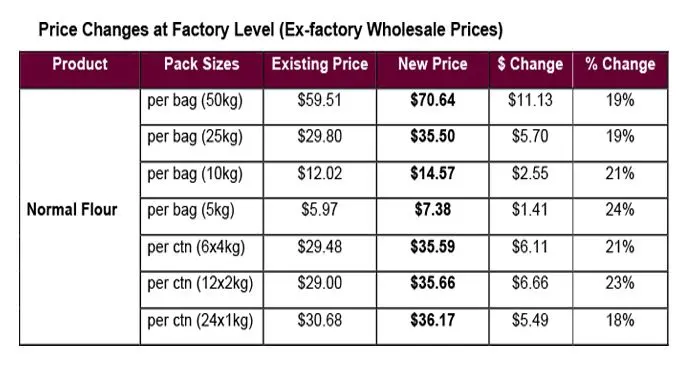
In addition to this, FCCC has also factored in increases in conversion costs (that is, production cost, milling and administration costs and other overhead costs), and determined that the average increases in domestic wheat prices will be by 21%, and will come into effect from the 9th March 2021.
Wednesday 09 March 2022 | 06:21
The prices for wheat products in Fiji are controlled under section 39 of the Fijian Competition and Consumer (FCCC) Act 2010.
Pursuant to this, FCCC regulates the prices pertaining to the supply of wheat products at factory, wholesale, and retail level.
The last price review for wheat products was conducted in March 2019, when increases in prices of wheat in the global market and freight charges led the way for a price increase in Fiji.
Related stories
Towards the end of 2021, FCCC received submissions from wheat manufacturers in Fiji requesting an increase in the price of wheat products due to surges in global wheat prices.
Fiji sources a majority of its wheat from Australia, so any increase in prices of wheat in the Australian market will directly reflect on wheat prices domestically.
FCCC’s independent assessments and verifications have noted increases in wheat prices by close to 18% and surges in freight and cargo rates by 9%, when compared to the last price review in March 2019.
In addition to this, FCCC has also factored in increases in conversion costs (that is, production cost, milling and administration costs and other overhead costs), and determined that the average increases in domestic wheat prices will be by 21%, and will come into effect from the 9th March 2021.
Flour, as a wheat product, is a main component in our diet and processed flour is used in many pastry and bakery products.
Every household in Fiji consumes flour in one form or another, and almost on a daily basis.
It is thus an essential food item and is under price-control.
It is also plausible that increases in the price of flour may also impact the prices for other goods where flour is a key, substantive ingredient.
Despite this importance, the price of flour in Fiji must increase when world market conditions collectively require it, such as unfavourable climatic conditions in major wheat-producing nations, buyers willing to pay higher prices to secure their supply of wheat, and transport and logistical issues stemming from restrictions related to COVID-19.
In recent times, there has been a lot of coverage on what impacts the Russia-Ukraine tension will have on global wheat prices, given that they both supply about a quarter of the world's wheat.
All these indicators point to the fact that global market conditions have led to higher prices in the Australian market, and will continue to push prices up.
Fiji is a price taker and must respond to the changes in the world market in order for domestic markets to remain feasible.
However, FCCC will continue to monitor conditions in the international wheat market and ensure that domestic prices are set in a reasonable, balanced manner in accordance with the FCCC Act 2010.
For more information/details on this, please contact us on our Facebook page https://www.facebook.com/FijianCCC , or on our website https://fccc.gov.fj/ or on 8921991.