Fiji Pine agreement hailed as benchmark for worker welfare
Mr Anthony welcomed the outcome, saying the agreement should serve as an example for employers throughout Fiji.
Tuesday 23 June 2026 | 15:30

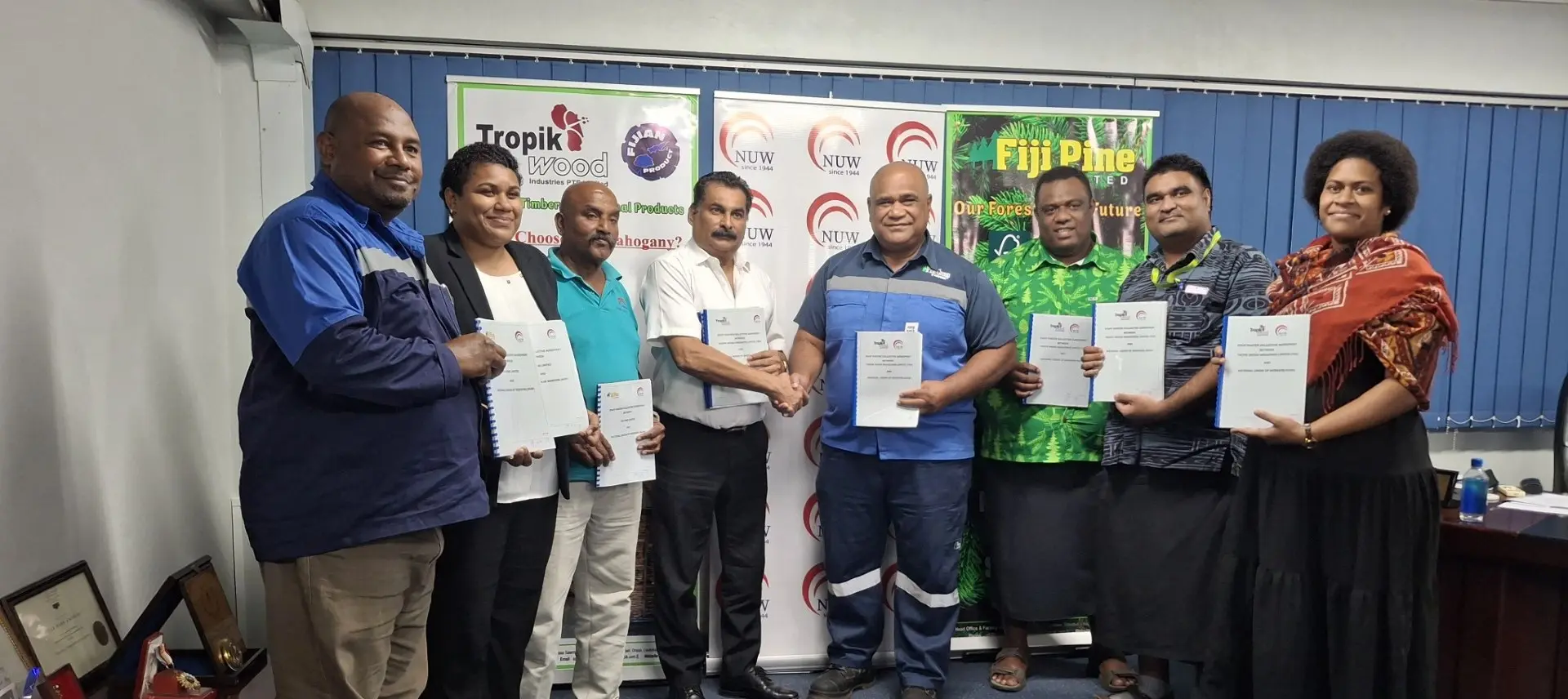
The agreement covers salaried employees of Fiji Pine Limited, Tropic Wood Industries Limited and Tropic Wood Products Limited, providing greater certainty and stability for workers across the three companies.
A new master agreement between the Fiji Pine Group and the National Union of Workers (NUW) has been hailed as a benchmark for worker welfare and industrial relations, with union leader Felix Anthony urging other employers to adopt similar approaches.
The agreement covers salaried employees of Fiji Pine Limited, Tropic Wood Industries Limited and Tropic Wood Products Limited, providing greater certainty and stability for workers across the three companies.
Fiji Pine Group chairman Rakuita Vakalalabure said the successful conclusion of the agreement was a milestone for the organisation and reflected its commitment to fair treatment, responsible management and strong employer-employee relations.
Related stories
He said retaining skilled workers remained a strategic priority, particularly as Fiji continues to face skills shortages.
Mr Vakalalabure also commended union representatives and the human resources team for conducting negotiations in a constructive and respectful manner.
Mr Anthony welcomed the agreement, saying it should serve as a model for other employers in Fiji.
He thanked management for engaging in negotiations in good faith and said the agreement provided workers with greater certainty over their employment conditions following a lengthy negotiation process.
Mr Anthony said Fiji Pine Group had demonstrated flexibility not often seen elsewhere and had gone beyond the minimum requirements of the Employment Relations Act.
What the agreement covers
According to Mr Anthony, the collective agreement includes:
- Salary structures and wage increases – providing employees with a clearer and more structured pay framework.
- Annual leave entitlements – outlining leave benefits available to employees.
- Sick leave provisions – ensuring workers have access to leave when unwell.
- Overtime arrangements – setting out conditions and compensation for extra hours worked.
- Allowances for unused sick leave – recognising employees who do not utilise their full sick leave entitlement.
- Other employment terms and conditions – covering workplace rights and obligations.
Mr Anthony said the agreement now covers both wage-earning and salaried employees, expanding union representation beyond its traditional coverage.
Salary review leads to increases
Mr Vakalalabure said a comprehensive job evaluation was carried out across all levels of the companies, from the lowest-paid employees to senior staff.
The review involved union participation and external expertise and resulted in:
- A structured salary framework.
- Fairer wage alignment with economic indicators.
- Across-the-board salary increases for employees.
He said the salary adjustments had been incorporated into the newly signed agreements.
Foundation for future cooperation
Both management and union representatives described the agreement as a strong foundation for continued cooperation, trust and positive industrial relations.
Three separate agreements were signed to cover each company within the group, with both parties committing to ongoing collaboration to monitor the effectiveness of the arrangements and address any future issues.
Mr Anthony said the agreement demonstrated how employers and unions could work together to improve conditions while maintaining constructive industrial relations.