Fiji’s Presence At COP26 Instrumental
Prime Minister Voreqe Bainimarama has been featured on several international television stations including SkyNews, BBC News and Al Jazeera.
Thursday 11 November 2021 | 16:06
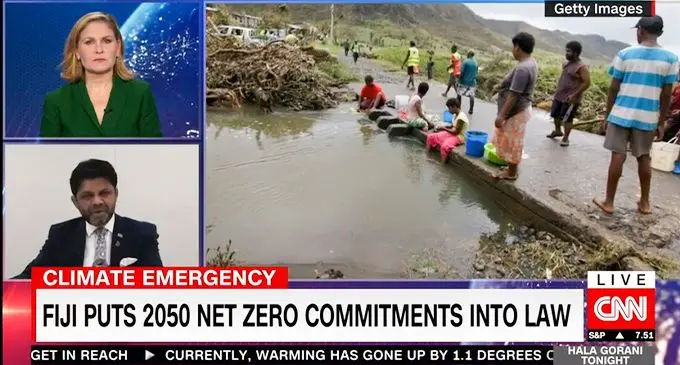
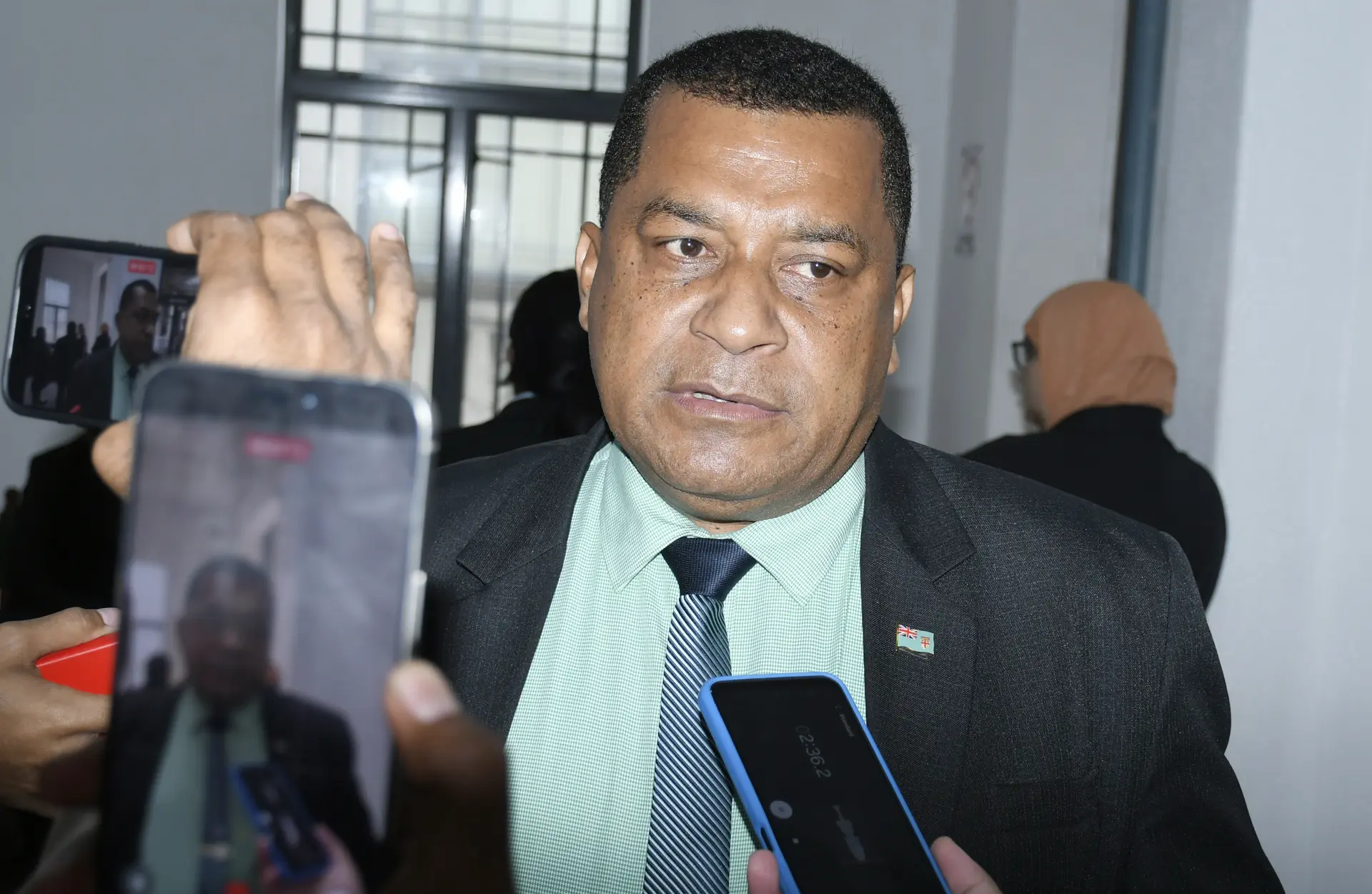
Attorney-General and Minister Responsible for Climate Change Aiyaz Sayed-Khaiyum, being interviewed by CNN’s Hala Gorani.
Fiji’s strong presence at the UN COP26 has been instrumental in amplifying the lived realities on the ground.
In most negotiation rooms, Fiji has been the lone representative from the region.
Also, on the floor of the Scottish Exhibition Campus, every opportunity is seized to broadcast about the constant threats that we face and the need to cut emissions.
Related stories
Prime Minister Voreqe Bainimarama has been featured on several international television stations including SkyNews, BBC News and Al Jazeera.
Yesterday, Attorney-General and Minister Responsible for Climate Change Aiyaz Sayed-Khaiyum, was interviewed by CNN’s Hala Gorani.
Here are excerpts from the interview: Are you encouraged or disappointed by the pledges you’ve heard at COP 26?
A-G: Obviously there's a lot of noise that has been made in the past one week or so there’s been a lot of positive noises being made. But it’s now down to the crunch time where we are in the negotiating rooms to get the right text going forward. For us, as you know, as you highlighted through President Barack Obama, we need to keep 1.5 degrees alive. It’s an existential issue for us. And the current trajectory suggests that we know the global temperature will rise anywhere between 2.7 to 3.1 degrees by the end of the century. We cannot afford to do that.
Commitments and pledges:
A-G: Well, I think the commitments need to be made and we need to ensure that within the process, we’re able to monitor those commitments. We’re still very, you know, positive about it. We believe that if we are able to push the emblem, we are able to also I think get some of the larger countries the
How do you maintain hope when past promises have been broken?
A-G: What is the alternative? The alternative is that you know, you spell this doomsday and you sit back and don’t do anything about it? Britain actually pointed at Germany and Canada in respect of the shortfalls of the 100 billion dollars. There is now a new projection that they will reach that target by 2023. We have seen that it needs to be a cumulative $500 billion by 2025. And they only need about $750 billion a year. And I think some of the private sector input in the past couple of days gives some sense of hope. And I think there’s an opportunity to get the private and the public sectors involved in getting blended finance. For us.
Obviously, it’s critically important that we have affordable finance available to us.
Feedback: rosi.doviverata@fijisun.com.fj