Finance Minister warns retailers over illegal price increases
Economist Dr Mahendra Reddy backs the Government’s refusal to remove fuel duty, warning against economically unsustainable subsidies.
Tuesday 26 May 2026 | 09:00
Updated 26 May 2026 | 10:04 FJT

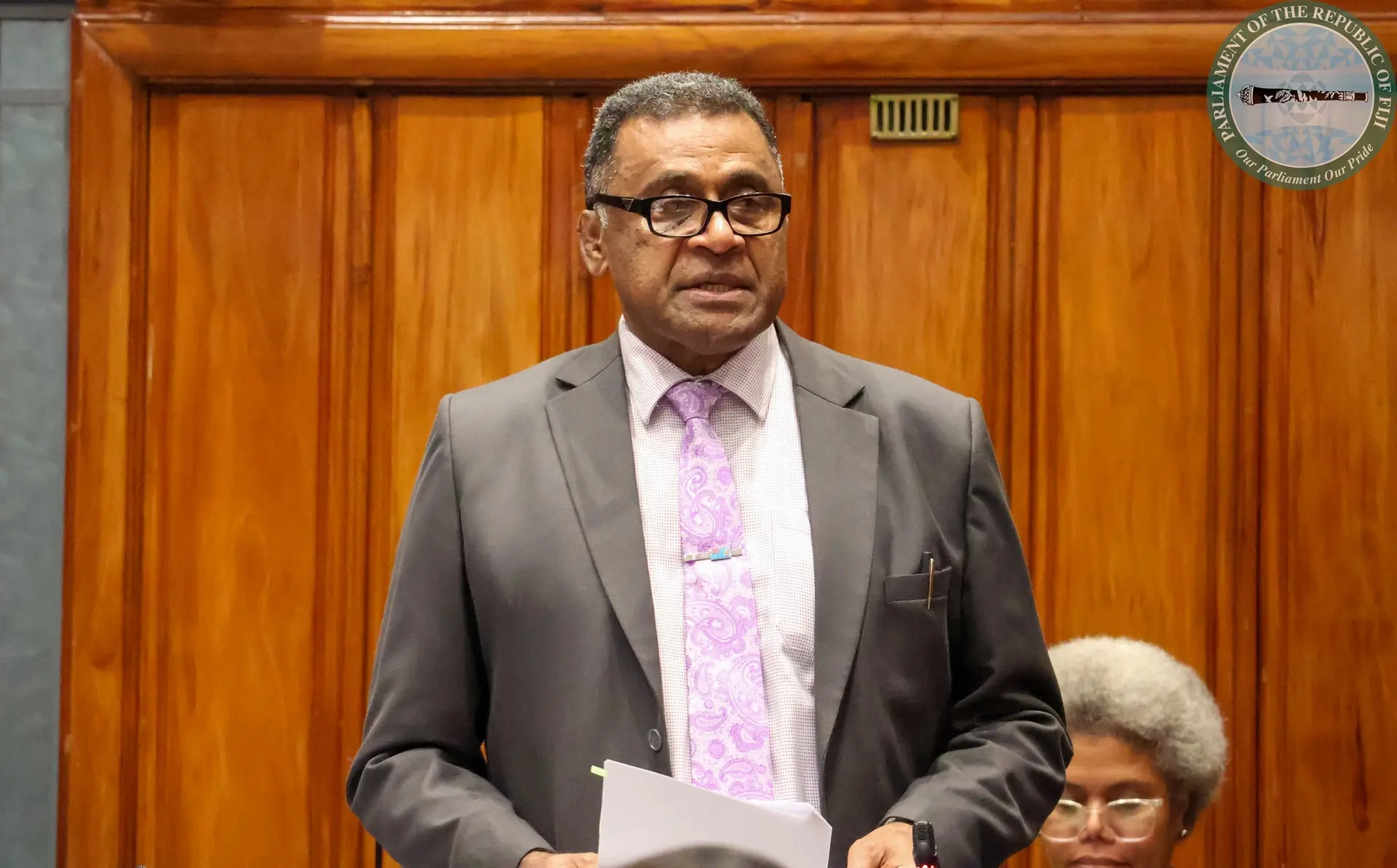
Finance Minister Esrom Immanuel speaking in Parliament on May 25, 2026.
Photo: Parliament of Fiji
Minister for Finance, Commerce and Business Development Esrom Immanuel has warned businesses against exploiting consumers through unjustified price increases.
He said companies found breaching pricing regulations would face legal action as Government agencies intensified market monitoring efforts.
Mr Immanuel’s comments follow concerns that some supermarkets and retailers had illegally increased prices of certain food items as Fiji braces for uncertainty surrounding global fuel price shocks caused by ongoing geopolitical tensions in the Middle East.
Related stories
“If they are caught, then they will subsequently be addressed accordingly,” he warned.
“Those price-controlled items are targeted specifically for our vulnerable people.”
Mr Immanuel said a monitoring team involving multiple ministries and the Fijian Competition and Consumer Commission (FCCC) would monitor non-price-controlled items to ensure prices remained fair.
Reddy backs Government stance
Meanwhile, former Member of Parliament, economist and public policy specialist Dr Mahendra Reddy supported the Government’s decision to resist calls to remove duty on unleaded and diesel fuels.
“Economic management during periods of global uncertainty requires discipline, prioritisation and long-term thinking, not politically convenient but economically unsustainable measures,” Mr Reddy said.
“The real challenge before Fiji is not simply how to temporarily lower pump prices, but how to protect vulnerable households while preserving fiscal stability, maintaining essential public services and safeguarding our fragile environment for future generations.”
Mr Reddy said good public policy required targeted interventions directed towards vulnerable households, public transport operators and essential sectors, rather than universal subsidies that disproportionately benefited higher-income groups.