FNU and GIZ Pacific Embark on a Seagrass Initiative
Seagrass meadows provide an important habitat for fisheries and thus play an important role in the ocean ecosystem and local livelihoods.
Thursday 05 October 2023 | 12:48
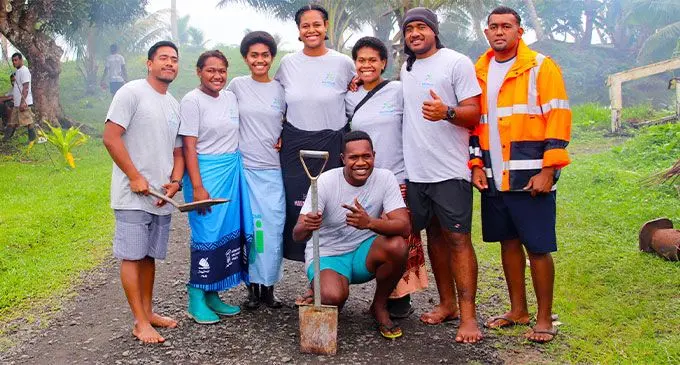
The Fiji National University’s (FNU) College of Agriculture, Fisheries and Forestry (CAFF), in collaboration with the Deutsche Gesellschaft für Internationale Zusammenarbeit GIZ GmbH (GIZ Pacific), has joined efforts in a seagrass restoration project in the Dawasamu district.
Since late July, the FNU and GIZ Pacific Management of Blue Carbon Ecosystem (MACBLUE) project has collaborated with the villages of Silana, Driti, and Nataleira, beginning with a knowledge exchange and awareness session on the importance and extent of seagrass ecosystems, led by the Fiji Locally Managed Marine Area Network.
CAFF Acting Dean, Dr Kaliova Ravuiwasa, has expressed his support for the environmental sustainability initiative spearheaded by Dr Shalini Singh, a Fisheries expert, and the Acting Associate Dean Learning and Teaching for the College.
Related stories
Dr Ravuiwasa emphasised that one of their core goals is to encourage partnership, and having to work with GIZ Pacific to sustainably restore seagrass for communities such as Nataleira Village is a great leap for the college.
“This commitment provides our fisheries students and staff with real-life experiences of giving back to our community. It also provides opportunities for research for our staff and career opportunities for our students,” Dr Ravuiwasa said.
In August, the villagers from Silana and Nataleira, together with FNU students, collaborated on a restoration exercise, putting knowledge into practice.
Nataleira Village Headman, Sakaraia Bola shared the impact of climate change and recent infrastructure developments on the livelihoods of the village.
“We are slowly experiencing the beauty of our coastal surroundings fading away. Additionally, some fish species that we used to consume before can no longer be seen,” Bola said.
Seagrass meadows provide an important habitat for fisheries and thus play an important role in the ocean ecosystem and local livelihoods.
Dr Shalini Singh shared that CAFF welcomed the opportunity to collaborate on the seagrass restoration project and looked forward to its success.
“Seagrasses are ranked with coral reefs and mangroves as the world’s most productive coastal habitat, and strong linkages among these habitats make the loss of seagrasses a contributing factor in the degradation of the ocean,” Dr Shalini shared.
“CAFF recognises the great potential to join forces and leverage synergies for the benefit of coastal communities in Fiji and the Pacific Islands. This collaboration will create knowledge on the management of blue carbon ecosystems in the Pacific, focused on seagrass meadows, as part of the MACBLUE Project.”
More than 30 students participated in the event, which trialled three restoration techniques using biodegradable mesh fabric, wire mesh, and sods. Close monitoring will be done at the restoration sites to identify key learnings for future restoration activities.
*FNU NIKUA LIFTOUT Issue No.9 September 2023*