FRCS receives ‘Snake Eye’ devices to fight drug smuggling
Devices will be used to inspect high-risk cargo and disrupt drug smuggling through legitimate trade.
Tuesday 06 January 2026 | 12:00
Updated 06 January 2026 | 14:09 FJT

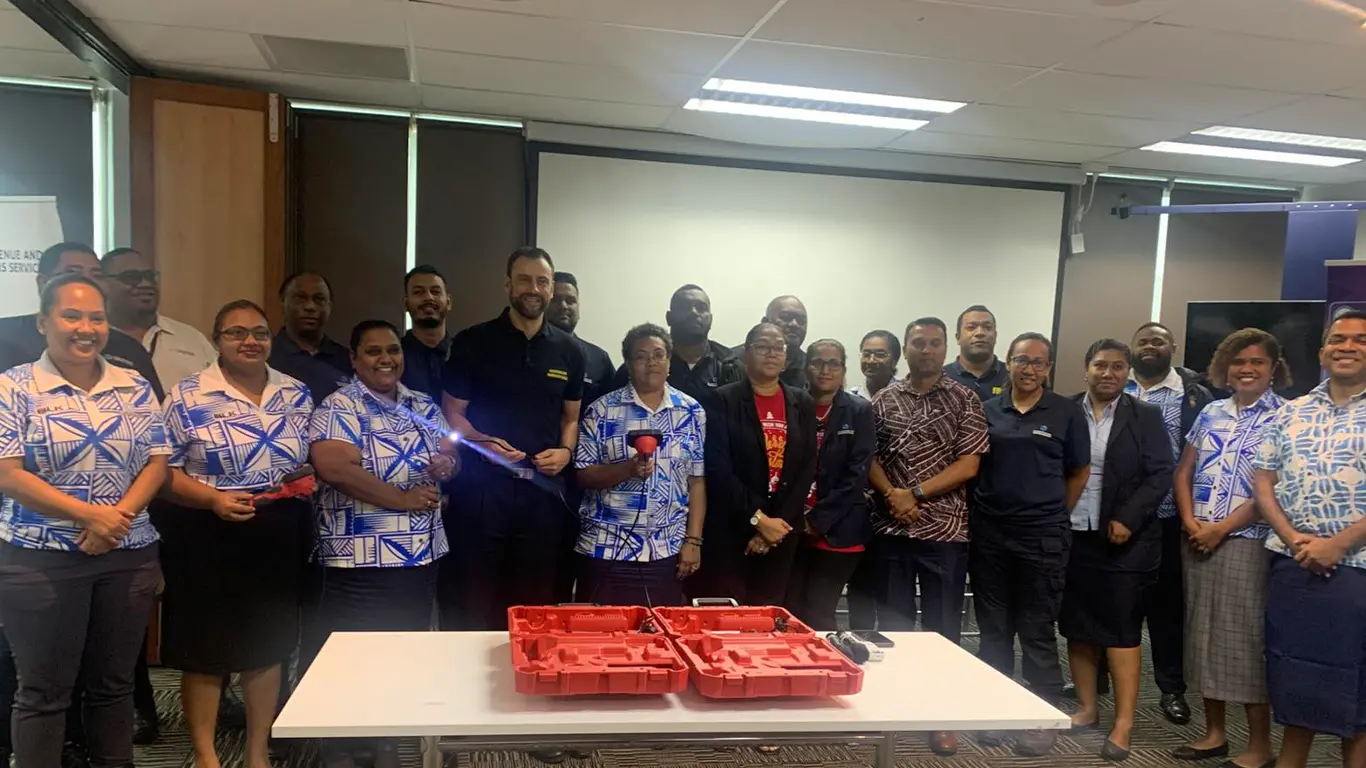
Australian Border Force donated two advanced “Snake Eye” inspection devices to the Fiji Revenue and Customs Service.
Photo: Fiji Revenue and Customs Service
“Snake Eye” inspection devices have been donated to the Fiji Revenue and Customs Service (FRCS) to strengthen border security against drug trafficking into Fiji.
The devices were received by FRCS director Border, Shelini Kumar, who said the tools would play a key role in inspecting high-risk shipments and enhancing border control capabilities.
“These tools will be instrumental in inspecting high-risk shipments and strengthening our border control capabilities,” Mr Kumar said.
Related stories
FRCS expressed its gratitude to the Australian Border Force (ABF) for the donation and reaffirmed its commitment to mobilising resources and strengthening operational capacity.
The donation was handed over by ABF counterparts who were in the country to conduct a training session with FRCS officers.
The training focused on advanced techniques used by traffickers to smuggle illicit drugs through international supply chains, and the critical role Customs plays in detecting and disrupting these threats.
The session was facilitated by Superintendent and Pacific Offshore Counsellor Uriah Turner, together with his ABF counterparts.
In a media statement, FRCS said discussions highlighted concerning trends observed at Australian borders, where smugglers increasingly exploit legitimate commercial shipments to conceal narcotics.
“These methods involve hiding drugs within cargo containers from the port of origin to their final destination, often using highly sophisticated techniques to evade detection,” the statement said.
“Among these tactics are the use of counterfeit seals, tampering with original container seals, and the ‘rip-on/rip-off’ method, where traffickers access containers without disturbing legitimate cargo.”
ABF facilitators also highlighted concealment strategies such as the “coke on a rope” technique, where drugs are hidden inside compartments of refrigerated containers.
FRCS said these methods have been detected more frequently during targeted inspections, underscoring the importance of risk profiling and prioritisation in Customs operations.
The authority said its officers remain committed to intensifying enforcement efforts by deploying both intrusive and non-intrusive inspection techniques.
“This includes deconstructing cargo and containers identified through risk assessments to eliminate the possibility of illicit drug concealment,” the statement said.
“Targeted operations focusing on void spaces within shipping containers will be implemented to ensure comprehensive examinations and disrupt cross-border criminal activity.”
FRCS said the initiative supports its ongoing efforts to detect and disrupt traffickers who attempt to exploit legitimate trade channels to smuggle drugs and other prohibited substances.
Feedback: laiseana.nasiga@fijisun.com.fj








