From hardship to hope: Kasanita Nadruku's journey of resilience
Born into a large family of 10 children, eight girls and two boys, Ms Nadruku learned responsibility from an early age.
Monday 22 June 2026 | 06:00

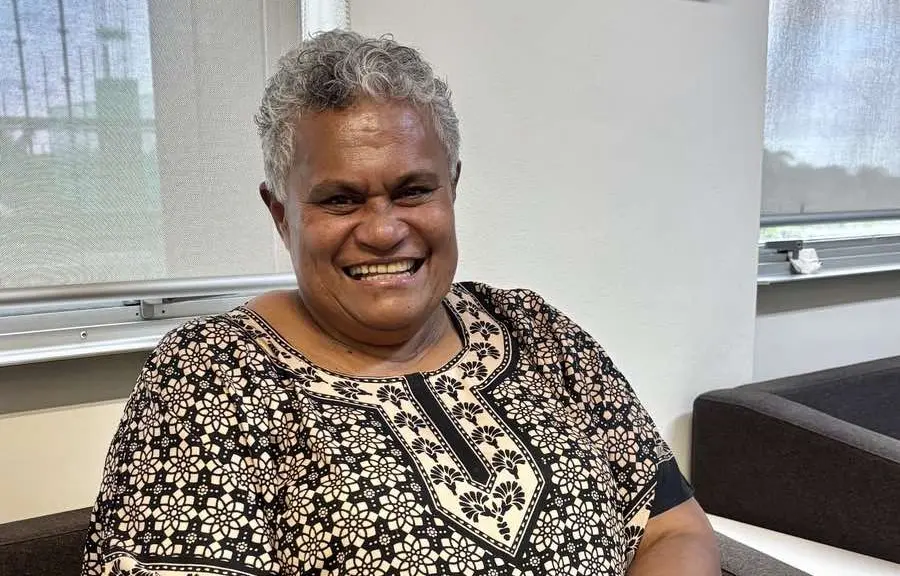
For much of her early life, Kasanita Nadruku believed the odds were stacked against her.
Raised in a broken home, forced to put aside her own dreams to help care for her siblings, and often labelled the "black sheep" of the family, the 62-year-old from Laselase Village in Nadroga has endured more than her fair share of hardship.
But rather than allowing life's challenges to define her, Ms Nadruku forged her own path — becoming one of the first women to drive a taxi in Suva, representing Fiji in women's soccer, serving communities as a civil servant, and today advocating for women, survivors of domestic violence and vulnerable families.
Related stories
Born into a large family of 10 children, eight girls and two boys, Ms Nadruku learned responsibility from an early age.
“I am the second child. Number 1, 3 and 5 have passed on. I am like the eldest one now,” she said.
Despite the challenges that came with growing up in a large household, she remains grateful for the values and lessons it taught her.
“I am grateful for the big family that I was raised in.”
She attended Saint Joan of Arc Primary School in Sigatoka, which was run by Catholic nuns at the time, before moving to Wainibuka for high school. As a Seventh-day Adventist, she had dreams of continuing her education at Fulton College in Tailevu.
However, life took an unexpected turn.
“I was raised in a broken family. My mum and dad separated when I was young,” she said.
“I could not finish school and attain my dream job because I had to help my mum look after the household.”
Instead of focusing on her own ambitions, she took on the responsibility of helping care for her younger siblings and supporting her mother.
Today, that commitment remains unchanged.
“My mother is still alive and she is 86 now, still alive and well. I am still looking after her today.”
Turning her life around
Ms Nadruku speaks openly about the mistakes she made in her younger years.
“I never went through an all-rosy childhood. I was rebellious and I would usually be called the black sheep of the family,” she said.
“The many things I went through. I did everything bad there is in this world. You name it, I have done it.”
She recalled spending countless hours drinking kava and making choices she later regretted.
“I drank kava for hours, but it came to a point where I told myself, this is where I draw the line.”
That decision became a turning point in her life.
Rather than dwelling on the past, she focused on building a future and creating opportunities for herself.
Breaking barriers
Among her many achievements, Ms Nadruku was one of the first women to drive a taxi in Suva, a profession largely dominated by men at the time.
She later joined the Ministry of Women and Culture in 1995 as a Women's Interest Officer, working with women and communities throughout the Western Division.
“I served the women in the Western Division,” she said.
Her work gave her a deeper understanding of the challenges women faced and strengthened her desire to make a difference.
She also developed a passion for sports and excelled across several disciplines.
“There is no sport I have not participated in,” she said.
“I played volleyball, netball, women's soccer, hockey and rugby.”
Her talent on the soccer field eventually earned her a place in the Fiji women's national team during the 1990s.
“In 1998, I went to New Zealand to play soccer.”
Like many journeys, however, hers was not without setbacks.
“Because of ill-discipline, I was let go from the team,” she admitted.
Rather than letting disappointment define her, she moved forward and embraced new opportunities.
A life of service
One of those opportunities came through former Cabinet Minister Seruwaia Hong Tiy, who offered her a position as a personal driver.
“She got me in to drive for her,” Ms Nadruku said.
“I was driving for her until two years ago when I had to go back to look after mum.”
She later worked as a security officer at the University of the South Pacific, where she made the most of opportunities for personal development.
“I worked among men. I took advantage of the benefits of being a staff member and completed some short courses there, which I graduated from.”
Throughout her career, Ms Nadruku has never been afraid to step into spaces traditionally occupied by men.
Whether driving taxis, working security or competing in sport, she has consistently challenged stereotypes and broken barriers.
Finding her voice
Today, she hopes her experiences can help others.
Having lived through family separation, hardship and personal struggles, she believes she understands the challenges faced by many women in Fiji.
“I come from a broken family,” she said.
“I want to be the voice of those who have gone through domestic violence, the women in rural communities, those who come from broken families and the vulnerable.”
Her desire to serve even led her to consider contesting a seat in local government, representing communities in the Sigatoka area.
Although those plans did not eventuate, her commitment to helping others remains strong.
“The setback has not derailed my spirit,” she said.
“Remember, I have been through the worst, tried it all and I think it will take someone like that to help fight the problem.”
Faith, family and purpose
Looking back on her life, Ms Nadruku sees a journey shaped by challenges, lessons and perseverance.
She continues to care for her elderly mother while encouraging others not to give up, regardless of their circumstances.
Through every setback and success, she says one constant has guided her.
“God has been faithful.”








