From the Dunes: Going All Batty
I have never feared bats. Despite the many Hollywood movies I’ve watched, where bats were portrayed as evil and maleficent, I have always found them fascinating.
Sunday 31 October 2021 | 14:01
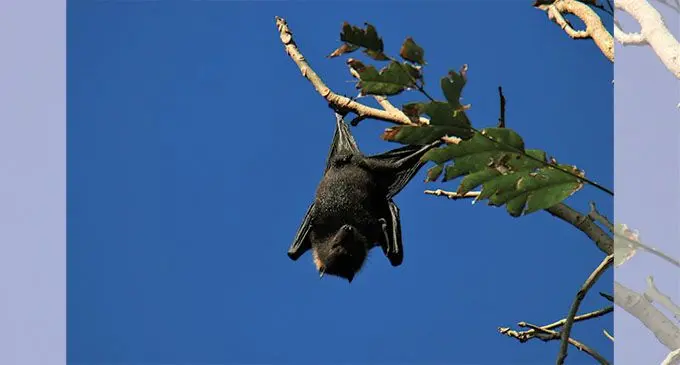
A Pacific Flying Fox hanging off one of its favourite roost in the National Park’s Mahakoni Forest. Photo: Mahipriya Meddepola
I have never feared bats. Despite the many Hollywood movies I’ve watched, where bats were portrayed as evil and maleficent, I have always found them fascinating.
As a child, I recall once walking up to a large Tahitian Chestnut tree, close to my home and staring up at its canopy. I remember a friend asking me then, “Hey, what you are looking at?”
I replied quietly and pointed: “There on that branch. It’s a little bat”. His unenthused response was, “Oi, the Beka. We eat them at home.”
Related stories
Well, I gave him a horrified look and I think he ceased been my friend that day. It was also the day I got to realise that humans have a varied animal diet.
This week is Bat Week. It’s an international celebration meant to raise awareness about the need for bat conservation. And it’s an important time to be reminded that the global bat populations are declining, some species have already disappeared, some are almost extinct, a good number are struggling, our bats need protection and that we’ve further endangered the world we live in.
I think that’s a fair assessment of how far we’ve come as a species, but today is not about humans. It’s about an amazing furry, flying mammal that also calls Earth, home.
Bats can be found nearly everywhere, except for the polar regions, extreme deserts, and some remote islands. There are more than 1400 species of bats in the world, making them the second most common group of mammals after rodents.
For Fiji, they are our truest mammals and they have been part ofthe Fijian island ecosystem way before our ancestors came ashore. Today, we have six species of bats living and sharing Fiji with us. A recent report on Fiji’s bats states: “Fiji’s bat fauna is of great conservation relevance because it includes one endemic species, several near endemics, and the best global populations of several threatened species.”
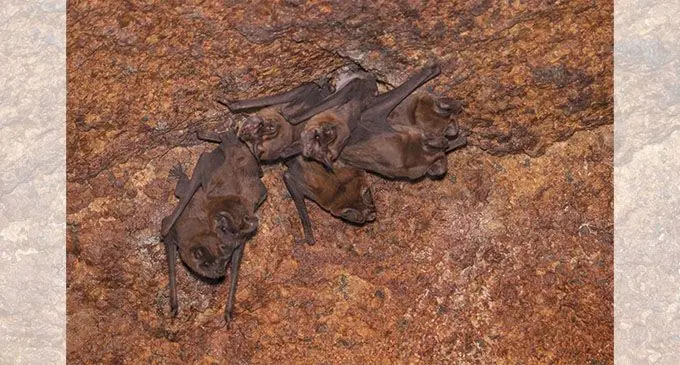
The Fijian free-tailed bat inside their only known roost in Fiji, the Nakanacagi Bat Cave in Vanua Levu. Photo: Bat Conservation International
BAT CAMPAIGN
The National Trust of Fiji, the organisation I work for, is conducting an online Bat Week campaign, called “Going All Batty”. We are using our social media presence to raise the much-needed awareness on the importance of bats and the need to protect them.
The campaign started on Monday and will end tomorrow.
We believe that education is key to protecting bats and we are hoping that as more people learn about bats, the misconceptions dissipate. It is important that people begin seeing bats for what they truly are, a force of nature.
Bats are so vital to the health of our natural world and economy. Although we may not always see them, bats are hard at work all around the world each night - eating tons of insects, pollinating flowers, and spreading seeds that grow new plants and trees.
There are two main types of bats: microbats and megabats. Most bats are microbats, which eat insects like moths, that come out at night.
To navigate dark caves and hunt at night, microbats rely on echolocation, a system that allows them to locate objects using sound waves.
This tells them an object’s size and how far it is away.
Megabats, on the other hand, live in the tropics and eat fruits, nectar, and pollen. They don’t use echolocation. Instead, they rely on their larger eyes and strong sense of smell to navigate and locate food.
Of the six species of Fijian bats mentioned earlier, we have three that are microbats, and three are megabats. When I joined the Sigatoka Sand Dunes National Park, I thought I was just going to be looking after a unique landscape and its associated forests. I forgot that forests are havens for all manner of creatures, including bats.
The National Park is a roost for the Pacific Flying Fox, which is a megabat. I believe we have the largest population in the Sigatoka Area (during roosting time).
These furry, squeaky, smelly and hanging-upside-down daytime residents are an added attraction for the National Park.
If you are curious to know what these bats forage at night, the answers are sprouting abundantly in the understory of their roost in the Mahakoni Forest.
OUR FIRST BAT SANCTUARY
In 2018, the National Trust of Fiji and partners, established the country’s first Bat Sanctuary in Vanua Levu, the Nakanacagi Bat Cave. This time it was to protect an endemic Fijian microbat, called the Fijian free-tailed bat, and its only known roosting cave.
I haven’t been to this protected area yet, but I’m intending to as I am one of its protectors. Perhaps, I will do an article on the Nakanacagi Bat Cave soon.
When we think of bats now, let’s not do the unfavourable thoughts and misconceptions.
They are more than what meets the eye and they have had millions of years upon this planet to claim a stake in its future.
They are very much Mother Nature’s pest-controllers, pollinators, and foresters.
We humans need to learn to share space and stop pushing these amazing creatures to the brink of extinction.
If you have time this weekend, I recommend that you watch “Fern Gully”. It’s an environmentally themed children’s movie that’s going to give you a whole new perspective on bats.
You should also take to social media and try to raise awareness on bats. Be a good Samaritan because we need a lot of you, if bats are to have a fighting chance.
Remember, bats are friends, and we absolutely and truly need them.
Until next time, stay safe.