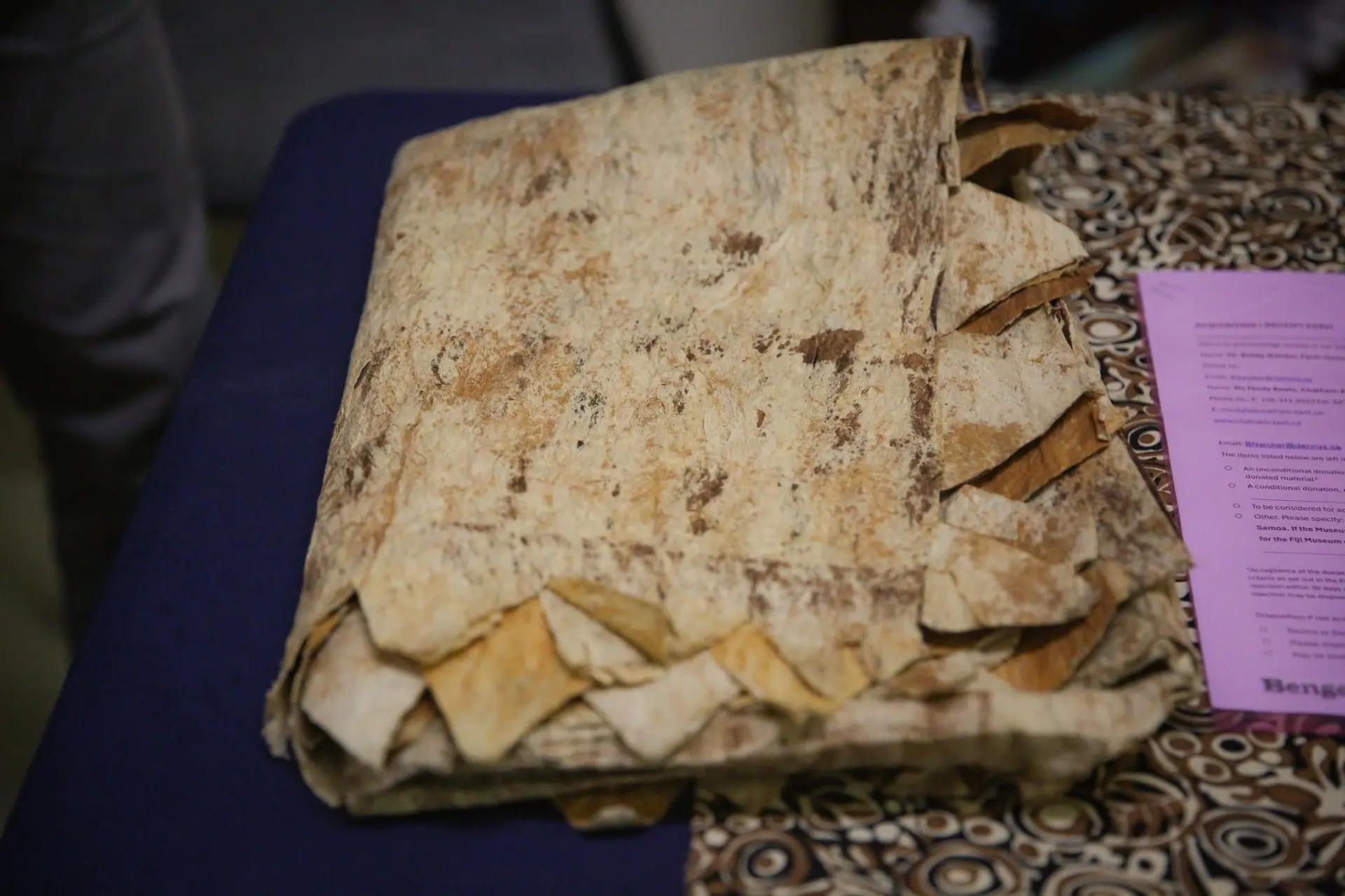
Historic Fijian masi returns home after 80 years in Canada
Wednesday 28 January 2026 | 09:00

The masi was originally taken to Canada by Edmund Tompkins Weberg in the early 1900s before entering the Chatham-Kent Museum’s collection.
A priceless piece of Fiji’s cultural heritage has returned home after nearly 80 years overseas, marking a significant milestone in ongoing efforts to repatriate Pacific artefacts and restore cultural identity.
The Fiji Museum on Tuesday formally received a historic masi (tapa cloth) that had been held at the Chatham-Kent Museum in Ontario, Canada, since 1946. The artefact was taken to Canada in the early 1900s.
The handover ceremony was witnessed by diplomatic representatives, including the High Commissioner of Canada and officials from the United States Embassy in Fiji, and was described by museum officials as the restoration of a long-lost cultural connection.
Related stories
Head of Prehistory and Archaeology at the Fiji Museum, Ratu Jone Baleivalu, said the return of the masi represented far more than the recovery of a physical object.
“Today’s handover represents not only its physical return, but also the restoration of a cultural connection that transcends time and distance,” Ratu Jone said.
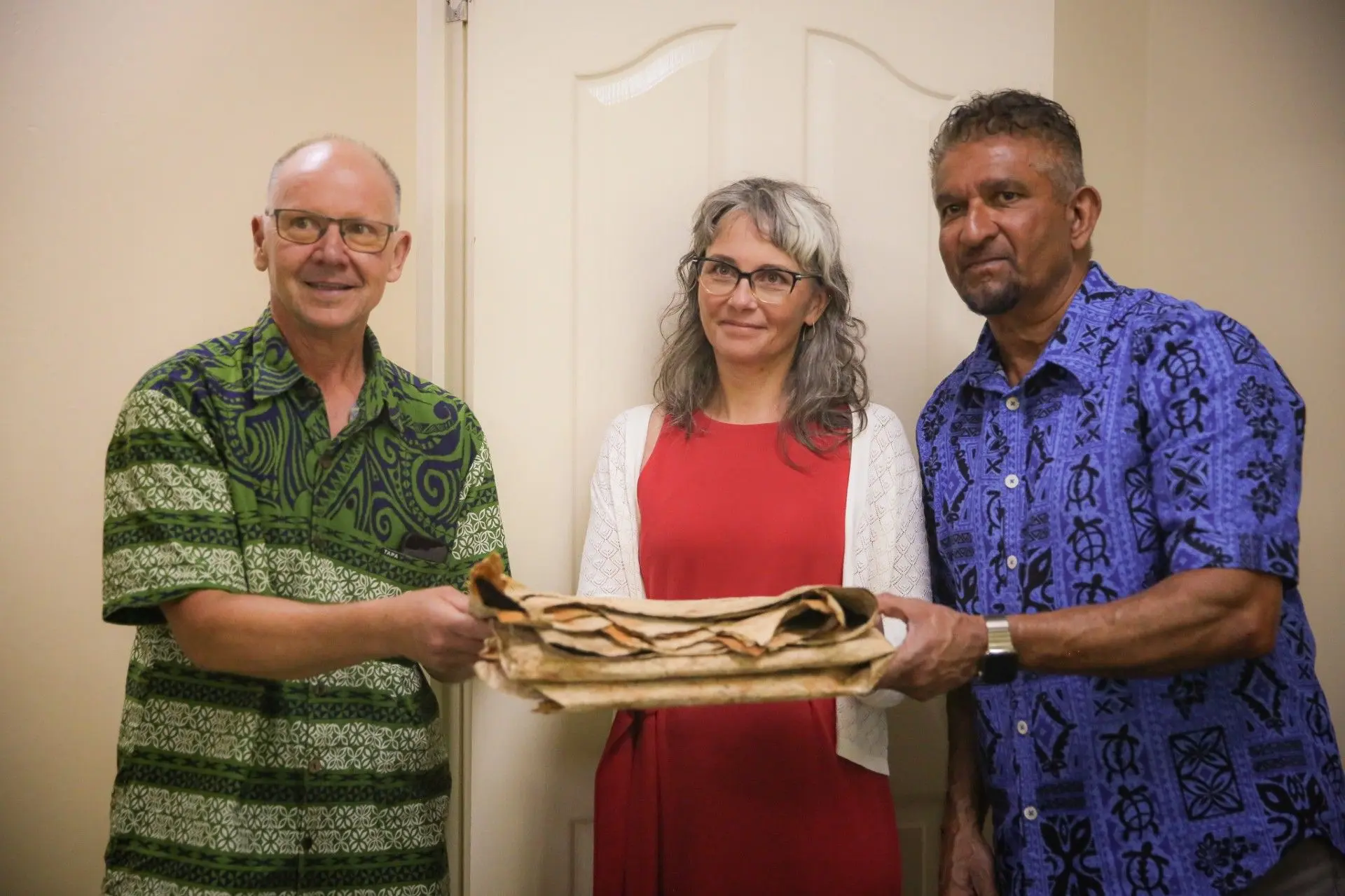
From left: Fiji Museum chief executive officer Armando Lowe, Canadian High Commissioner to Fiji Jennifer Lalonde and Fiji’s Honorary Consul in Canada Mr Bobby Naicker during the official handover of the masi (tapa cloth), at the Fiji Museum on January 27, 2026, marking the return of the cultural artefact to Fiji after nearly 80 years in Canada.
Kaneta Naimatau
The masi was originally taken to Canada by Edmund Tompkins Weberg in the early 1900s before entering the Chatham-Kent Museum’s collection. Its return was facilitated through the efforts of Fiji’s Honorary Consul in Canada, Mr Bobby Naicker, following an institutional de-accession process by the Canadian museum.
Mr Naicker said the circumstances surrounding how the masi left Fiji remained unclear.
“We don’t know how it was taken, why it was taken, or the full journey it made,” he said.
“If the masi could speak, it would tell stories of everything it has seen and experienced in its lifetime.”
Ratu Jone acknowledged the role of international partners in preserving the artefact over the decades and enabling its dignified return.
“We extend our heartfelt appreciation for the commitment shown in safeguarding this important cultural heritage item and facilitating its return to Fiji,” he said.
Masi, known across the Pacific as tapa, holds deep cultural and ceremonial significance. In Fiji, it is a living expression of identity, used in births, marriages, chiefly installations and funerals, and serves as a sacred medium through which history, status and social values are communicated.
The Fiji Museum said the masi will now be accessioned into the national collection, where it will be conserved, researched and interpreted according to professional museum standards. Detailed analysis of its designs and materials will help determine its place of origin and provide insights into traditional masi-making techniques used more than a century ago.
“As the national custodian of Fiji’s movable heritage, this is both a privilege and a responsibility,” Ratu Jone said.
“This artefact will be preserved not just for this generation, but for those yet to come.”
He said the return highlights the importance of respectful international collaboration and reflects growing recognition of the need to return cultural property to its rightful home.
The Fiji Museum continues to audit Fijian cultural materials held overseas and has successfully worked with several North American institutions to repatriate artefacts identified as originating from Fiji.
“This shared artistic tradition reminds us that the Pacific has always been interconnected,” Ratu Jone said.
“When cultural heritage returns with dignity and goodwill, everyone benefits.”