Hydrological Sensors to Help Farmers
Participants from the Ministry of Agriculture and Fiji Met tussled over the daily challenges faced by farmers and how information gathered from the sensors can assist them.
Saturday 01 January 2022 | 13:44
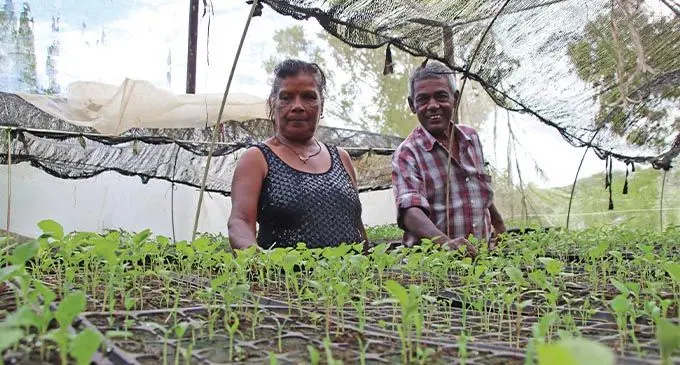
Ravi Shankar and Shanti Devi of Barara in the lower Sigatoka Valley region prefer planting papaya seedlings and selling them directly to farmers. Photo: Rosi Doviverata
Farmers living in the lower Sigatoka valley will benefit from the recently installed hydrological sensors at the Nacocolevu Research Station
Called the PLS-C system, the conductivity sensors measure salinity which help farmers know the amount of dissolved salts at the Nacocolevu site.
The TB3 rain gauge sensor provides farmers the rainfall intensity for a particular hour or the past 6 hours, 12 hours, and 24 hours.
Related stories
As a result, farmers get an overview on how it affects the water level at Nacocolevu site.
The information also helps farmers prepare themselves in advance based on the water level status or flood status.
For semi-commercial farmer Permal Gounder the information from the sensor will help avoid future disasters.
In his 10 acres farm located less than 10 metres from the winding Sigatoka River, vegetables and fruits experienced stagnant growth, rusty leaves, and discolouration from the river salinity.
This often takes place during the dry spell. Farmers along the river pump river water to the farm at low tide unaware that sea or salt water remain.
“I work closely with the Ministry of Agriculture extension officers. Having access to the information gathered from the sensor will help us make the right decisions.”
Mr Gounder suggested that a Facebook group or page is created to keep their close community in- formed.
His farm is dwarfed by one of the biggest vegetable farms in the area, Tian Farm.
Fiji Meteorological Service Principal Officer (Hydrology) Viliame Vereivalu said data or information received from Nacocolevu site such as the percentage of salinity level, water level status or flood level will be most useful for the surrounding areas and those living downstream.
“Data and information in the upper catchment will be different from the one collected at Nacocolevu site,” he said.
On the other side of the Barara area road and less than 20 meters from Naduri village is 60-year-old Ravi Shankar’s citrus farm.
Mr Shankar has been farming all his life.
The sole farmer considers vegetable farming a risky business because of the flooding in the area. He has resorted to growing papaya seedlings.
He is perhaps the only supplier in the lower Sigatoka valley area.
“The flash floods sometimes catch us off guard and we have to leave and take shelter just with the clothes on our back.”
Mr Shankar welcomed the installation of the hydrological sensor at the Nacocolevu Research Centre. He was hopeful that the information about possible flooding will reach them before the flood waters arrive at their doorstep.
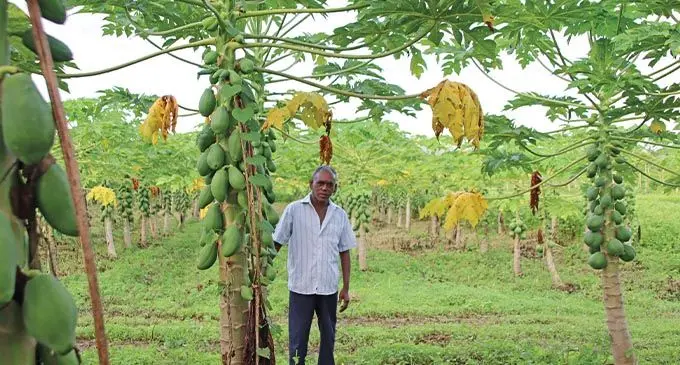
Permal Goundar, a semi- commercial farmer plants vegetables and papaya in his 10 acre farm in the lower Sigatoka valley. Photo: Rosi Doviverata
PROJECT BACKGROUND:
The Indian Government through the UN-India Partnership fund had provided funding for 7 Pacific Island countries (excluding Fiji) to improve their hydrological capacity both in terms of technical understanding amongst hydrologists as well as equipment to measure hydrological parameters such as precipitation (rainfall), water run-off, pressure, salinity and surface water depth.
The installation of the sensors in Fiji was made possible through the UNDP Pacific Office willingness to support the project through funding allocations from other projects. The installation of the hydrological sensors took place in 6 locations; i) Nacocolevu, Sigatoka and ii) Naboutini in Serua, iii) Tuvatu and iv) Mulomulo in Nadi and v) Dreketi and vi) South Taveuni in the North.
COST: $6k for 1 sensor and installation
Feedback: rosi.doviverata@fijisun.com.fj