Immigration reform not enough, says top Govt official
Deputy director urges coordinated approach to tackle skills shortages.
Monday 27 April 2026 | 16:30
Updated 27 April 2026 | 18:07 FJT

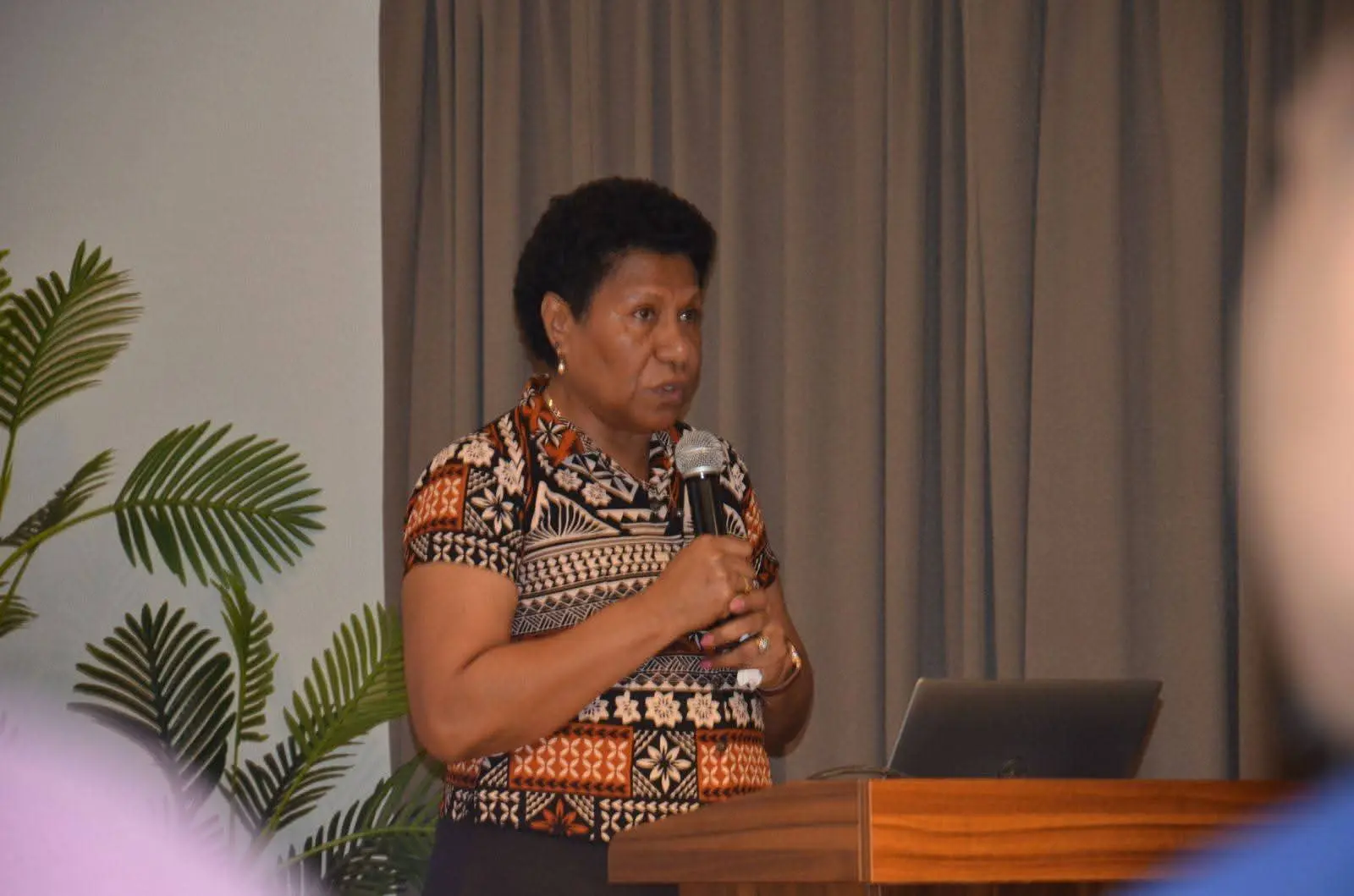
Immigration deputy director Rasieli Rabukawaqa, at the NCCI business symposium in Nadi.
PHOTO: SUPPLIED
Immigration reforms alone will not fix Fiji’s labour crisis, a senior Government official has warned.
Immigration deputy director Rasieli Rabukawaqa said reform on its own would not resolve the country’s worsening workforce shortages, calling for a broader and more coordinated response.
She made the comments at the Nadi Chamber of Commerce and Industry Business Symposium at Tanoa Skylodge Hotel in Nadi last Friday evening.
Related stories
Ms Rabukawaqa said that while reforms to the Immigration Act 2003 were near completion, deeper structural challenges remained.
Fiji’s labour market is under increasing pressure from skills shortages, outward migration and global competition for talent, even as sectors such as tourism, construction and agriculture continue to recover.
“These include skills shortages in critical and technical occupations, migration-driven labour mobility, brain drain, an ageing workforce in certain sectors, and a mismatch between training outputs and labour market demand,” she said.
She said migration trends presented both opportunities and risks, supporting remittances and skills development while also widening workforce gaps at home.
Reforms to the Immigration Act are expected to be tabled in Parliament soon, aimed at modernising the legal framework and improving responsiveness.
Ms Rabukawaqa said new systems, including Advance Passenger Information (API) and Passenger Name Record (PNR), are being introduced to strengthen border management.
“These tools will enhance our ability to conduct risk assessments offshore or prior to passenger arrival to our borders, enabling a more intelligence-led, proactive border management approach, and they will improve both security outcomes and facilitation of legitimate travel,” she said.
Despite these measures, she said urgent and coordinated action was needed to secure Fiji’s workforce future.
“No single institution can address the challenges alone; a sustainable workforce agenda requires a whole-of-government approach supported by the private sector, development partners and community,” she said.
“We remain committed to building a system that is secure, efficient, modern and very supportive of Fiji’s development aspirations,” she said.