Lautoka agencies develop plan to address growing street dweller population
Approximately 20 street dwellers, including five families, have set up camp near the city.
Monday 08 June 2026 | 15:00

Authorities are developing a coordinated response as concerns grow over increasing numbers of street dwellers and children living in Lautoka.
The Lautoka City Council (LCC) is concerned with the growing number of street dwellers and street children in the city and is seeking assistance from the Department of Social Welfare and the Fiji Police Force to address the issue.
Council acting chief executive officer Taitusi Rasoki said representatives from the council, the Department of Social Welfare and Police met last Tuesday to discuss possible interventions.
Related stories
He said the three agencies were developing a coordinated action plan, which would be discussed at their next meeting.
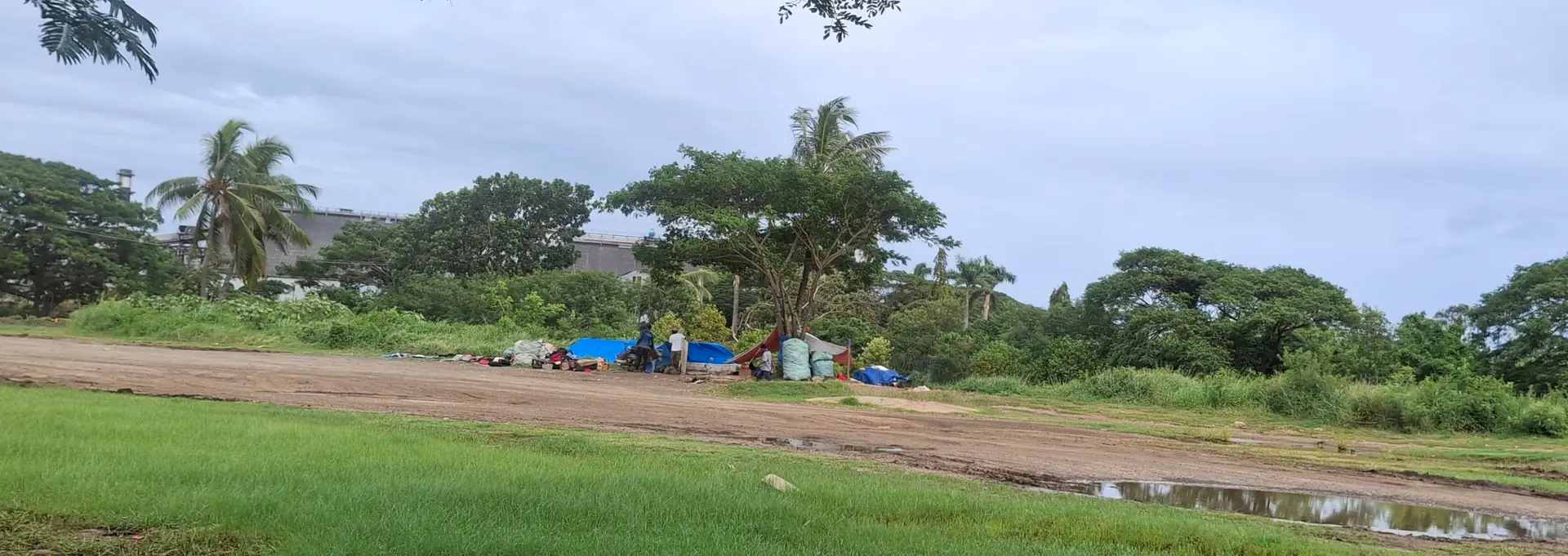
Mr Rasoki was responding to concerns about approximately 20 street dwellers, including five families, who have erected tents and are reportedly planning to construct makeshift tin shelters near the Lautoka seawall.
The group claims it was instructed by Police and the LCC to vacate Shirley Park and the seawall area and relocate to a site near the creek close to the Fiji Sugar Corporation mill.
Residents and business owners have raised concerns about alleged substance abuse among some members of the group, including the inhalation of kerosene and glue fumes, as well as frequent intoxication.
The group's leader, Lavenia Radinitavea of Viseisei Village in Vuda, said most members came from nearby communities, including Vitogo, Vuda and Yasawa.
She said many chose to live together because they had been rejected by their families and villages.
"Here we gather, eat together and pray together. We are now planning to make weekly contributions to start a barbecue business," Ms Radinitavea said.
"It is better for us to stay together because we understand and care for each other. We are often looked down upon because of the way we live. The LCC and Police moved us from Shirley Park and the seawall and directed us to our current location."
Ms Radinitavea said she earned an income by collecting cans and bottles around the city and selling them for recycling.
She said the group largely survived through the sale of recyclable materials, while some of the women also fished in a nearby creek.
Police spokesperson Ana Naisoro confirmed a meeting with the Department of Social Welfare had been scheduled to review the joint Operation Lesu Ki Vale initiative, as many street dwellers continued returning to town after being relocated.
"Acting CEO Mr Rasoki and the LCC legal officer visited the Police Station after meeting with Social Welfare and raised the same concerns," Ms Naisoro said.
"The Divisional Police Commander West informed them that Police continue to respond to complaints from business owners, particularly in the Shirley Park area, where these individuals are allegedly causing disturbances.
"Police remove them from the area; however, they often relocate to another part of town."
Ms Naisoro said authorities would continue reviewing Operation Lesu Ki Vale and strengthening collaborative efforts to address the issue.
Ministry continues outreach efforts
Meanwhile, the Ministry of Women, Children and Social Protection confirmed that, through the Department of Social Protection, it continues to engage with street dwellers in Lautoka through regular outreach and profiling exercises conducted in partnership with key stakeholders.
The ministry said joint sweep operations are carried out monthly, usually on the last Friday of each month, to assess the needs and circumstances of people living on the streets.
Approximately 30 individuals have so far been profiled and entered into a database developed through the joint operations.
The ministry said the information collected helps stakeholders develop targeted interventions and identify pathways for rehabilitation, reintegration and economic empowerment.
The ministry is an active member of the Lautoka Street Dwellers Taskforce, chaired by the Lautoka City Council and comprising government agencies, non-government organisations and community stakeholders.
The taskforce is developing a coordinated action plan to guide interventions and identify practical solutions based on the individual circumstances of street dwellers.
Discussions are also underway with shelter providers to explore temporary and long-term accommodation options.
In addition, the Department of Social Protection is identifying individuals who may be suitable for employment opportunities through the Lautoka City Council or its contractors as part of broader reintegration initiatives.
Community reintegration efforts
The ministry confirmed that direct engagement with individuals from communities such as Vitogo, Vuda and Yasawa had already begun.
Where appropriate, the ministry will facilitate referrals and engagement with provincial councils, village leaders and community representatives to support reintegration into their communities of origin.
The ministry said the overall objective was to ensure interventions were person-centred, sustainable and developed in consultation with the individuals concerned and their support networks.