Lautoka market gets $146k package to dispose waste
The Environment and Climate Change Canada’s $146,603 assistance package was given through collaboration between LCC and ROP.
Monday 01 June 2026 | 14:30

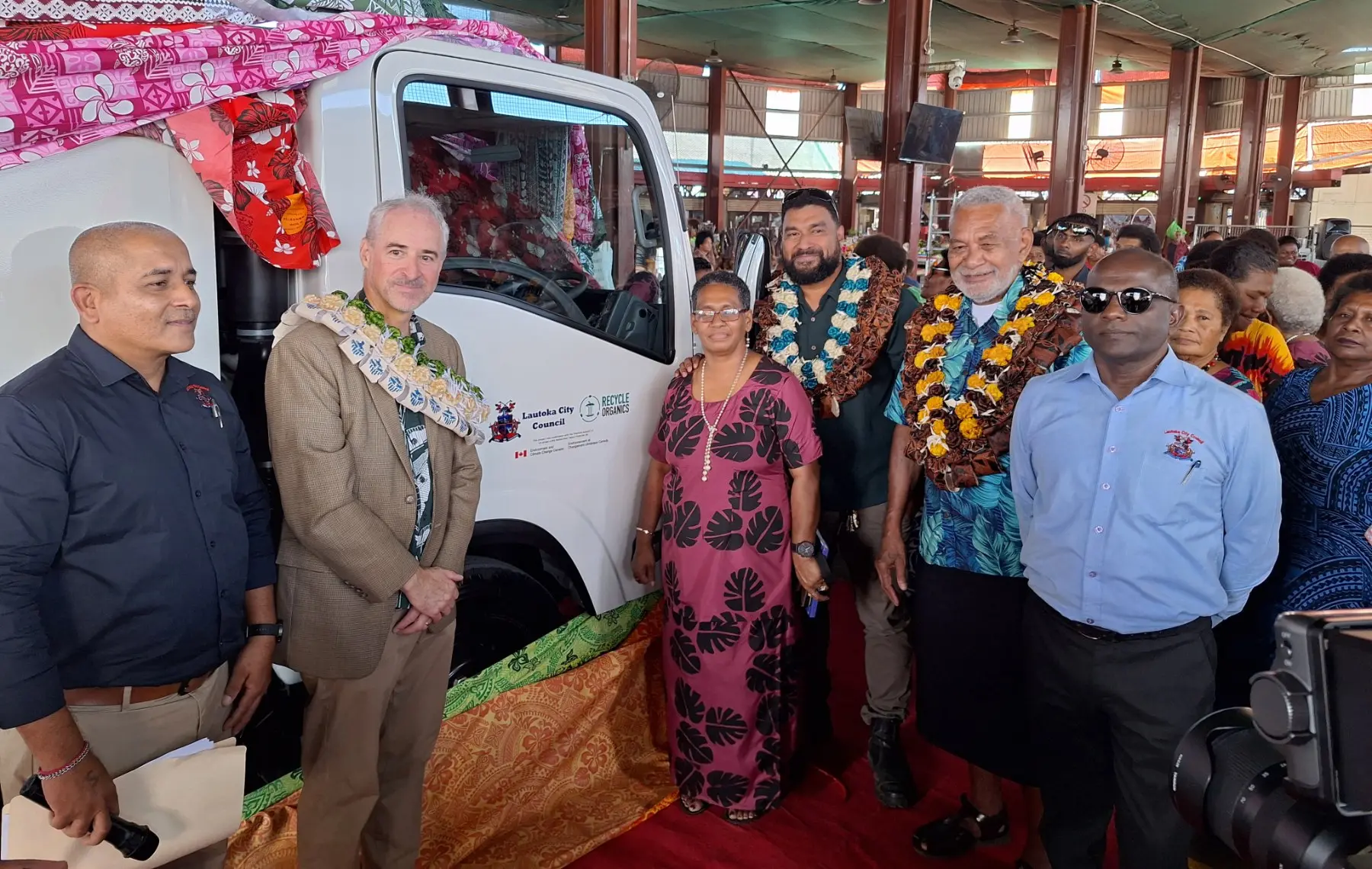
Canadian High Commission head of cooperation David Fournier handing over the 3-tonne Isuzu truck to the Lautoka City Council at the Lautoka Municipal Market.
Photo: Katherine Naidu
Canada-backed waste management project is helping Lautoka market dispose 3.2 tonnes of waste generated daily in reducing methane emissions and extending the durability of landfill sites.
Lautoka City Council (LCC) on Thursday received a new three-tonne Isuzu tip truck, 40 wheelie bins and 100 compost bins, along with composting kits, under the Recycle Organics Programme (ROP).
The Environment and Climate Change Canada’s $146,603 assistance package was given through collaboration between LCC and ROP.
Related stories
LCC special administrator chairman and acting chief executive officer Taitusi Rasokia said waste management remained a growing challenge for municipalities across the country.
“Waste management is becoming a challenge for any municipality, and LCC is no exception. Lautoka market vendors generate an average of 3.2 tonnes of waste a day,” Mr Rasokia said.
“The Japanese say a mixture produces waste, but separation produces resources,” he said.
“The project would reduce methane emissions through alternative organic waste treatment methods while increasing the council’s composting capacity.”
Mr Rasokia said the council had sold 170 tonnes of market compost between 2011 and April 2026, generating $52,530 in revenue.
Recycle Organics Fiji consultant Wayne Fuakilau said Fiji faced increasing pressure to manage waste because of limited land available for landfill expansion and challenges of securing new disposal sites.
100 compost bins will be distributed to households in pilot communities, allowing families to turn food waste into compost while contributing to Fiji’s climate action goals.