Low female workforce a missed opportunity, says ILO
Geneva-based official says increasing women's workforce participation is essential to addressing labour shortages.
Thursday 16 July 2026 | 11:00
Updated 16 July 2026 | 12:09 FJT

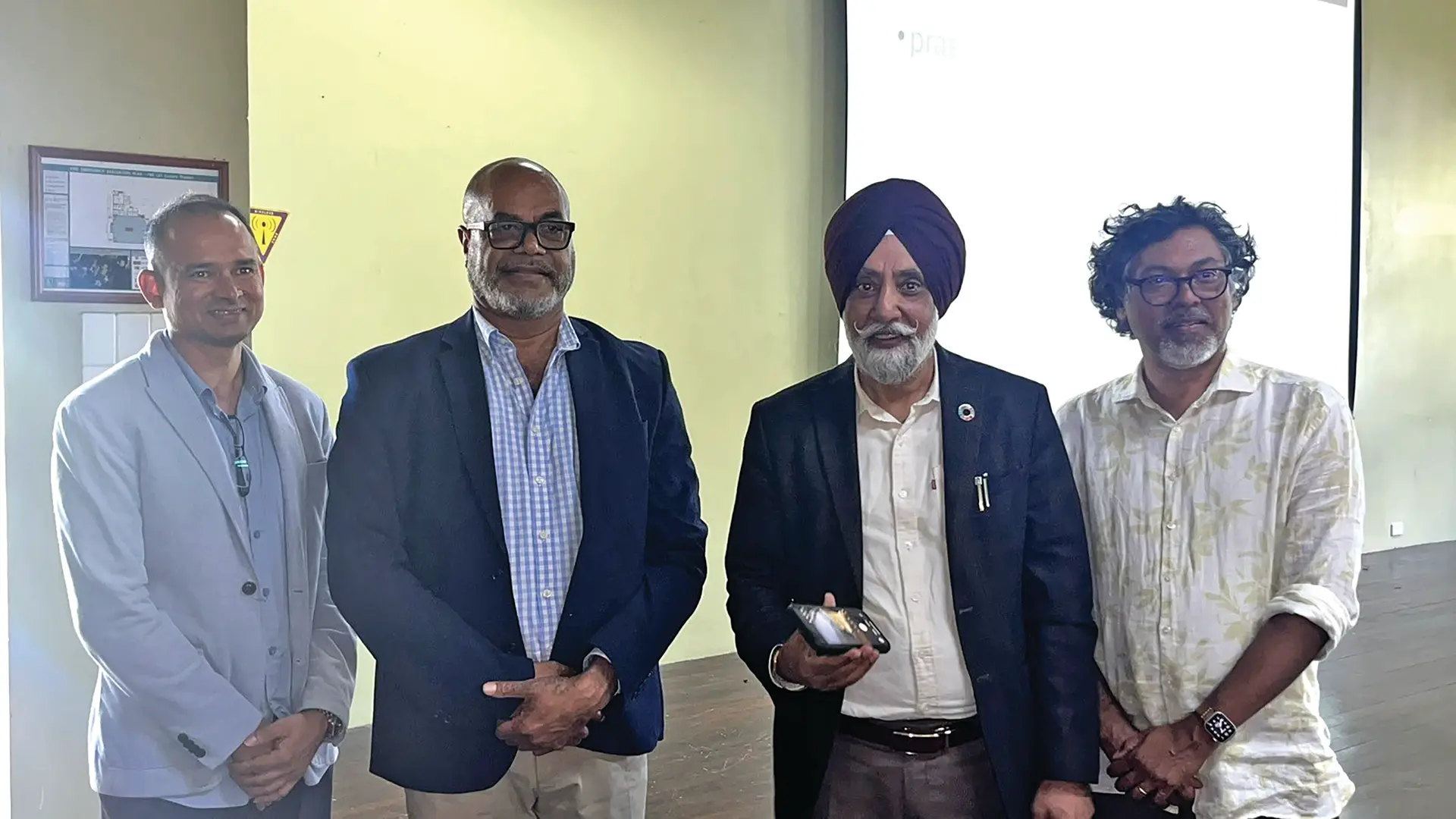
From left: Associate Professor of Economics Baljeet Singh, Permanent Secretary for Employment, Productivity and Workplace Relations Maretino Nemani, Professor and Head of the School of Business and Management Gurmeet Singh, and Head of Education and Training Naren Prasad on July 15, 2026.
Photo: Joseph Balolo
Fiji is failing to tap one of its biggest labour resources, with only four in 10 women participating in the workforce despite widespread labour shortages.
Speaking at the University of the South Pacific, International Labour Organisation (ILO) Geneva head of education and training Naren Prasad said Fiji's female labour force participation rate was about 40 per cent.
He said this was well below the level seen in many developed countries.
Related stories
"I am surprised to see Fiji's female labour force participation rate is rather low, around 40 per cent," Mr Prasad said.
"Women are not working. That's the potential that we have and we are not helping them go into the labour market."
Mr Prasad said many women were highly qualified but continued to face barriers that prevented them from entering or remaining in employment.
"They are highly qualified. There are other issues that we are not helping them integrate into the labour market."
Comparing Fiji with Europe, Mr Prasad said about 70 per cent of women there participated in the workforce.
"There is an issue here," he said.
Mr Prasad said Fiji's labour shortages could not be addressed without increasing women's participation in the workforce.
He said many businesses needed workers, yet many women remained outside the labour force because of limited childcare support, unsafe transport and a lack of policies to help them balance work and family responsibilities.
"No childcare. No safe transportation. Not really helping them integrate into the labour market," he said.
Mr Prasad said increasing women's workforce participation should form part of a broader "jobs first" approach to economic policy, alongside improving skills development, retaining local talent and using evidence-based policymaking.








