Masi maker keeps tradition alive
“It is part of who I am. It connects me to my people, to our history.”
Friday 13 June 2025 | 11:21
Updated 08 August 2025 | 15:36 FJT

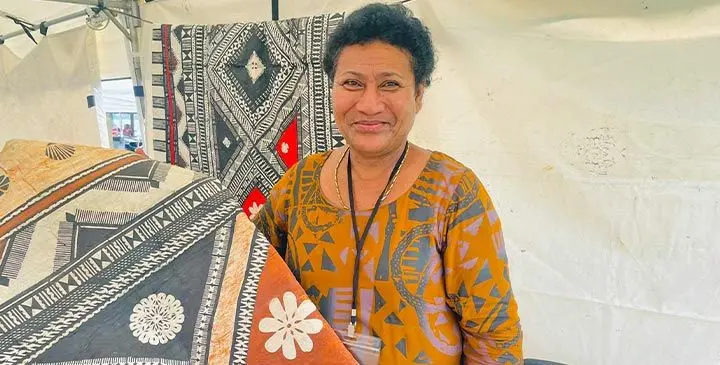
Biusalia Bosenawainibuka, during the Central Division Women’s Expo on June 12, 2025, in Suva. Photo: Rariqi Turner
In a quiet village in Wailotua in Wainibuka, Tailevu the rhythmic beating of Tuki Masi (Fijian Tapa) against stone echoes through the world today.
Biusalia Bosenawainibuka, 57, proudly showcasing her art of making Masi (Fijian Tapa) yesterday at the Civic Centre in Suva during the Central Division Women’s Expo.
Originally from Namuka-i-Lau and now married in Wailotua, Tailevu, Ms Bosenawainibuka is known in her community for the delicate precision of her work and the deep cultural meaning behind each piece.
Related stories
“Tapa making is not just a job,” she says.
“It is part of who I am. It connects me to my people, to our history.”
Each masi begins with the careful preparation of bark from the mulberry tree, pounded until soft, then dried and decorated. Customers from around Fiji and the world send in design ideas, sometimes traditional, sometimes personal and Ms Bosenawainibuka brings them to life with her own creative touch.
“I enjoy every step,” she says, her fingers gently tracing a half-finished piece.
“From the sound of the bark being beaten to the final brushstroke, it calms me. And it feeds my family.”
She works from home, were art blends with daily life. Family members help her gather materials, and neighbours stop in for advice on patterns.
“This is how we live. And how we survive.”
At the expo, Ms Bosenawainibuka proudly displayed her masi to a crowd of admiring onlookers. But for her, the real pride lies not in the sale, but in knowing that through her hands, a tradition lives on.
Feedback: rariqi.turner@fijisun.com.fj