Moves made to prevent disease affecting kava
The viral disease, caused by the cucumber mosaic virus (CMV), affected kava-growing regions throughout the Pacific.
Monday 28 October 2024 | 08:24

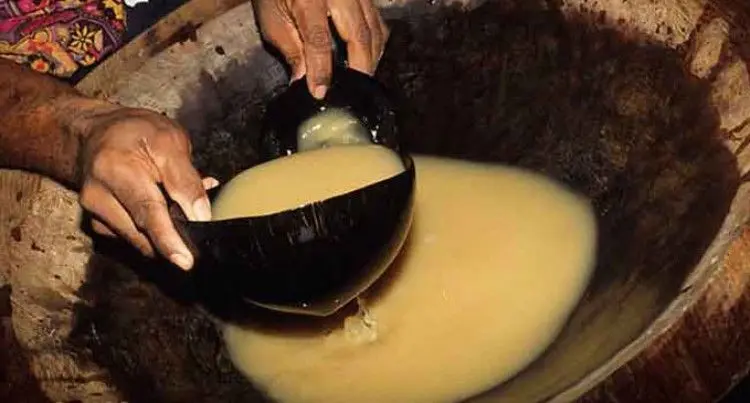
Moves are being made to curb a threat to our kava production and export.
Works are in place to scale back on sizeable kava farms because of a kava dieback disease that is being triggered by deforestation.
The viral disease, caused by the cucumber mosaic virus (CMV), affected kava-growing regions throughout the Pacific.
Related stories
In Fiji, the first recorded incidences date back to 1934 during large-scale cultivation in the absence of proper precautionary measures.
The kava dieback disease severely impacted the Northern Division from 1998 to 2003, and again from 2021 to 2023, research found. During these periods, the price of kava surged due to the opening of export markets, prompting farmers to engage in mass planting.
Large tracts of land were deforested, and expansive plantations were established, leading to a shift from traditional mixed-cropping systems to intensive mono-cropping.
TURN OF EVENTS TO IMPROVE PRODUCTION
To address kava dieback concerns, local efforts were reinforced through a four-day training on soil and plant health.
Led by Pacific Community’s soil scientist, Rohit Lal, the workshop at the Friendly North Inn in Labasa, educated farmers in the Northern Division on the importance of plant and soil health.
“Between 2003 and 2007, the incidence of kava dieback declined, possibly due to the hard lessons learned during the earlier outbreaks,” Mr Lal said.
“Additionally, the export markets had closed, and kava prices in Taveuni plummeted from FJ$50/ kg in 2002 to FJ$20/kg in 2004.”
As a result, farmers scaled back operations, reducing the size of plantations from large-scale production to smaller patches of about 1000 plants.
CHANGE IN TREND
The current spike in kava prices has once again spurred mass planting.
Mr Lal said large-scale plantations, without the necessary precautions, could lead to an increase in kava dieback cases.
“Prevention is critical, and the best approach to grow kava is in a traditional multi-cropping system within a partially cleared forest,” he said.
“Kava should be inter-planted with several different crops and grown below a tree canopy.”
SYMPTOMS OF THE DISEASE
Infected node cuttings from diseased stems can also introduce kava dieback into a nursery or field.
CMV infected kava plants and weeds can display a wide range of symptoms; a single plant may have several symptoms.
The initial ones usually include leaf mosaic, yellowing, curling, and puckering of the youngest leaves on a stem.
Feedback: shratikan@fijisun.com.fj