No country can fight transnational crime alone: Burke
Australia’s Tony Burke has urged Pacific nations to strengthen maritime security, intelligence-sharing, and regional policing against organised crime.
Wednesday 20 May 2026 | 08:30

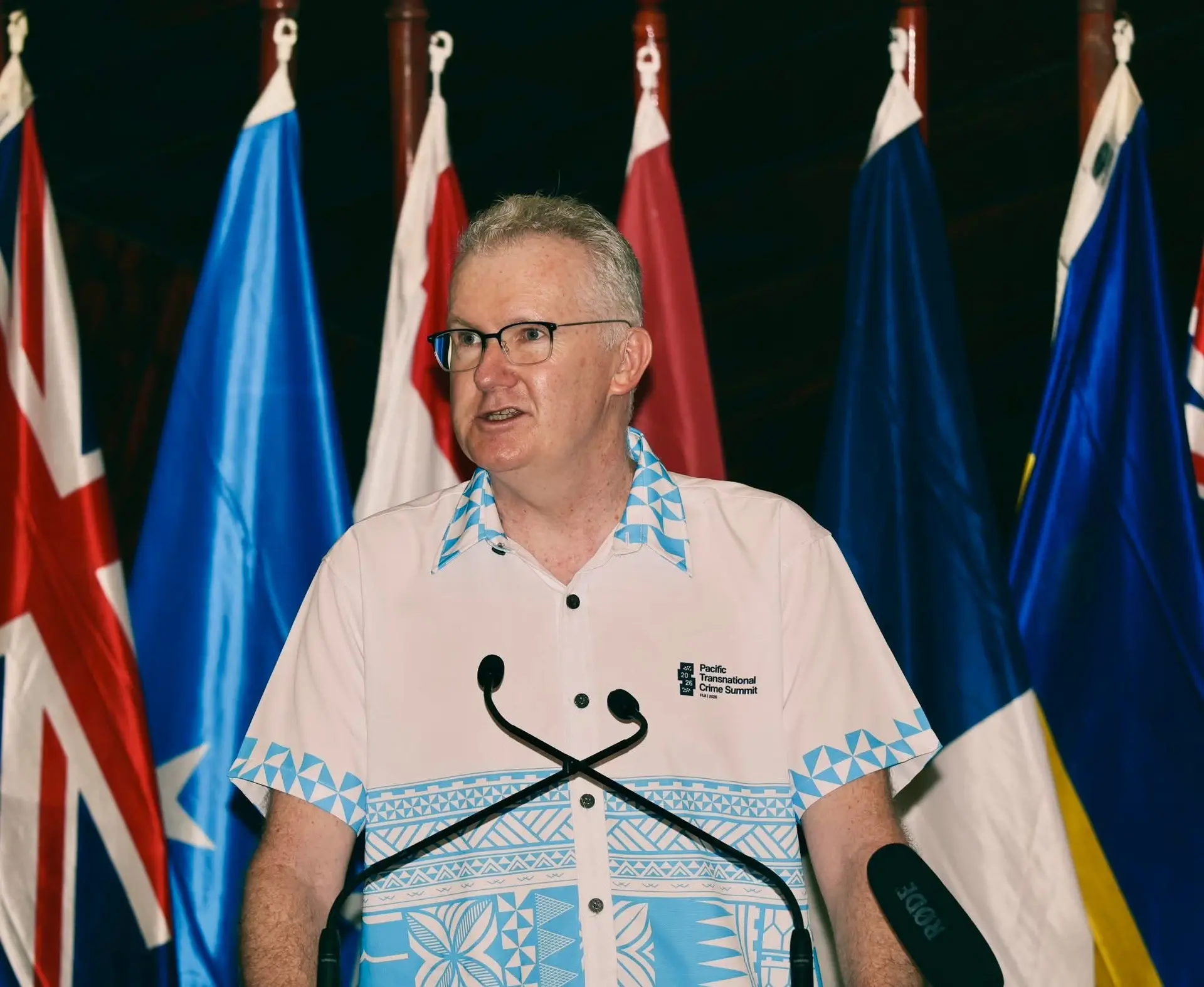
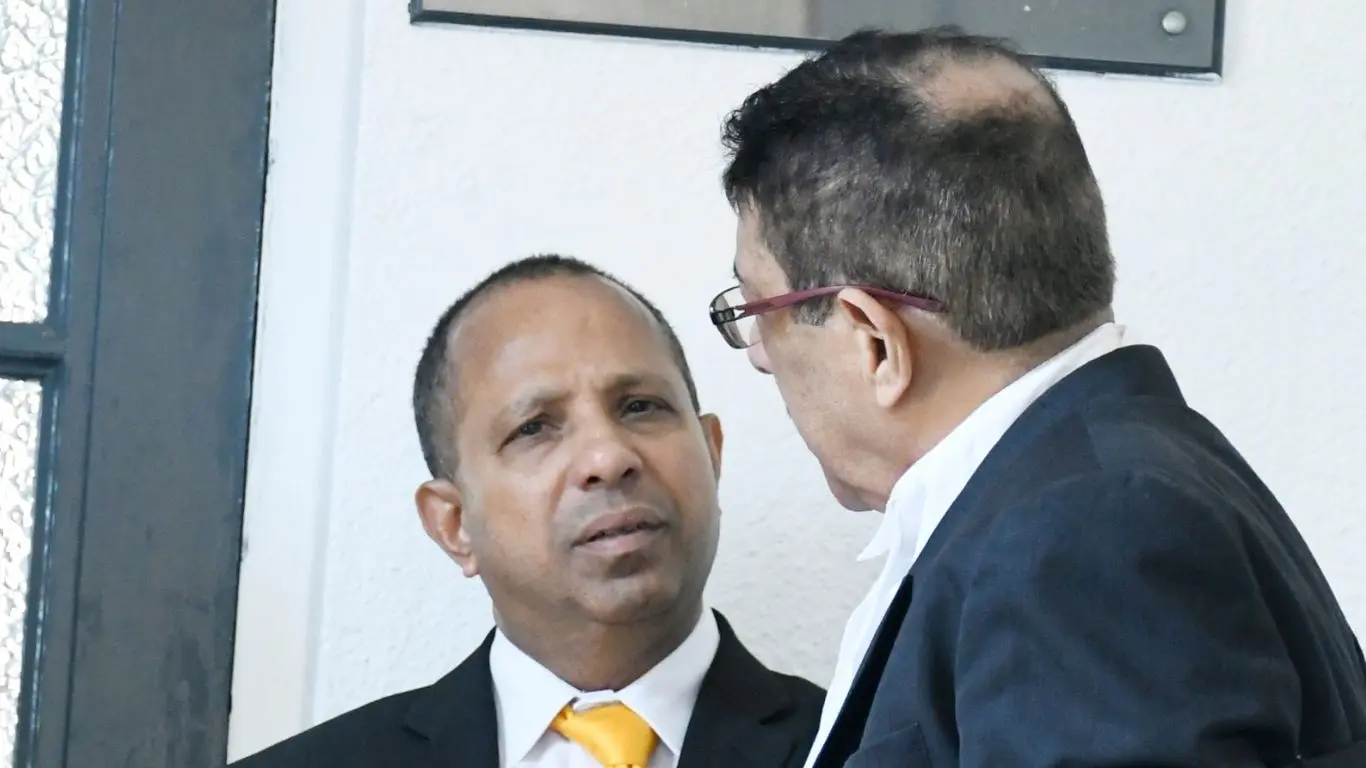
Australia’s Minister for Home Affairs, Immigration and Citizenship, Cyber Security, and the Arts, Tony Burke, at the Police Ministers Meeting during the 2026 Pacific Transnational Crime Summit at the Fiji Marriott Resort Momi.
Photo: Katherine Naidu
Pacific leaders are being urged to strengthen maritime security and intelligence-sharing as organised crime networks increasingly exploit regional vulnerabilities.
Australia’s Minister for Home Affairs, Immigration and Citizenship, Cyber Security, and Arts, Tony Burke, told Pacific leaders that organised crime groups are exploiting weak maritime borders, cyber vulnerabilities, and social pressures, making coordinated regional action essential.
Speaking at the Police Ministers Meeting during the 2026 Pacific Transnational Crime Summit at the Fiji Marriott Resort Momi Bay, Mr Burke said no country in the region could confront the threat alone.
Related stories
“The reality is this, no country acting alone can meet this challenge,” Mr Burke said.
He outlined four priority areas for Pacific cooperation: maritime security, intelligence sharing and connectivity, a whole-of-system approach, and support for regional policing leadership.
On maritime security, Mr Burke said the region’s geography was both an advantage and a vulnerability.
“Criminal groups exploit the distances between us and the water that connects us. Our coordinated maritime response needs to be intelligence-led, using the regional architecture we already have, making it harder for illicit goods to move through our region,” he said.
Law enforcement alone is not enough and Pacific nations must adopt a whole-of-system approach that addresses underlying social and economic vulnerabilities.
The fourth pillar focuses on strengthening regional policing structures, including the Pacific Policing Initiative and support for Pacific police chiefs.
“If we use this moment well and align our efforts, strengthen our cooperation and commit to practical outcomes, then we can shift the pathway; we can change the trajectory that we have seen in recent years,” he said.
“We can make it hard for the criminals to operate, and we can make the Pacific a safer, stronger and a more resilient region for us all.”
Feedback: katherine.n@fijisun.com.fj