One Week, Two School Fires Cause Concern
“NFA is committed to inspecting all primary and secondary schools across Fiji’s three divisions, prioritizing schools that are more vulnerable to fire risks. Our goal is to lower the incidence of school fires by ensuring compliance with fire safety standards.”
Wednesday 16 October 2024 | 12:27

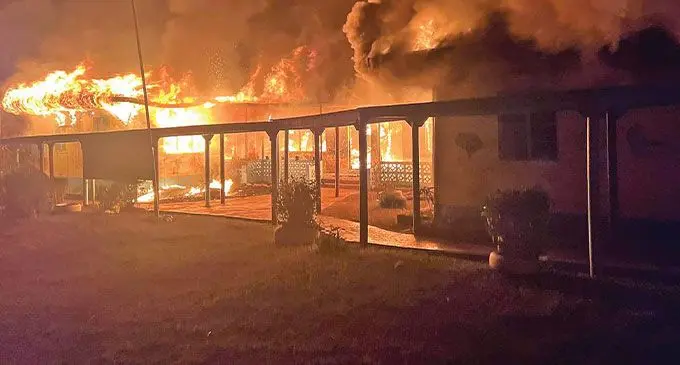
Desbhandhu Vitogo Primary School in Lautoka engulfed in flames on October 12, 2024.
In response to two recent school fires, the National Fire Authority (NFA) is intensifying inspections of schools nationwide to ensure compliance with fire safety regulations.
NFA chief executive Puamau Sowane emphasised the urgent need for action following incidents at Desbhandhu Vitogo Primary School in Lautoka on October 12 and Lomaivuna High School on October 6.
The NFA is also urging government and school authorities to prioritise investing in fire insurance for their properties.
Related stories
Lautoka
The fire in Desbhandhu Vitogo Primary School destroyed four classrooms, an office, staff room and computer room.
It was a concrete structure with corrugated iron roof and aluminum doors.
The structure sustained 95 per cent damage with the estimated cost damage set at $220,000. Students are currently studying in tents.
The items damaged in the fire cost $160,000, bringing the total estimated cost of damage to $380,000.
Items damaged in the school office and staff room included a photocopier, laptops, projector, computer sets, tablets, school stationery valued at $4000, office chairs and tables, air-conditioning units, staff room tables and chairs, refrigerators, gas stoves, cleaning agents and storage containers with groceries and lunch supplies for students.
An investigation is being carried out to determine the probable cause of fire.
Concerns
“To address the broader issue, NFA has initiated discussions with the Permanent Secretary for Education and the Minister of Education regarding the inclusion of a Fire Safety Curriculum in early classes. The aim is to ensure that children are educated on fire safety from a young age, empowering them to respond appropriately in emergency situations,” Mr Sowane said.
In terms of inspections, NFA has shifted its focus to high-risk schools, specifically those that provide boarding facilities, operate commercial kitchens, have heritage-listed or old classroom blocks, and are equipped with chemistry laboratories.
“We have already inspected 25 schools, including 12 major boarding schools in Viti Levu and Taveuni; each with student population exceeding 500. These inspections were either requested by the schools or scheduled by NFA as part of our high-risk assessment strategy,” he said.
“NFA is committed to inspecting all primary and secondary schools across Fiji’s three divisions, prioritizing schools that are more vulnerable to fire risks. Our goal is to lower the incidence of school fires by ensuring compliance with fire safety standards.”
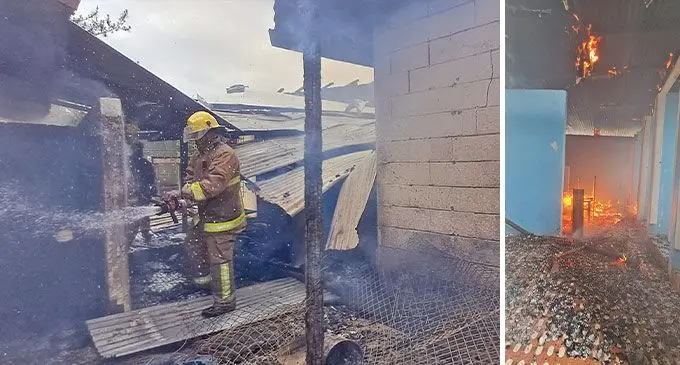
Lomaivuna High School caught fire on October 6, 2024.
Statistics
Mr Sowane said NFA statistics showed that from January 2019 to October 15, 2024, a total of 22 buildings in schools around the country sustained more than 90 per cent damage.
“This included 11 classrooms and offices, five dormitory buildings, six teachers’ quarters and a tool shed. The cost of damage from these fires was in excess of $3.7million,” he said.
Mr Sowane added that school managements and central Government should seriously consider investing in school properties through insurance.
“A lot of investment in education has been lost in the recent school fires,” he said.
“Government’s investment in schools is enormous and fire safety is always questionable, particularly when school children are present in school buildings. Insurance is an avenue to secure that investment in buildings, office and school equipment, furniture, staff and students.
“Additionally, we are collaborating closely with building and Government architects to ensure that all government buildings, particularly schools, meet the minimum fire safety requirements as outlined in the National Building Code of Fiji.
“We are also in the process of gathering data from the Ministry of Education regarding the ages of certain school blocks, which will help us tailor fire safety advice based on the specific risks associated with older structures.
“This initiative remains a top priority, and we will continue to provide updates as we progress towards completing the inspections and advancing fire safety education within schools.”
Feedback: inoke.rabonu@fijisun.com.fj