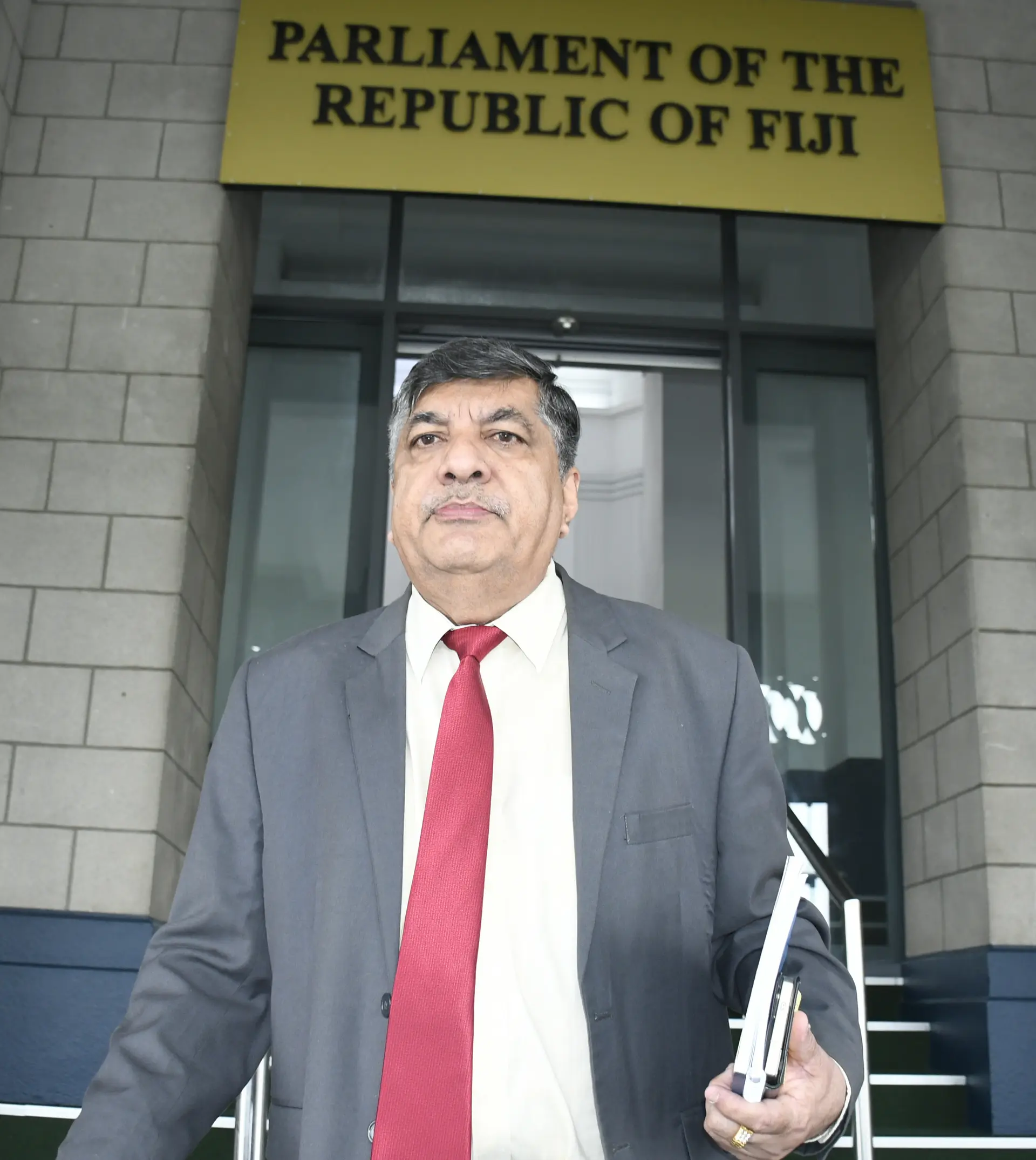
Phase Out Sedition Laws: Richard Naidu
“Freedom of expression is not just a principle; it is socially efficient. It allows society to listen, learn and take remedial steps,” Mr Naidu said. “Bigoted statements and racial statements we need to know and understand that there are those sentiments out there. If Government stops us from speaking, it cannot stop us from thinking, it only suppresses honestly held opinions."
Monday 26 June 2023 | 10:20

Sedition laws should be abolished, says Suva-based lawyer Richard Naidu.
Speaking during the Office of the Director of Public Prosecutions’ (ODPP) Annual Conference, Mr Naidu discussed the implications of Sedition laws on freedom of speech.
He said that cases like Karunaratne and The Fiji Times did not pose any substantial threat to the stability of the State, questioning the necessity of such stringent laws.
Related stories
Mr Naidu further asserted that freedom of expression can be a complex and messy affair.
“Freedom of expression is not just a principle; it is socially efficient."
"It allows society to listen, learn and take remedial steps,” Mr Naidu said.
“Bigoted statements and racial statements we need to know and understand that there are those sentiments out there."
“If Government stops us from speaking, it cannot stop us from thinking, it only suppresses honestly held opinions."
“We have to learn to respond to hate speech, racism, etc. while using social media and we see it there,” he said.
According to Mr Naidu, sedition laws are gradually being phased out worldwide due to their legal inadequacies, democratically inconsistent with freedom of expression, and potential tool for pressuring opposing voices.
“Fiji’s recent history with sedition bearded this out that none of the so-called ‘seditious acts’ had the slightest impact on people’s attitudes towards the government, trigger-happy government leaders focused on suppressing any opposing views (or troublesome newspapers),” Mr Naidu said.
“The ODPP must strengthen itself institutionally to be independent of (every) government and must be free to take a proportionate and mature approach to complaints related to controversial speech and publication in the public interest
“In recognising that, win or lose, investigations and prosecutions are themselves a burden on suspects and defendants.
“The threat of investigation and prosecution has its own ‘chilling effect’ on others and inhibiting freedom of expression merely closes a social safety valve which is not in society’s interest,” Mr Naidu said.
Story by: ashna.kumar@fijisun.com.fj