PM Rabuka to meet EFL over power rationing plans
EFL has warned that without urgent Government financial support by May 22, controlled load shedding or nationwide power rationing could begin from June 2026.
Wednesday 20 May 2026 | 10:30

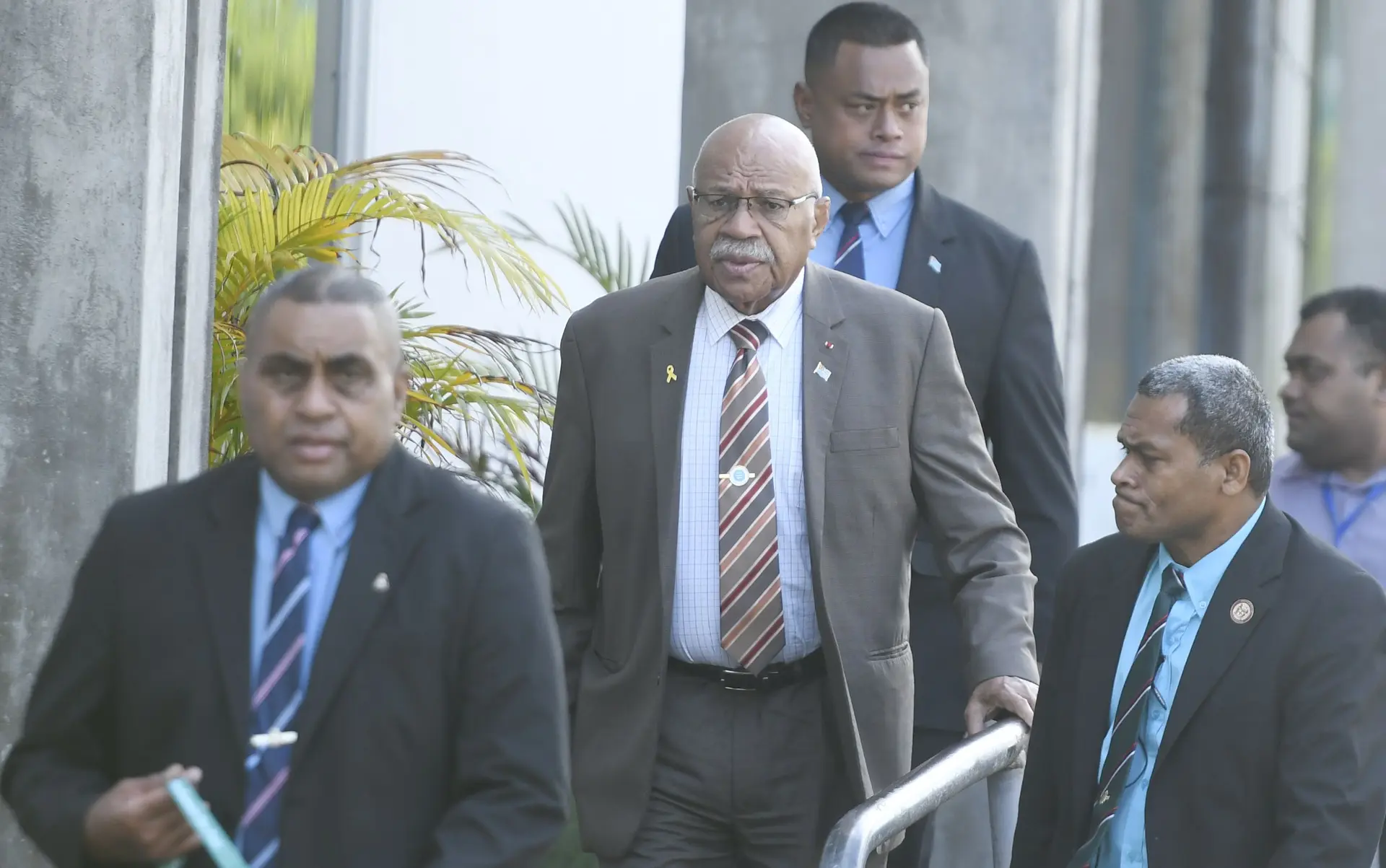
Prime Minister Sitiveni Rabuka outside his office on September 30, 2025.
Amid Energy Fiji Limited’s stance to carry out power rationing, Prime Minister Sitiveni Rabuka will meet chief executive officer Fatiaki Gibson today to discuss solutions to ease the power crisis threatening to affect ordinary Fijians.
“I will talk to him tomorrow (today). Hopefully we can resolve something or make whatever EFL wants to do bearable for the people,” Mr Rabuka said after yesterday’s Cabinet meeting.
EFL has warned that without urgent Government financial support by May 22, controlled load shedding or nationwide power rationing could begin from June 2026.
Related stories
On whether Government would meet the deadline, Mr Rabuka did not give a direct commitment. He said EFL executives had already been trying to reach Minister for Finance Esrom Immanuel.
EFL is losing money on every unit of electricity it generates because of surging global fuel costs driven by conflicts in the Middle East and Europe. It costs EFL 86.70 cents to generate one unit using diesel, but it only charges customers an average of 38.4 cents — a loss of nearly 48 cents per unit.
Mr Rabuka said: “It doesn’t have to end up in blackouts. It has to be properly structured power use reduction.”
As Fiji enters the dry season, water levels at the Monasavu Dam have reduced at the country’s main hydroelectric source, forcing greater reliance on expensive diesel generators.
Nakasi housewife Mereoni Naivalu expressed frustration yesterday, saying: “We already struggle with food prices and now maybe no power too? How are families supposed to cope?”
Litia Waqairatu from Nausori added: “We pay our bills every month. It’s frustrating to hear we could still face blackouts.”
EFL confirmed hospitals, emergency services, water systems and other essential services would be protected under the rationing plan.
Mr Rabuka said the Australian Government’s fuel support contribution had been received but would go through the national budget to help soften cost-of-living pressures.