Residents fight for river protection
Landowners fear that their lifeline is under threat, and the ocean it runs into may soon suffer the same fate.
Saturday 20 December 2025 | 19:00
Updated 12 January 2026 | 18:41 FJT

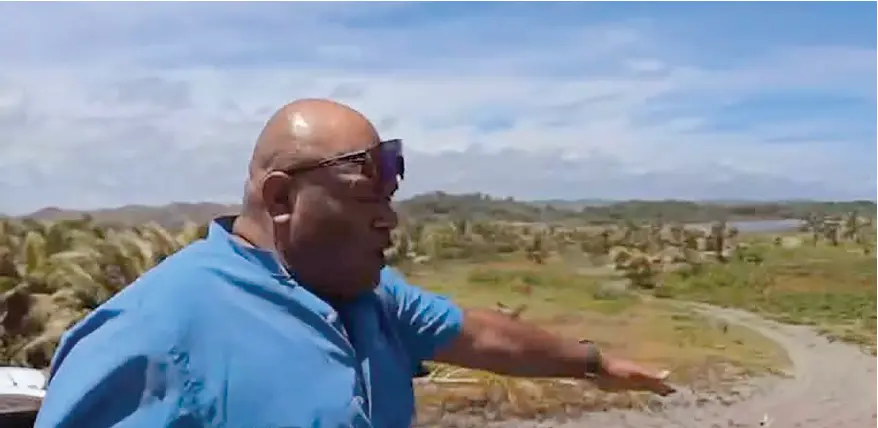
For generations, the Sigatoka River has been the lifeblood of Tikina o Nasigatoka, providing food, transport and a foundation for culture and identity.
The tikina make up seven villages located opposite the sleepy Sigatoka Town in the western part of Fiji. Along the banks of the Sigatoka River and the dusty road that runs parallel are the villages of Nasigatoka, Yavulo, Nasama, Vunavutu, Volivoli, Nayawa and Laselase.
Landowners fear that their lifeline is under threat, and the ocean it runs into may soon suffer the same fate.
Related stories
They fear the plans set out by Magma Mines Pte Limited will damage the riverbed, poison the water, and leave a trail of destruction along the Coral Coast - a well-known stretch of coastline on the main island of Viti Levu, running between Suva and Nadi. It’s one of Fiji’s most popular tourist regions.
Magma Mines Pte Limited is a subsidiary of Dome Gold Mines Limited. Dome describes itself as an emerging iron sand, copper, gold exploration and development company focused on locating and developing significant mineral discoveries in Fiji.
They are pushing to dredge nine kilometres of the Sigatoka River.
The district council rejected the proposal during its November 19, 2024, meeting. But residents said the fight is far from over.
“If we lose this river, we lose ourselves,” Laselase Village headman Sakeyasa Rakaria said.
The community is terrified of seeing their river and the ocean it feeds changed forever.
“This river raised us. If it dies, a part of us dies too.”
Standing on the riverbank where children once learned to fish, Mr Rakaria said the threat extends far beyond the dredging site.
“Everything from here flows into the ocean. If we poison the river, we poison the sea. If the sea dies, our culture dies with it.”
Mr Rakaria said the river provides fish, prawns, crabs, mussels and clean water – essentials that money cannot replace.
“No amount of compensation can bring back a dead river,” he said.
“No money can bring back a dead ocean.”
Sediment, chemicals and dying reefs
Villagers fear dredging will cloud the sea with sediment, suffocating coral reefs that support fisheries and tourism.
For Salanieta Anareta who sells freshwater bivalves, the river is her only source of income. She worries the dredging will destroy not just the river ecosystem, but also the ocean she grew up worshipping.
“I am scared every day,” her voice shaking. “If the dredging starts, I will lose my livelihood. And when the ocean fills with mud, all our food will be gone. Who will help us then?”
She says her fear is not only economic, it is emotional.
“My father taught me to fish here. My children play in this water. How can I watch this place destroyed?”
A village elder’s grief and anger
Village elder Lanieta Burasia said the most painful part is when landowners are never given a voice.
“We were left in the dark,” she said. “No one came to sit with us. No one listened to our fears. It feels like we do not matter.”
Her words carried both anger and deep sorrow.
“It breaks my heart,” she said. “The ocean is our mother. The river is her blood. And now someone wants to drain it for profit.”
She fears once dredging begins, mining will follow, and the ocean — already fighting erosion and rising seas — will face another blow.
189 million tonnes of loss
Documents shown to villagers outline that the company plans to remove 189.5 million tonnes of sand and minerals, natural barriers that protect the coastline.
Village leaders know that once the sand disappears, seawater will surge inland, swallowing farmland and washing over Kulukulu, Vunavutu and Nasama villages.
“They will take our sand and leave us with floods,” Mr Rakaria said. “They will take our fish and leave us hungry.”
“This is not development, this is destruction”
Many villagers say the proposal does not feel like progress at all.
“They call it development,” Ms Anareta said. “But what kind of development destroys the land and the sea? What kind of development makes people cry in their own homes?”
Others echoed the same sentiments.
“We are not against development,” Ms Burasia said. “But not one that costs us our river, our ocean, our spirit.”
A community refusing to break
Despite the pressure, the people of Tikina o Nasigatoka said they will not back down.
“We will fight for this river until our last breath,” Mr Rakaria said. “We owe that to our ancestors, and to the children who will come after us.”
Their message is clear: the Sigatoka River and its ocean are not just resources. They are life.
And the community is determined to protect that life no matter how long the struggle takes.
- THIS IS PART ONE OF THREE SERIES