RFMF proposes independent Military Court in constitutional reforms
Military Court would replace current General Court Martial
Friday 03 July 2026 | 06:30

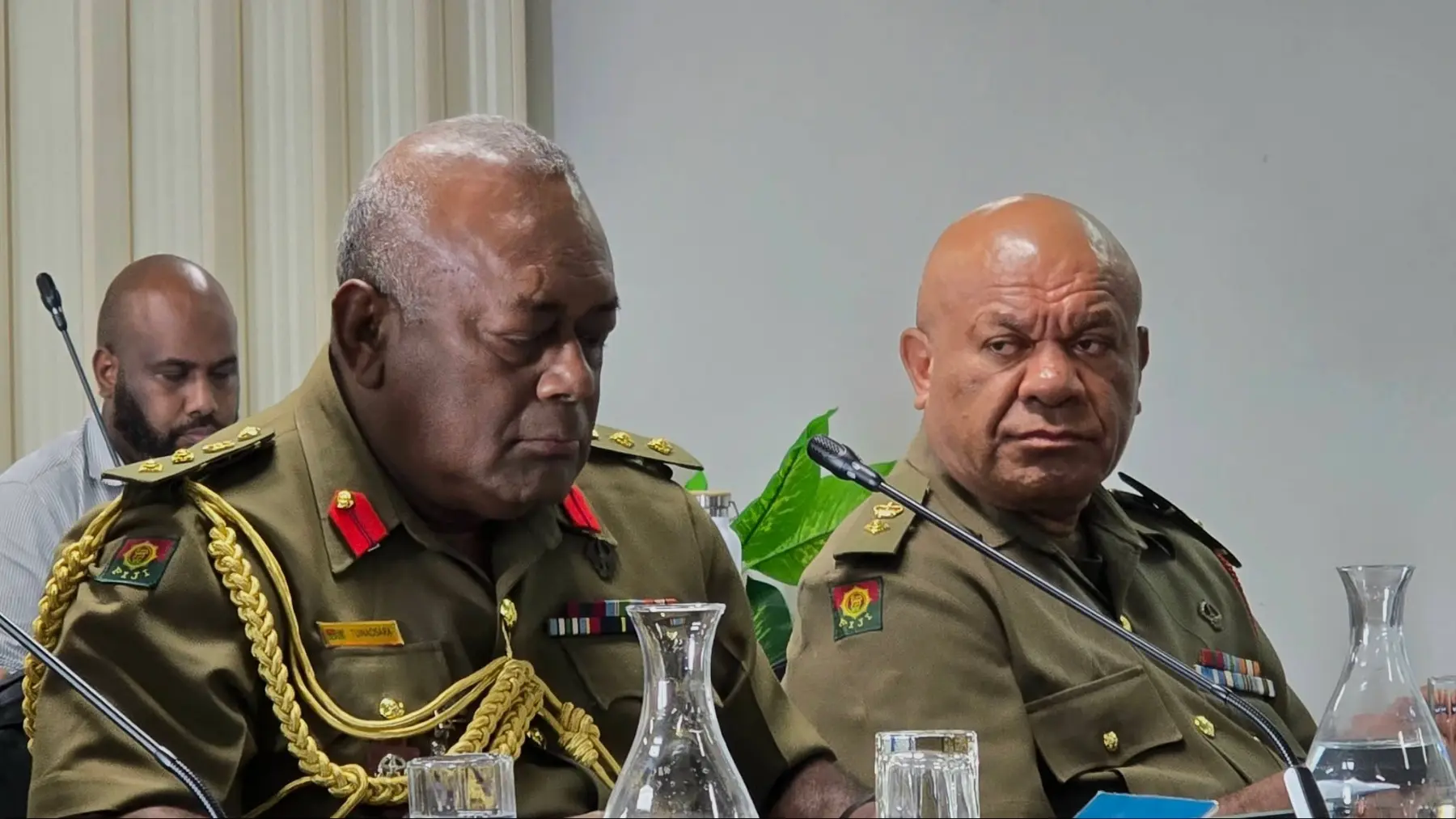
RFMF director of Army Legal Services Colonel Kitione Tuinaosara (left).
Photo: Constitutional Review Commission
The Republic of Fiji Military Forces (RFMF) has proposed the establishment of an independent Military Court of Fiji as part of its submission to the Constitution Review Commission.
Director of Army Legal Services Colonel Kitione Tuinaosara made the submission during the commission's consultation, saying the proposed Military Court would replace the current General Court Martial system while operating alongside Fiji's civilian courts.
He said the reform would strengthen transparency, fairness and accountability within the military justice system.
Related stories
Colonel Tuinaosara said discussions on the proposal began in 2019 when drafting of the court's rules commenced. Implementation would require approval from the High Court following further consultations within the RFMF.
"We intend to have it for independence, transparency and fairness. We intend to have a Military Court of Fiji here at the camp," he said.
Under the proposed model, a military judge would preside over proceedings with a panel of military personnel, similar to the current court martial system. However, the panel would comprise senior officers, warrant officers and other ranks instead of being made up exclusively of senior officers.
Colonel Tuinaosara said the reforms are intended to address longstanding concerns about the perceived independence of military justice and improve public confidence in the system.
He said the Military Court could operate separately from the civilian courts, with discussions also exploring the possibility of holding military court sessions after civil court sittings conclude.
The proposal forms part of the RFMF's broader recommendations to the Constitution Review Commission as Fiji considers reforms to its constitutional and legal framework.