‘Shut down’ ChatFiji
“In view of the increasing incidents of cyberbullying, Government needs to look urgently at increasing the resources available to the Commission,” he said.
Friday 12 July 2024 | 10:18
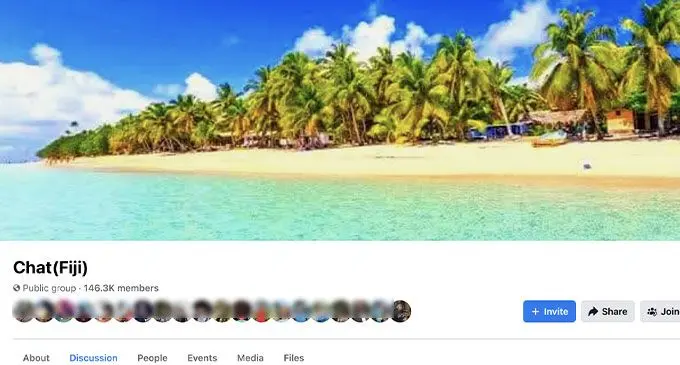
There are strong calls from concerned Fijians that the 'ChatFiji Facebook' forum be shut down.
The call comes after a social influencer, Esala Seru Yalewamama, best known as 'Ranadi Kei Viti', died yesterday morning.
'ChatFiji', a local 'Facebook' forum, is notorious for unregulated content, frequently hosting defamatory and derogatory posts about individuals.
Related stories
Circumstances surrounding Esala's death is allegedly connected to the 'ChatFiji Facebook' forum. Assistant Commissioner of Police - Crime ( ACP) Mesake Waqa said an investigation was underway.
"At this early stage, we cannot speculate on the circumstances surrounding the victim's death because that will be part of the investigation process,” ACP Waqa said.
Despite the unprecedented call, another social media influencer and lawyer, Jon Apted, feels shutting down the forum is not a permanent solution.
“While that might deal with the toxic culture on one page, that is not a long-term solution since the bad behaviour will merely be transferred to a new or different page,” he told this masthead yesterday.
“The solution lies in changing behaviour through education, effective handling of complaints and where possible prosecution of serious offenders.
“We ourselves need to take responsibility for keeping online platforms safe and for creating a more respectful online culture.
“We should stop reacting to or sharing harmful posts.
“Where possible, we should call out and report the more offensive posts.”
From the scale of the problem, he said it appeared many were of the view that their freedom of speech allowed them to say whatever they liked online.
“Freedom of speech is not an absolute right,” he said.
“It allows you the fullest freedom to express your views about issues and political figures, but it does not include the freedom to say nasty personal things about others or cause anyone harm.”
Mr Apted is calling on the Fiji Human Rights, the Anti-Discrimination Commission and the Online Safety Commission to educate the public on what “freedom of speech allows and what it doesn’t”.
“In view of the increasing incidents of cyberbullying, Government needs to look urgently at increasing the resources available to the Commission,” he said.
Fiji Women’s Rights Movement
The women’s activist group has strongly condemned the repeated acts of psychological violence and character attacks.
Fiji Women’s Rights Commission executive director, Nalini Singh, is urging relevant authorities to direct more effort to monitoring acts of violence online.
“This is not the first time ..., and it is sad that despite Esala’s death, people continue to dump hateful remarks online. When will we learn?” Ms Singh said.
“Time and time again, we continue to speak out against cyberbullying and online harassment and demand justice for those who are victimised on our online platforms.
“There are many of us who think that these sexist, abusive and defamatory attacks have no repercussions.”
The movement calls for no impunity for online violence, especially against marginalised communities.
She urges Fijians to exercise responsible online etiquette by refraining from engaging in hate speech.
Fiji Human Rights and Anti-Discrimination Commission
The FHRC echoed similar sentiments.
“The commission is concerned that those managing public-chat forums on social media are failing to moderate and control hate-comments on their pages,” chairperson Pravesh Sharma said.
“The culpability lies with the administrators of the public chat-forum Facebook pages and those commenting.
“And they must face the full brunt of the law.
“Freedom of speech carries ‘responsibility’ and has limitations.”
The 2013 Constitution, under Section 17 (3)(b)(d), states:
(i) that a law may limit, or may authorise the limitation of free speech to protect reputation, privacy, dignity, rights or freedoms of other persons, including — the right to be free from hate speech, whether directed against individuals or groups.
(b) the protection or maintenance of the reputation, privacy, dignity, rights or freedoms of other persons, including — (i) the right to be free from hate speech, whether directed against individuals or groups; and
(d) preventing attacks on the dignity of individuals, groups of individuals or respected offices or institutions in a manner likely to promote ill will between ethnic or religious groups or the op pression of, or discrimination against, any person or group of persons;
(4) In this section, “hate speech” means an expression in whatever form that encourages, or has the effect of encouraging discrimination on a ground listed or prescribed under section 26.
26.— (1) Every person is equal before the law and has the right to equal protection, treatment and benefit of the law.
(2) Equality includes the full and equal enjoyment of all rights and freedoms recognised in this Chapter or any other written law.
(3) A person must not be unfairly discriminated against, directly or indirectly on the grounds of his or her— (a) actual or supposed personal characteristics or circumstances, including race, culture, ethnic or social origin, colour, place of origin, sex, gender, sexual orientation, gender identity and expression, birth, primary language, economic or social or health status, disability, age, religion, conscience, marital status or pregnancy, or (b) opinions or beliefs, except to the extent that those opinions or beliefs involve harm to others or the diminution of the rights or freedoms of others.
Feedback: wati.talebula@fijisun.com.fj








